How to make slow-roasted leg of lamb: the easy method for tender, flavorful meat
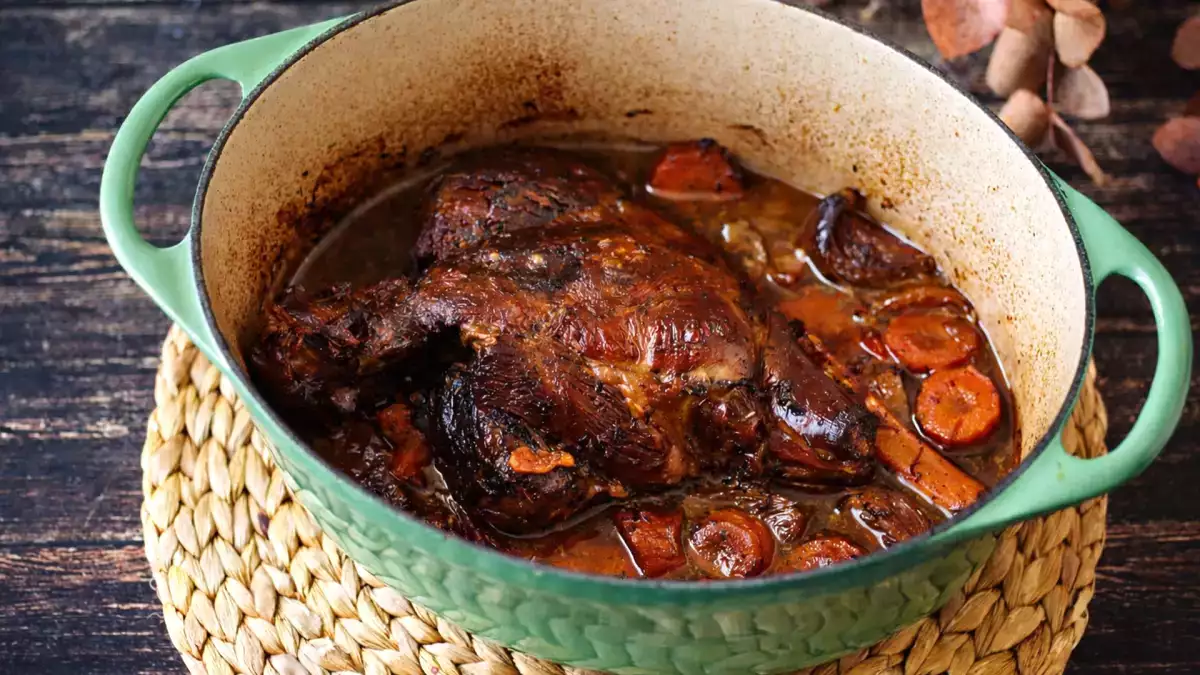
Leg of lamb is one of those dishes that are immediately associated with festive tables, family gatherings and recipes that deserve some time. It is often prepared in the oven in a hurry, looking for a golden outside and a juicy inside, but there is another way of cooking it that completely changes the result: a very slow cooking, in a casserole and at a low temperature, until the meat is tender, fragrant and almost separates by itself.
A cooking technique with a name of its own: gigot 7 heures
In France, this preparation has its own name and is part of the classic recipe book: gigot de 7 heures, also known as gigot à la cuillère, because of its soft texture that allows it to be served almost with a spoon. Several sources place this tradition within the French popular cuisine and relate its antecedents to the gigot or agneau à la brayaude, an ancient preparation associated with long cooking intended to soften firmer pieces. The first written mention is usually attributed to Charles Durand in Le Cuisinier Durand (1830), and today it is still alive in versions by authors and cooks such as Larousse, Alain Ducasse or Cyril Lignac.
Here the idea is better adapted if we speak of slow-roasted leg of lamb or slow-cooked leg of lamb. It sounds more natural for us and describes well what happens in the casserole: first the meat is browned to fix flavor, then it is surrounded by onion, carrot, garlic and herbs, and then the oven does its work smoothly, for hours, until it leaves a mellow meat and a juice full of nuances.Ingredients for one slow roasted leg of lamb
To prepare a leg of lamb for about 8 people, you need:
- 1 leg of lamb (here 4 lbs 6 oz with bone)
- 2 carrots
- 2 onions
- 4 garlic cloves
- herbes de Provence
- salt
- pepper
Equipment needed
- a cast iron casserole with a lid. If you don't have one, you can use a well-covered baking dish to retain moisture throughout the cooking process.
Step 1: Prepare it
Place the leg of lamb on a board and check if it fits well in the casserole. If the end of the bone is in the way, cut it off. And if the piece is too big, you can ask the butcher to debone it.
Then, remove the excess surface fat with a knife. It is not necessary to leave it completely clean, because part of this fat will help protect the meat during cooking, but it is advisable to remove the excess so that the result is not heavy.
Step 2: browning the meat
Put the casserole over high heat with a little olive oil.
When it is hot, add the leg of lamb and brown it well on all sides for a few minutes. This step is worthwhile: it is not only a matter of color, it also helps to build the flavor of the stew from the beginning.
Step 3: add the vegetables and liquid
Once the meat is browned, add the onions cut into quarters, the garlic cloves and the carrots cut into large pieces.
Sprinkle with the aromatic herbs, season with salt and pepper and pour 1 cup of water into the pan. The idea is not to cover the meat, but to create a moist base that allows slow, gentle and very aromatic cooking.
Step 4: slow cooking in the oven
Preheat the oven to 250°F/120 ºC.
Cover the casserole and put it in the oven for 7 hours. Throughout the cooking time, it is advisable to turn the leg every 1 or 2 hours and check that there is always some liquid on the bottom, about 0.4 inch/1 cm. If you see that it is dry, add a little more water.
This long time completely transforms the piece: the tissue softens little by little, the vegetables are impregnated with the juices and the whole gains depth without the need to do almost anything else.
Step 5: let stand and serve
When the leg is ready, take it out of the oven and let it rest for a few minutes before taking it to the table.
Serve it hot, with the vegetables and the cooking juices on top or on the side, so that everyone can serve themselves as they like.
Why is this recipe so tender?
The key is the combination of low temperature, long time and covered casserole.
It is not low-temperature cooking in the most technical sense of the term, as is done with millimetric control in a precision or vacuum oven, but it does respond to the same logic: apply moderate heat for many hours so that the meat becomes tender without drying out. In France, this extreme texture is precisely what has made the gigot de 7 heures famous.
How do you know if the leg of lamb is done?
Here you should not look for pink meat or a clean cut, but the opposite: a very soft, juicy and easy to separate texture.
You will know it is ready when you feel very little resistance when pierced and the meat begins to open easily. If at the end of cooking it is still firm, it may need a little more time in the oven. In this type of recipe, the exact time always depends a little on the size of the piece and how each oven works.
An ideal recipe for special meals
This way of cooking the leg of lamb has something very grateful: it requires patience, but not too much attention. Once the casserole has been assembled and the liquid has been checked from time to time, the hard work is done by the oven.
This is why it works very well for a family meal, for a quiet Sunday or for a festive table where you want to put a large platter in the center. It is not by chance that in France it is still a recipe closely linked to celebrations such as Easter, and that chefs and gastronomic media continue to recover it as one of those classic dishes that never go out of fashion.
What to accompany it with
Once done, this leg of lamb combines very well with:
- the vegetables from the cooking itself
- a homemade mashed potato
- a celery or carrot puree
- baked potatoes on the side
- a simple salad that adds a little freshness
The juice left in the casserole deserves to be put to good use, because it concentrates a good part of the character of the dish.
 Patricia González
Comments