How to oven-roast pork that stays juicy every time: simple tips to prevent dry, tough meat
Friday 25 September 2026 10:00 - Adèle Peyches
Except that in real life, roast pork can quickly become dry. An oven that’s too hot, cooking it for too long, not enough juices, or putting the meat in the oven cold… and the result loses all its charm.
Don’t worry: all it takes is a few simple tips to get a pork roast that’s tender, flavorful, and a delight to eat!
Take the meat out of the fridge before cooking
The first, simple tip: don’t put the roast directly from the refrigerator into the oven. Meat that’s too cold cooks less evenly and may shrink more quickly when exposed to heat.
Take the roast out about 30 minutes before putting it in the oven. This gives it time to slowly come back to room temperature.
Meanwhile, you can prepare the seasoning: olive oil, melted butter, garlic, rosemary, salt, and pepper. It’s nothing complicated, but it makes a big difference.
Take the roast out about 30 minutes before putting it in the oven. This gives it time to slowly come back to room temperature.
Meanwhile, you can prepare the seasoning: olive oil, melted butter, garlic, rosemary, salt, and pepper. It’s nothing complicated, but it makes a big difference.
The right temperature: 350°F/180°C for even cooking
For a classic pork roast, cooking at 350°F/180°C is a good guideline. It’s hot enough to cook the meat properly, but not too harsh on it.
For a roast weighing about 600 g (1lb 5 oz), allow about 1 hour of cooking time. If your roast is larger, you’ll need to cook it longer. If the piece is smaller, check on it sooner.
The trap is setting the temperature too high to speed up the process. The outside will brown, but the inside may dry out before it’s really tender.
For a roast weighing about 600 g (1lb 5 oz), allow about 1 hour of cooking time. If your roast is larger, you’ll need to cook it longer. If the piece is smaller, check on it sooner.
The trap is setting the temperature too high to speed up the process. The outside will brown, but the inside may dry out before it’s really tender.
Add a little liquid to the dish
A pork roast doesn’t need to be submerged in water, but a little liquid helps keep the pan moist and creates cooking juices.
Add a small amount of water, broth, or even a little white wine, depending on the recipe. For a 600-gram roast, a few centiliters are enough to start with.
The goal isn’t to boil the meat. The goal is to have enough liquid to baste the roast while it cooks.
Add a small amount of water, broth, or even a little white wine, depending on the recipe. For a 600-gram roast, a few centiliters are enough to start with.
The goal isn’t to boil the meat. The goal is to have enough liquid to baste the roast while it cooks.
Water regularly—really
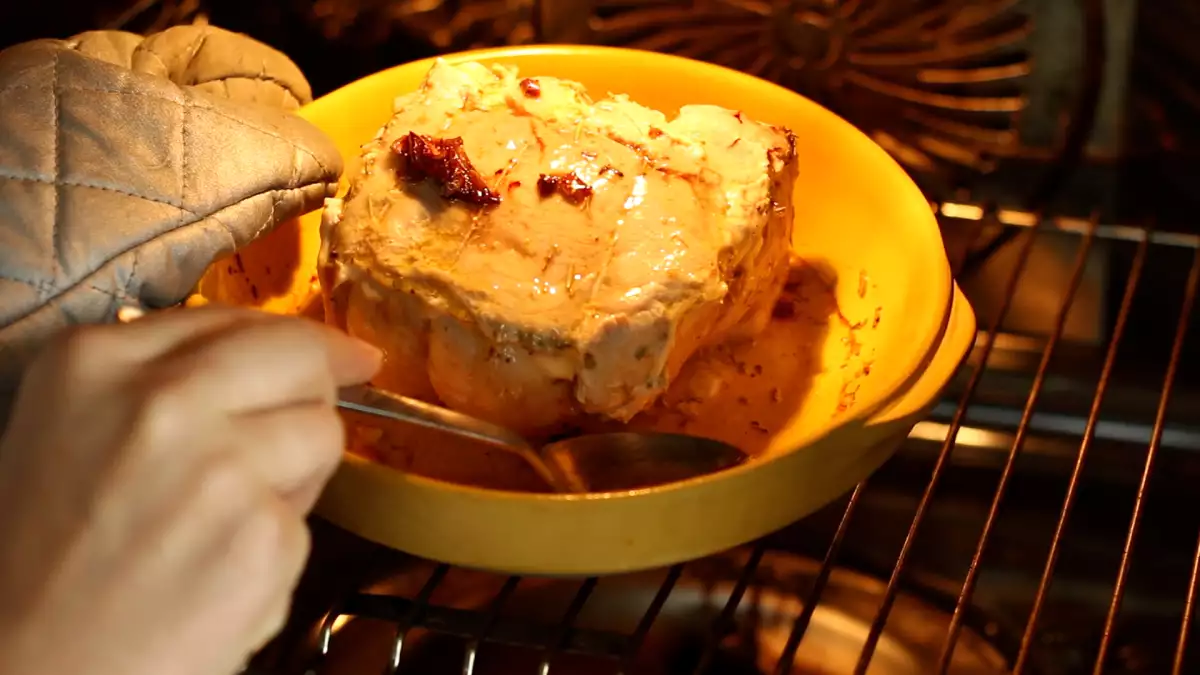
It’s the little thing that seems insignificant, but makes all the difference. While the roast is cooking, open the oven from time to time and baste it with the juices from the pan.
Do this about every 15 to 20 minutes. This moistens the surface, prevents it from drying out too quickly, and adds more flavor to the meat.
If the liquid in the pan evaporates completely, add a little water or broth. A completely dry pan often results in a dry roast.
Do this about every 15 to 20 minutes. This moistens the surface, prevents it from drying out too quickly, and adds more flavor to the meat.
If the liquid in the pan evaporates completely, add a little water or broth. A completely dry pan often results in a dry roast.
Turn the roast halfway through cooking
For more even cooking, turn the roast halfway through cooking. If cooking for an hour, do this after about 30 minutes.
This helps distribute the juices more evenly and prevents the top from becoming much drier than the rest.
Take this opportunity to baste generously, check the bottom of the pan, and adjust as needed.
This helps distribute the juices more evenly and prevents the top from becoming much drier than the rest.
Take this opportunity to baste generously, check the bottom of the pan, and adjust as needed.
Covering it at the beginning can help
If you're worried the roast will dry out, you can cover it during the first part of cooking. A sheet of parchment paper or a suitable lid will help retain some moisture.
Keep it covered for about 30 to 40 minutes, then uncover it to let the surface brown.
This is a good method if your cut is fairly lean, such as a tenderloin roast, which tends to dry out more easily.
Keep it covered for about 30 to 40 minutes, then uncover it to let the surface brown.
This is a good method if your cut is fairly lean, such as a tenderloin roast, which tends to dry out more easily.
The song you choose also affects the result
Not all pork roasts turn out equally tender. A roast cut from the tenderloin is leaner, so it’s more prone to overcooking. It can become dry if left in the oven too long.
The loin, which has more marbling, often yields a juicier and more flavorful result. It holds up better when roasted in the oven, especially for a family meal.
If you want a very tender roast, the choice of cut matters almost as much as the cooking method.
The loin, which has more marbling, often yields a juicier and more flavorful result. It holds up better when roasted in the oven, especially for a family meal.
If you want a very tender roast, the choice of cut matters almost as much as the cooking method.
How can you tell if the roast is done?
The most reliable tool is still a meat thermometer. For a well-cooked pork roast, the internal temperature should reach about 70 to 75°C, depending on the desired result and the recommendations you’re following.
If you don’t have a thermometer, pierce or make a small cut in the thickest part: the juices should run clear, and the meat should no longer be pink in the center.
But be careful: cooking it longer “just to be sure” is often what makes the roast dry. It’s better to check than to cook by guesswork.
If you don’t have a thermometer, pierce or make a small cut in the thickest part: the juices should run clear, and the meat should no longer be pink in the center.
But be careful: cooking it longer “just to be sure” is often what makes the roast dry. It’s better to check than to cook by guesswork.
Let it rest before cutting
Once you take the roast out of the oven, don’t slice it right away. Let it rest for about 10 minutes, loosely covered with a sheet of parchment paper or aluminum foil.
This resting period allows the juices to distribute more evenly throughout the meat. If you slice it right away, some of the juices will run into the cutting board, and the slices will seem drier.
It’s just a short wait, but it really improves the taste.
This resting period allows the juices to distribute more evenly throughout the meat. If you slice it right away, some of the juices will run into the cutting board, and the slices will seem drier.
It’s just a short wait, but it really improves the taste.
What about the side dishes?
Roast pork pairs perfectly with simple side dishes: potatoes, carrots, green beans, mashed potatoes, salad, or roasted vegetables.
You can add vegetables to the dish, but be careful not to overcrowd it. If there are too many ingredients around the meat, it may not cook evenly, and the juices may evaporate unevenly.
For a classic, step-by-step version, here’s the basic recipe to keep on hand.
You can add vegetables to the dish, but be careful not to overcrowd it. If there are too many ingredients around the meat, it may not cook evenly, and the juices may evaporate unevenly.
For a classic, step-by-step version, here’s the basic recipe to keep on hand.
How to cook a pork roast in the oven?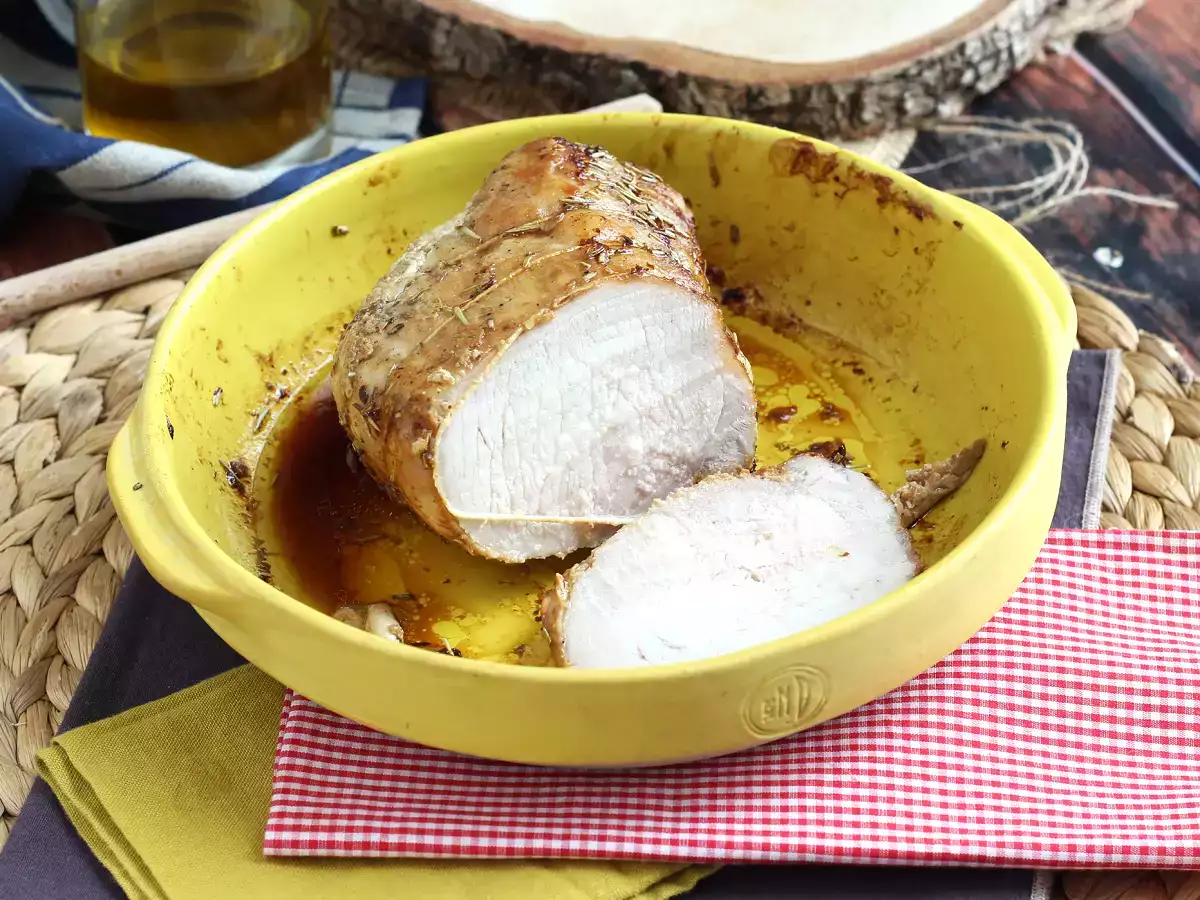
When we think of a Sunday meal , we often picture a roast served with sautéed potatoes and green beans. This traditional recipe is one of the great classics of French cuisine , loved for its homely, comforting feel. Here, we share our roast pork...
Mistakes that make a roast dry
The most common mistakes are quite simple: putting meat in the oven that’s too cold, cooking at too high a temperature, forgetting to baste, letting the dish dry out, or continuing to cook without checking on it.
Another common mistake: cutting into the roast as soon as it comes out of the oven. Even if everyone is hungry, let it rest for a few minutes.
And if you’re using a lean cut, be even more careful. Tenderloin is less forgiving of overcooking than pork loin.
Another common mistake: cutting into the roast as soon as it comes out of the oven. Even if everyone is hungry, let it rest for a few minutes.
And if you’re using a lean cut, be even more careful. Tenderloin is less forgiving of overcooking than pork loin.
A handy summary of cooking times
For a pork roast weighing about 600 g (1lb 5oz), allow about 1 hour at 350°F/180°C. Take the meat out of the refrigerator 30 minutes before cooking, add a small amount of liquid, baste every 15 to 20 minutes, and turn it halfway through cooking.
You can cover it for the first 30 to 40 minutes, then uncover it to brown. After cooking, let it rest for about 10 minutes before slicing.
The secret to a tender pork roast isn’t complicated: moderate heat, juices, basting, and not a single extra minute of cooking “just in case.”
You can cover it for the first 30 to 40 minutes, then uncover it to brown. After cooking, let it rest for about 10 minutes before slicing.
The secret to a tender pork roast isn’t complicated: moderate heat, juices, basting, and not a single extra minute of cooking “just in case.”
 Adèle Peyches
Editorial manager who just can't wait for winter to enjoy fondue! Passionate about gastronomy and always on the lookout for new culinary gems, I first studied law before returning to my first love: the taste of good products and the joy of sharing around the table :)
Comments