Is this recipe truly 'light'? Easy checks to spot when a supposedly healthy dish is just pretending
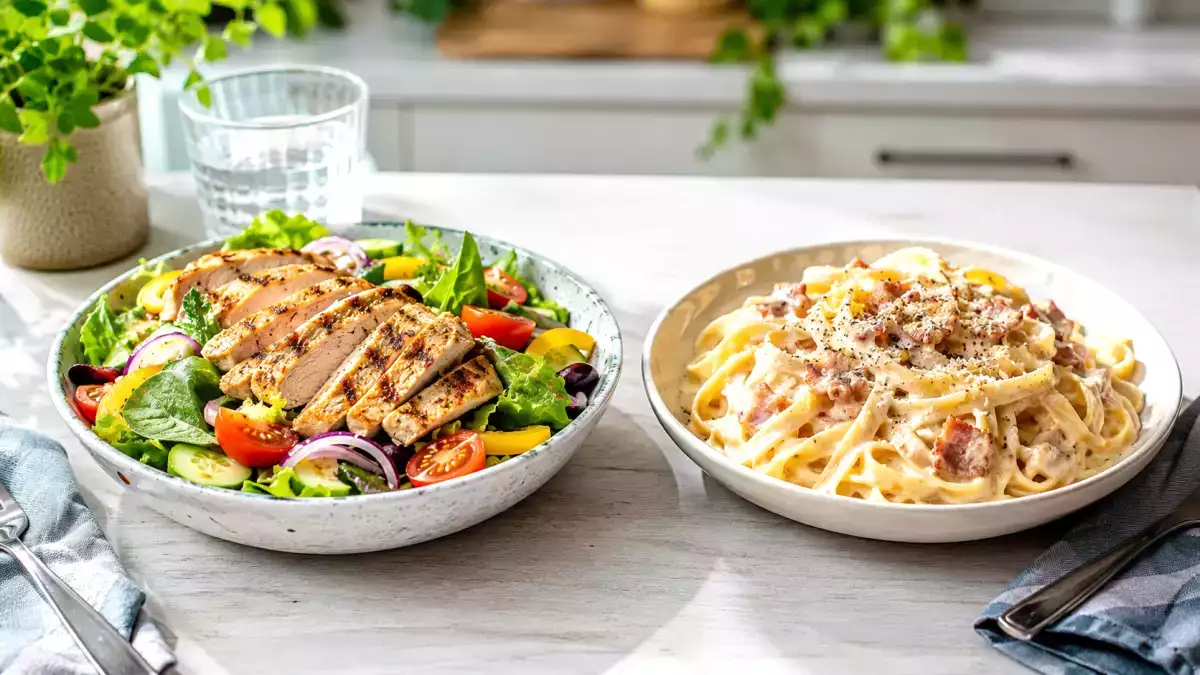
A recipe with the word “light” in the title, a pretty, colorful bowl, and a few salad leaves in the foreground: it all looks very light. Then you read the ingredients, and there’s half an avocado, three tablespoons of oil, cheese, nuts, and a mysteriously creamy “healthy” sauce.
The question naturally arises: when can a recipe truly be considered “light”?
It’s not enough to simply cut out the butter, use yogurt, or add a handful of vegetables. To evaluate whether a recipe is “light ,” you have to look at the big picture: portion sizes, calories per serving, seasonings, nutritional balance, cooking method, and the dish’s ability to satisfy your hunger.
What does "light recipe" really mean?
In everyday language, a “light” recipe is a dish that is lighter than its traditional version, generally lower in calories, fat, sugar, or seasonings. There is no universal calorie threshold, however, beyond which a dish automatically ceases to be “light.”
The threshold depends on the type of dish. A snack, a first course, a full dinner, and a dessert cannot all be judged by the same standard.
For packaged products, however, the term “light” has a more precise meaning: according to European regulations, it must meet the criteria for “reduced-content” claims, generally involving a reduction of at least 30% compared to a similar product and clearly indicating the reduced content.
When it comes to homemade recipes, therefore, we need to use a little more common sense. And maybe even a measuring spoon.
What are the criteria for determining whether a recipe is low-calorie?
To determine whether a dish is truly light, it’s best to consider at least the following factors:
- total calories per serving;
- the actual amount served;
- the presence and amount of condiments;
- the ratio of vegetables, protein, carbohydrates, and fats;
- fiber content and satiety;
- cooking method;
- comparison with the traditional recipe.
Analyzing these factors together is essential. A dish may be low in calories per 100 grams, but become substantial and high in calories when the portion size triples. Conversely, a high-calorie food can be included in moderate amounts as part of a balanced meal.
How many calories should a low-calorie recipe have?
This is one of the most common questions, but there’s no one-size-fits-all answer. Energy needs vary depending on age, body type, physical activity, and the overall composition of one’s daily diet.
Rather than fixating on a rigid threshold, it’s helpful to consider the role of the recipe itself. A main dish should provide more energy and nutrients than a side dish; a slice of light cake cannot be compared to a full dinner.
The Italian Guidelines for Healthy Eating emphasize the importance of energy balance, variety, and appropriate portion sizes.
The real mistake is judging a meal solely by its declared calorie count. A dish that’s very low in calories but not very filling might prompt us to look for more food shortly afterward. And at that point, that impromptu snack from the office drawer takes its toll.
The portion size matters more than the name of the recipe
A recipe doesn’t become “light” just because it’s served in a minimalist bowl. Portion size is one of the first things to keep in check.
Let’s consider a simple salad. Lettuce, tomatoes, and carrots are low in calories. But when you add plenty of oil, mozzarella, olives, croutons, avocado, and a store-bought dressing, the result can be much more calorie-dense than its appearance suggests.
This doesn’t mean these ingredients are “wrong.” It means that portion sizes make all the difference.
The same goes for pasta, rice, and bread. You don’t need to cut them out entirely to prepare lighter meals: just serve them in reasonable portions and pair them with vegetables, legumes, fish, eggs, or other protein sources.
Is a recipe without butter automatically low-calorie?
No. Omitting butter can reduce the fat content or alter the nutritional profile, but it all depends on what’s used in its place.
A butter-free cake made with lots of oil, sugar, nut butter, and chocolate is still a pretty rich cake. It’s probably delicious, but it doesn’t magically become lighter.
Even ingredients perceived as healthy can quickly add up in calories:
- extra virgin olive oil;
- nuts;
- seeds;
- avocado;
- cheese;
- nut butters;
- honey and syrups.
These foods can be part of a balanced diet, but they should be consumed in moderation. “Natural,” “butter-free,” and “white sugar-free” are not automatically synonymous with “low-calorie.”
Does the cooking method make a recipe lighter?
The cooking method can make a big difference in the final result. Oven, steaming, griddle, boiling, air fryers and pan-frying with minimal fat generally allow for better control over seasoning.
Traditional frying or dishes prepared with butter, cream, and generous amounts of sauce, on the other hand, tend to increase the calorie content.
Be careful, though, of the classic oven trap. A vegetable baked in the oven and drenched in oil doesn’t become “light” just because it isn’t fried. The oven cooks—it doesn’t make the seasonings disappear with a wave of a magic wand.
To add flavor without making the dish heavy, you can use spices, herbs, lemon juice, vinegar, garlic, onion, plain mustard, or unsweetened yogurt.
A light recipe should also be filling
A good, light recipe shouldn't leave your stomach in "where are the cookies?" mode after half an hour.
To increase satiety, it’s helpful to combine:
- vegetables, for volume and fiber;
- a protein source;
- a portion of carbohydrates proportionate to the meal;
- a small amount of fat;
- water, broth, or ingredients naturally rich in fluids.
A dish consisting solely of vegetables may be low in calories, but it is not always sufficient as a complete meal. Add chickpeas, lentils, chicken, fish, eggs, or tofu can make it more balanced and satisfying.
The Ministry of Health recommends controlling portion sizes, increasing fruit and vegetable intake, and being mindful of fat consumption, snacks, and sugary drinks.
Do low-calorie recipes help you lose weight?
No single recipe can make you lose weight on its own, just as an occasional carbonara doesn’t automatically ruin a balanced diet.
Body weight depends on your overall energy balance and the habits you maintain over time. A “light” recipe can help you better manage calories and portion sizes, but it’s not a magic formula.
In fact, the “light” label can create a curious psychological effect: by thinking the dish is light, you end up eating twice as much. Two “light” servings, unfortunately, don’t always stay light.
How can you make a recipe lower in calories without ruining it?
To make a dish lighter, you don't have to eliminate everything that adds flavor. Often, small changes are all it takes:
- slightly reduce the amount of oil, butter, cream, and cheese
- increasing the amount of vegetables
- choosing leaner cuts of meat
- replace part of the sauce with yogurt or tomato
- measure seasonings precisely
- opt for simple cooking methods
- avoid combining too many high-calorie ingredients in the same dish
The goal isn’t to turn every recipe into a bland, boiled leaf, but to find a balance between flavor, calories, nutrients, and satiety.
In conclusion, a recipe is truly “light” when it’s lighter than the original version, features reasonable portions, controlled seasonings, and a balanced composition. There’s no need to demonize pasta, bread, oil, or cheese—it’s all about paying attention to quantities and combinations.
And let’s remember: “not light” doesn’t necessarily mean “unhealthy.” Some dishes are simply richer and should be enjoyed in moderation and in appropriate portions. True lightness isn’t about eating without pleasure, but knowing what’s on your plate without being fooled by decorative parsley.
 Daniele Mainieri
Comments