Keep school lunchbox food fresh until recess: 5 easy rules every parent should follow for kids
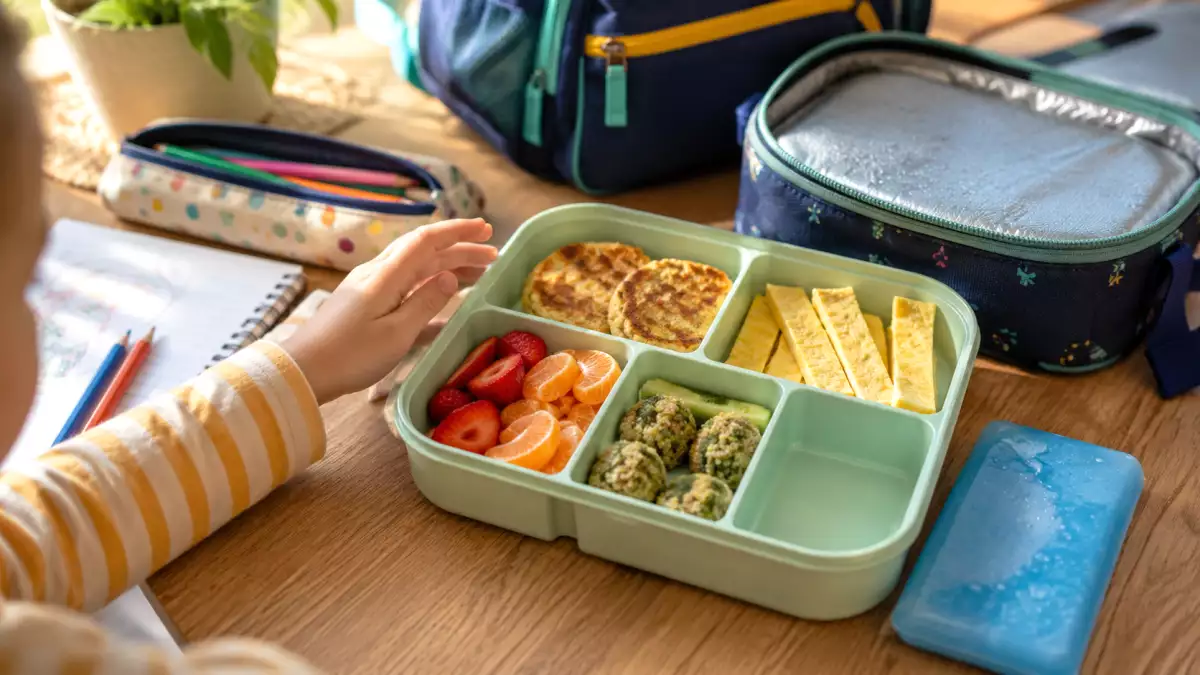
Choosing the right lunch is only part of the equation. You also have to consider how it will stay fresh until the child eats it, whether they’ll be able to handle it without help, and whether the way it’s cut is appropriate for their age.
1. A lunchbox is not a refrigerator
A cooler bag helps maintain the temperature, but it needs ice packs inside. If the school has a refrigerator, the easiest thing to do is to store the lunchbox there upon arrival. If there isn’t one, a good insulated bag and enough ice packs will have to do the job until recess.
The time spent without refrigeration is counted from the moment the food stops staying cold. As a general food safety guideline, perishable foods should not remain at room temperature for more than two hours and even less so on a particularly hot day.
That’s why a yogurt or an omelet taken out of the refrigerator first thing in the morning shouldn’t spend the entire morning in a backpack without any measures to keep it cold.
2. What happens after cooking matters, too
Cooking food thoroughly does not guarantee that it can be safely stored afterward. An omelet, a roast chicken, or a serving of rice may have been prepared correctly, yet they may still become unfit for consumption if left for too long at temperatures that promote the growth of microorganisms.
At home, the rules are well known:
- clean hands and utensils,
- thoroughly washed fruits and vegetables, meat and eggs cooked thoroughly, and
- promptly refrigerating foods that require it
In a child’s lunchbox, it’s also best to avoid homemade dishes made with raw eggs.
Preparing lunch the night before is perfectly fine. It’s stored in the refrigerator and stays there until the next morning. What’s not advisable is leaving a cooked dish on the counter for hours, waiting for it to cool completely.
You should also be somewhat cautious about what comes back home. If a perishable food item has spent a good part of the morning without being kept cold, putting it back in the refrigerator won’t restore the proper storage conditions it lost during those hours.
3. With children, it matters what they eat and also how it's cut
Whole nuts, hard candies, and other foods that are round, very hard, or sticky also require caution. The child’s age and their ability to chew and handle each food should determine how we offer it to them.
The setting where the child eats also plays a role. At home, we can make sure the child is seated, chews slowly, and that an adult stays nearby. Recess is usually quite different: there’s a rush, conversation, movement, and many distractions.
That’s why it’s worth taking a fresh look at common foods like grapes, cherry tomatoes, raw carrots, or certain pieces of apple. You don’t necessarily have to leave them out of the lunchbox, but rather prepare them in a way that’s appropriate for their age.
4. A good lunchbox has to be good for more than just looking nice
Just because a lunchbox claims in large print that it is “BPA-free” does not automatically mean it is suitable for any use. In the European Union, materials intended to come into contact with food are subject to specific regulations.
It’s best to choose a lunchbox designed for food use and to follow the manufacturer’s instructions regarding microwaves, dishwashers, freezing, and maximum temperatures.
When it comes to children, there are two other issues that deserve attention: durability and ease of use. A lid that’s great for an adult can turn into a daily struggle for a five-year-old. Before using the lunchbox for the first time at school, it’s a good idea to test it at home: have the child open it, close it, and see how the different compartments work.
Then comes the less glamorous, but equally necessary, part: washing it daily and letting it dry completely before putting it away again.
5. Before packing the lunchbox, check with the school
Three questions can help you avoid a lot of mistakes:
- Is there a refrigerator?
- Where do the children eat, and under what supervision?,
- What are the policies regarding allergies and sharing food?
The answers have a much greater impact on what goes into the lunchbox than it might seem. If there’s no way to keep food cold, it may be more practical to opt for stable, age-appropriate foods: a whole tangerine or banana, bread, certain dry goods, or prepared foods that don’t require refrigeration.
If you want to include yogurt, fresh cheese, eggs, hummus, meat, fish, or pre-cut fruit, you should have a way to keep them cold figured out before you close the lunch bag.
That doesn’t mean filling the lunchbox with processed foods just because they hold up better for a few hours outside the fridge. There are also simple, minimally processed options that can work well: a tangerine, a banana, bread, a small sandwich, some homemade pancakes, or a slice of simple homemade cake; as long as they don’t contain fillings or ingredients that need to be kept cold.
You don't have to fill all the compartments
A good school lunchbox isn’t one that comes back empty at any cost. It’s one that arrives at recess with the food still in good condition, contains foods appropriate for the child’s age, and is part of a routine that both the family and the school can manage without complications.
 Patricia González
Comments