Make chimichurri a barbecue staple: what goes into it and three easy tips to nail the flavor
An extraordinary piece of grilled meat does not need much to taste good. If you have a quality cut, well-managed embers, and someone willing to stand over the heat while everyone else gives opinions from the shade, beer in hand, about whether it is done or still needs a little longer, there is not much more to add.
But it is worth accepting a small dose of humility: most backyard barbecues are not an Argentine temple of asado. They are a gathering of hungry people, a fire controlled with more goodwill than expertise, and some chops that, sometimes, deserve a little extra joy.
That joy can be chimichurri.
You do not need to come from the pampas or drink mate to understand it. Just put a bowl in the middle of the table and watch how this delicious Argentine sauce works. First, someone dips into it with the caution of a person signing a mortgage and asks before tasting it: “Is there no ketchup?” Then that same person goes back for more. This time they ask: “What’s in this? It’s actually pretty good.” After that, they put it on chicken, on a potato, on a piece of bread, and, if no one is watching, on anything that passes near their plate.
Chimichurri has that kind of quiet success. It enters the meal as a side and ends up stealing part of the spotlight. It does not hide what is underneath, but it gives it a push. Where the barbecue brings fat, smoke, and a toasted edge, chimichurri brings herbs, acidity, garlic, and a little heat that wakes everything up. That is why we are sharing the recipe, plus three tips to make it perfect for your next summer barbecue.
What goes into chimichurri?
Chimichurri is a cold sauce closely linked to Argentine asado. And as with almost every popular recipe that has survived several generations, there is no single version guarded by a stern man in an apron. Every household has its own, every grill adjusts the quantities, and every cook defends some detail as if family honor depended on it.
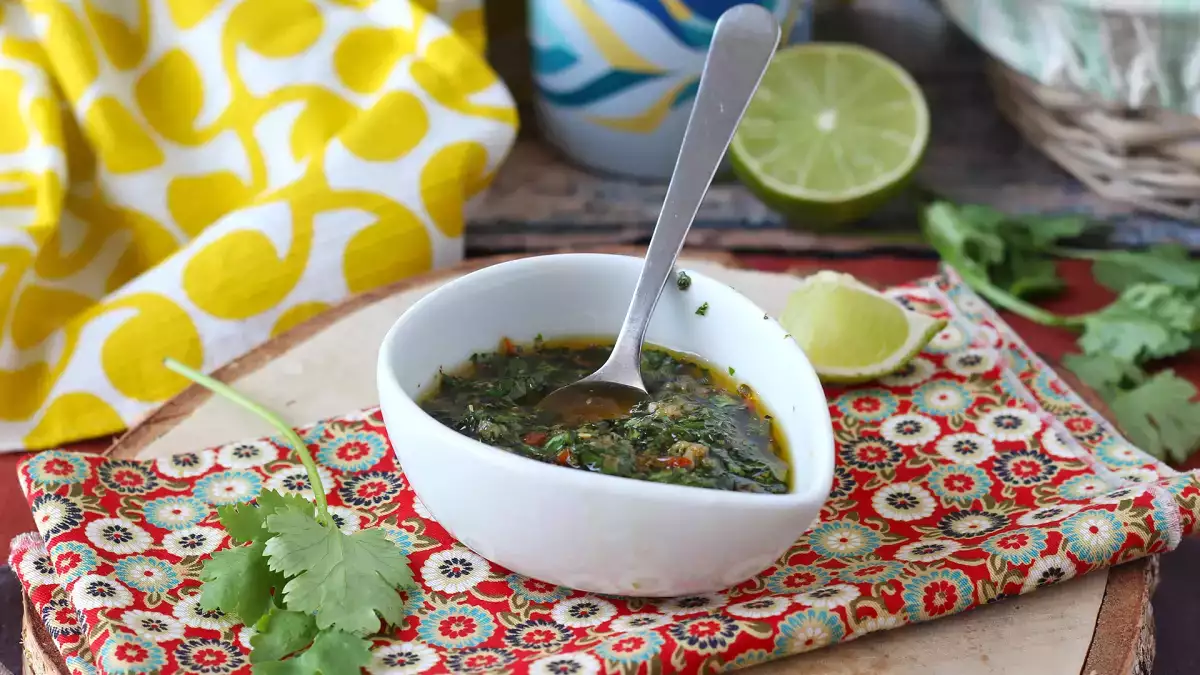
The base, however, usually stays within familiar territory: fresh parsley, garlic, dried oregano, crushed red pepper or chili, vinegar, oil, and salt. If you do not have Argentine ají molido, no problem. A mild dried chili or a pinch of hot paprika can do a perfectly decent job.
From there, the variations begin: a little paprika, a bay leaf, thyme, pepper, more garlic, less heat, wine vinegar, a milder oil, or a more pronounced one.
Without a doubt, it is a very useful sauce for barbecues. Against the fat, smoke, and char of the grill, chimichurri brings freshness, acidity, and herbs. It cleans the palate and makes every bite ask for another.
And although its most obvious association is with red meat, it has much more range than a steak. It works beautifully with chicken, ribs, sausages, grilled vegetables, potatoes, leftover sandwiches, grilled shrimp, and even oily fish cooked over the coals. Once there is a jar in the fridge, dangerously reasonable ideas start to appear.
First tip: do not turn it into a purée
With chimichurri, texture matters as much as flavor. The parsley should still be visible, finely chopped; the garlic should be minced small; and the oregano should slowly hydrate in the mixture. That is why the blender, although it may seem like a brilliant idea (fast, obedient, and capable of doing in ten seconds what would take us several minutes with a knife) is usually not the best option. Here, it is better to resist.
If you blend the parsley, garlic, oil, and vinegar too much, the mixture may become green, flavorful, and even tasty, but it will not be exactly what we are looking for. Chimichurri needs texture. It should not look like a cream or an emulsified bottled sauce.
A knife, a cutting board, and a little patience are better. That small effort of chopping everything finely makes a difference: the sauce tastes fresher, livelier, more pleasant in the mouth, and looks the way it should.
Second tip: garlic and vinegar need to behave
Chimichurri has character, but it should not be aggressive. One of the most common mistakes is confusing intensity with excess: too much garlic, too much vinegar, or too much heat. Everything needs its place.
The key is to start cautiously and adjust afterward. Taste the sauce before serving it. If it is too strong, a little more oil will soften it. If it tastes flat, it may need a few more drops of vinegar or a pinch of salt. If it lacks energy, add a little more chili or crushed red pepper.
Chimichurri is not a recipe of millimeter-level precision. It is a sauce of adjustment, instinct, tasting, and saying: “Now it’s right.”
Third tip: make it ahead, not when the meat is already on the table
This is the detail that separates a decent chimichurri from one that disappears from the bowl: resting time.
When freshly mixed, every ingredient is still going its own way. The garlic tastes too raw, the vinegar feels sharper, and the oregano has not quite understood what it is doing there yet. After half an hour, things improve. After a few hours, they improve a lot more. The oil absorbs the aromas, the heat settles in, and the sauce stops being a collection of ingredients and becomes something that makes sense.
That is why this recipe is so convenient for a backyard barbecue. You can make it in the morning, store it in a clean jar, and keep it in the fridge while you deal with more urgent matters, like checking whether there is enough ice or preventing someone who does not know what they are doing from taking charge of the grill.
Before serving, just stir it well and taste it. It may need a little more salt, a few drops of vinegar, or a drizzle of oil.
Our chimichurri recipe
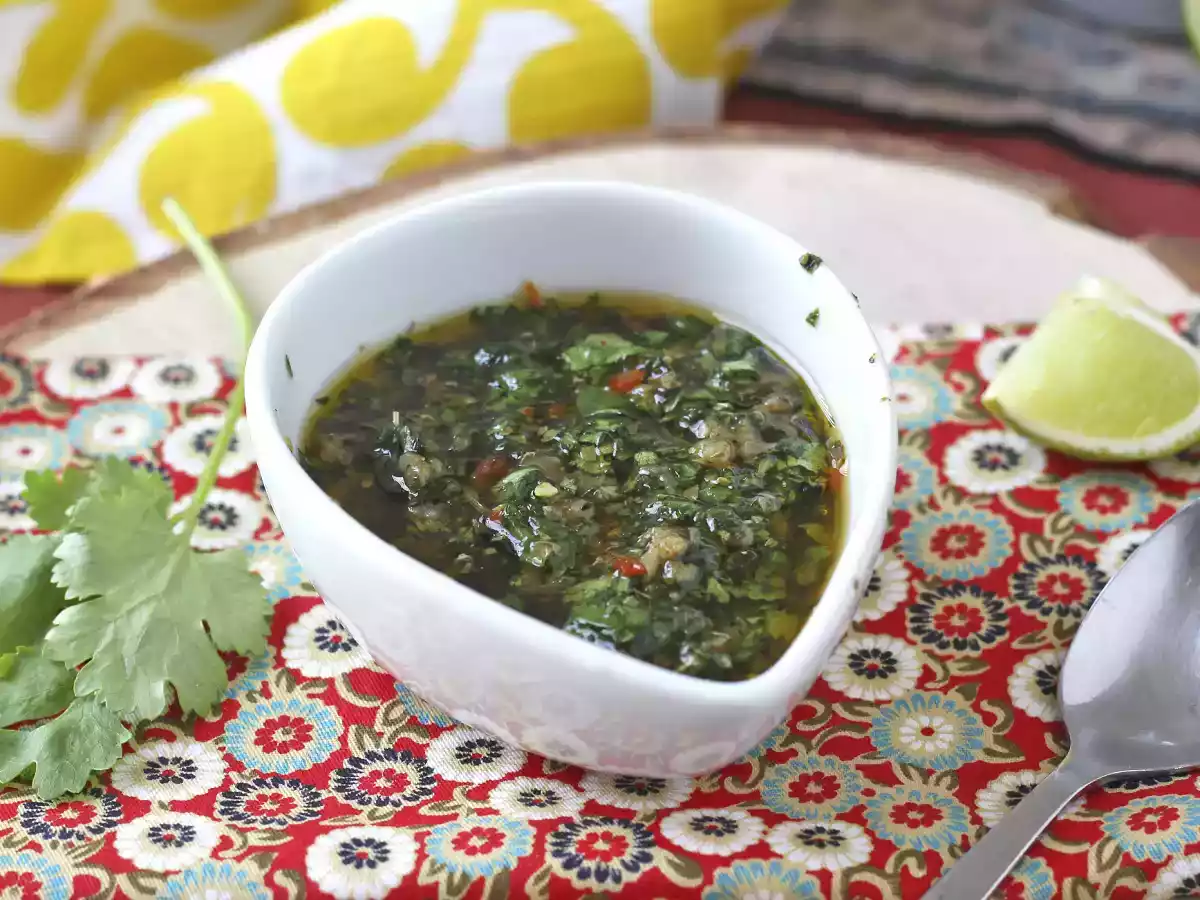
In Argentina, there is no asado without chimichurri —and rightly so! This delicious and versatile sauce not only enhances the flavor of meats, fish and vegetables, but also adds a touch of freshness and spiciness that makes it irresistible. Renowned...
Why does it disappear so quickly?
Maybe that is exactly why it works so well. It does not pretend to turn a backyard barbecue into a Buenos Aires parrilla, but it does achieve something more useful: it makes a simple meal feel better thought out. Sometimes all it takes is a green, tangy, aromatic bowl in the middle of the table for everyone to understand, spoonful by spoonful, why it vanished so fast.
Did you already know chimichurri, or have you ever tried it at a barbecue? If you are one of those people who already has your own version, or if there are any Argentines in the room ready to stop us from committing some parsley, garlic, or vinegar heresy, now is the time to step in. How do you make it at home? Do you let it rest, make it spicier, change the vinegar? Tell us in the comments, because every barbecue can use good advice.
 Patricia González
Comments