More and more restaurants are choosing Phone-ban: what really happens to customers?
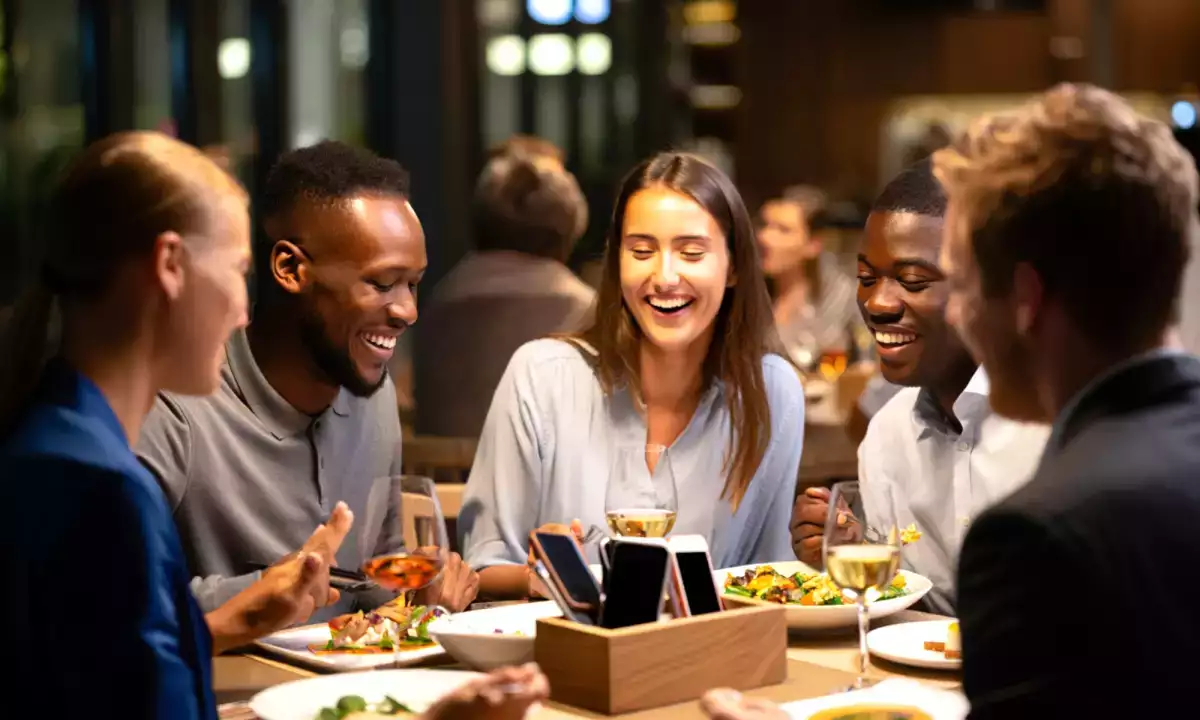
Walking into a restaurant and seeing people talking, laughing, and eating without a phone in their hand is starting to feel weirdly rare. That’s exactly why more and more places are experimenting with something once unthinkable: a no-phones-at-the-table rule.
Why phones quietly ruin the restaurant experience
A smartphone isn’t just a tool; it’s a constant stream of stimuli. Even when it’s face down on the table, part of your attention stays hooked on it. That means:
- less focus on flavors and textures,
- less real listening,
- less emotional connection to the moment.
Many restaurateurs who have tried phone-free nights say the same thing: without phones, guests talk more, taste more, and rush less. The meal stops being something to “capture” and turns back into something to live.
Restaurants are already testing the “no phone” idea
This isn’t just theory. Around the world (and increasingly in the U.S.) restaurants are playing with different versions of the phone ban, sometimes even turning it into a game or reward:
- Some ask guests to drop their phones in a box at the beginning of the meal and offer a free drink, dessert, or small discount as a thank you for staying present.
- Others don’t go as far as a ban, but politely discourage photos and scrolling, especially in small, intimate dining rooms.
- A few more experimental spots build the rule into the whole experience: phones handed over at the door so guests can fully immerse themselves in a tasting menu or “dinner as a show” concept.
- In busy noodle shops or ramen joints, the rule is almost practical: no phones so people eat while the food is hot and tables keep moving.
The details vary, but the intention is the same: less screen, more table.
What actually changes for diners?
People who try a phone-free dinner are often surprised by how different it feels:
- Conversations go deeper because there’s no screen to hide behind during silences.
- The food seems more flavorful and memorable when you’re not mentally composing the caption.
- Time feels a bit slower; in a good way. You walk out with the sense of having really been there, not just “checked in.”
Many say that after one good restaurant experience without a phone, they start trying the same thing at home: stack the phones, put them in another room, or at least keep them off the table.
The criticism (and the middle ground)
Not everyone loves the idea. Some see the phone ban as:
- too restrictive,
- a bad fit for parents who need to be reachable,
- or simply out of touch with the fact that sharing food online is, for many, part of the fun.
That’s why plenty of restaurants choose a softer approach:
- encouraging guests to take their photos at the start, then put the phone away,
- asking to avoid loud calls and long videos,
- or having optional phone-free sections or nights instead of a hard rule.
This middle ground respects digital habits while still protecting the quality of the moment at the table.
And you, how would you feel about it?
Would you enjoy walking into a restaurant knowing that, for the length of the meal, no one at your table will be half-elsewhere on their phone? Or does banning smartphones feel like going too far, especially if you like taking photos or need to stay reachable?
If you’ve ever eaten in a restaurant that discouraged or banned phones, think back:
- Did you talk more?
- Notice the food more?
- Leave with a different feeling than usual?
It’s a small rule that touches a big habit and maybe, for a couple of hours, it’s a chance to remember how good it feels to give a meal (and the people in front of you) your full attention.
 Daniele Mainieri
Comments
Anon
I think this is a bad idea for people with disabilities. Some folks are non-speaking like being autistic and rely heavily on tech to be able to communicate with others. It also affects people like my dad who needs his phone with him to check his diabetic levels as well!