Over 50? Try these easy breakfast swaps to add more fiber every morning, made easy
Saturday 3 October 2026 10:00 - Vincent Sabourdy
One important thing to note: the goal of about 30 g of fiber per day is a general recommendation for adults, not an amount specifically set for people over 50. Fiber can come from whole grains, fruits, vegetables, legumes, nuts, and seeds and variety matters.
If you prefer a breakfast that’s more protein-focused, you can also check out Petitchef’s selection: 6 quick, protein-packed breakfast ideas to start your day off right.
1. Replace white bread with whole-grain bread
If your morning starts with toast, the simplest change is to choose whole-grain bread instead of white bread. Whole-grain bread allows you to increase your fiber intake without drastically changing your morning routine.
Check the product label and look for a variety where whole grains are among the main ingredients.
Check the product label and look for a variety where whole grains are among the main ingredients.
2. Replace sugary cereals with oatmeal
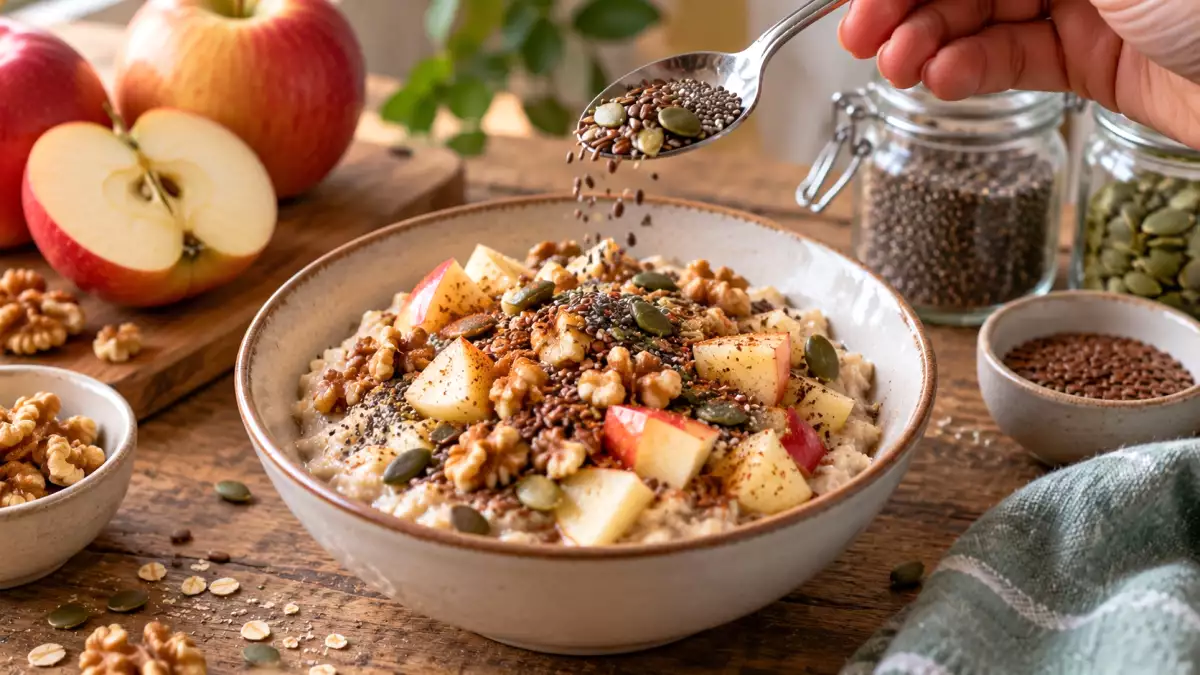
Instead of very sweet breakfast cereals, make a bowl of oatmeal. Oats are a good source of fiber and can easily be combined with fruit, nuts, or seeds.
For a simple breakfast, cook the oats in milk or water and top them with fresh fruit.
For a simple breakfast, cook the oats in milk or water and top them with fresh fruit.
3. Don't eat plain yogurt: add apples, seeds, and nuts
Plain yogurt can quickly become a higher-fiber breakfast if you add an apple, seeds, and nuts. Yogurt itself isn’t a significant source of fiber, so it’s the plant-based ingredients that make the difference.
Cut an apple into pieces and add a moderate amount of nuts and seeds.
Cut an apple into pieces and add a moderate amount of nuts and seeds.
4. Turn a simple open-faced sandwich into a higher-fiber breakfast
A simple slice of bread can be replaced with whole-grain bread with peanut butter and a piece of fruit. This combination provides fiber from whole grains, fruit, and peanuts.
Whenever possible, choose peanut butter that doesn't contain large amounts of added sugar or salt.
Whenever possible, choose peanut butter that doesn't contain large amounts of added sugar or salt.
5. If you prefer an omelet, add vegetables and whole-grain bread
Eggs don't contain fiber, but that doesn't mean you have to give up omelets. Add vegetables to your omelet and serve it with whole-grain bread.
Bell peppers, tomatoes, mushrooms, spinach, or onions are a few simple ways to incorporate plant-based sources of fiber.
Bell peppers, tomatoes, mushrooms, spinach, or onions are a few simple ways to incorporate plant-based sources of fiber.
30 grams of fiber a day: What does that actually mean?
The British recommendation is about 30 g of fiber per day for adults. This is not a recommendation specifically for people over 50.
You don’t even need to get the entire amount at breakfast. It’s more practical to include a variety of fiber sources throughout the day.
You don’t even need to get the entire amount at breakfast. It’s more practical to include a variety of fiber sources throughout the day.
Increase your fiber intake gradually, and don't forget to drink plenty of fluids
If your current diet is low in fiber, don’t try to increase your intake suddenly from one day to the next. A rapid change can lead to bloating, gas, and abdominal discomfort.
Gradually incorporate more whole grains, fruits, vegetables, nuts, and seeds, and drink plenty of fluids. If you have a bowel condition or are following medical dietary recommendations, talk to your doctor or dietitian before making any major changes to your diet.
Gradually incorporate more whole grains, fruits, vegetables, nuts, and seeds, and drink plenty of fluids. If you have a bowel condition or are following medical dietary recommendations, talk to your doctor or dietitian before making any major changes to your diet.
Five simple changes for breakfast
White bread → whole-grain bread.
Sweet cereals → oatmeal.
Plain yogurt → yogurt with apples, seeds, and nuts.
Plain toast → whole-grain bread with peanut butter and fruit.
Plain omelet → omelet with vegetables and whole-grain bread.
Small, consistent changes can help increase your daily fiber intake, especially if you continue them at your other meals as well.
Sweet cereals → oatmeal.
Plain yogurt → yogurt with apples, seeds, and nuts.
Plain toast → whole-grain bread with peanut butter and fruit.
Plain omelet → omelet with vegetables and whole-grain bread.
Small, consistent changes can help increase your daily fiber intake, especially if you continue them at your other meals as well.
 Vincent Sabourdy
Co-founder and publishing director of Petitchef, I am above all passionate about cooking and the internet.
I make the best crêpes on the street.
I love accessible recipes, practical advice, and culinary news.
My goal: to offer the best possible culinary website to make cooking a pleasant and shared experience.
I make the best crêpes on the street.
I love accessible recipes, practical advice, and culinary news.
My goal: to offer the best possible culinary website to make cooking a pleasant and shared experience.
Comments