Serve soft ice cream right from the freezer: one super-simple trick every host needs to know
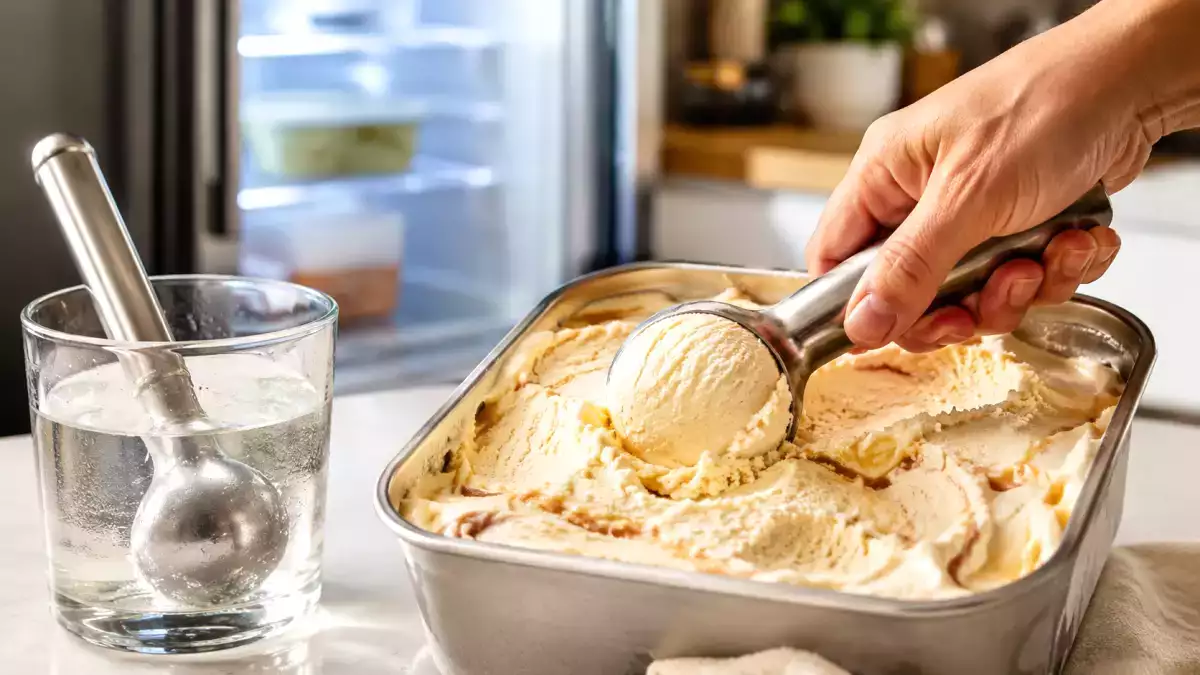
Open the freezer, grab the tub of your favorite ice cream, and dig in with enthusiasm. Or at least you try to. The ice cream is so hard that the spoon seems about to bend, and your desire to make a nice bowl of ice cream risks turning into a mini test of strength.
Leaving it on the table for several minutes might seem like the easiest solution, but the result is often uneven: the edges start to melt while the center remains as solid as a block of ice. Fortunately, there’s a quick way to serve ice cream straight from the freezer without compromising its creaminess.
How can you soften ice cream right after taking it out of the freezer?
The trick is to warm up the scoop, not the ice cream. Simply fill a tall glass with hot water, dip the spoon or scoop in it for a few seconds, and dry it thoroughly before using it.
The slightly warm metal glides more easily through the frozen surface, allowing you to scoop the ice cream without having to wait for the entire container to soften.
The process is very simple:
- fill a glass with hot water, but not boiling water;
- dip the scoop in for about 10 seconds;
- dry it thoroughly with a clean dish towel;
- push it into the ice cream with a smooth, continuous motion;
- repeat the process before scooping each new scoop.
It’s important to always dry the scoop. Water droplets that get into the ice cream can freeze and cause small ice crystals to form.
How long should ice cream sit out before serving?
When the container is particularly hard, you can let the warm spoon sit for a short while at room temperature. Three to five minutes are usually enough, especially if the container isn’t very large.
There’s no need to wait for the ice cream to soften at the edges. The goal is to make the surface just a little easier to work with, while keeping the rest of the ice cream cold and firm.
The timing may vary depending on several factors:
- the temperature setting in the freezer;
- the amount of ice cream remaining in the container;
- the presence of ingredients such as chocolate, nuts, or cookies;
- the percentage of sugar and fat;
- the type of ice cream— artisanal or store-bought.
A rich, creamy ice cream generally tends to soften sooner than a sorbet, which contains more water and can become particularly firm when stored at very low temperatures.
Can you soften ice cream in the microwave?
The microwave seems like a tempting shortcut, but it risks heating the ice cream unevenly. Some parts may start to melt while others remain completely frozen. Once the container is returned to the freezer, the melted parts can refreeze, forming ice crystals and altering the texture.
For this reason, it’s better to warm the utensil or let the container sit briefly on the kitchen counter. This way, you can work with only the amount you need, without subjecting the entire container to a sudden temperature change.
Why does ice cream get too hard in the freezer?
Ice cream doesn’t freeze like a simple ice cube. Its texture depends on the balance between water, sugars, fats, and air incorporated during preparation.
When a home freezer reaches very low temperatures, the water in the ice cream solidifies more. Some ice creams may therefore become harder, especially if they contain little sugar or fat.
The position of the container can also make a difference. Placing it near the back wall or close to the cold air vents can expose it to colder temperatures than other areas of the freezer.
How should you store ice cream to keep it creamy?
To prevent it from becoming too hard or forming ice crystals, it’s best to keep it tightly sealed at all times. Before replacing the lid, you can place a sheet of parchment paper directly on the surface of the ice cream, applying light pressure.
This small barrier limits contact with the air and helps reduce the formation of surface ice. The container should also be stored in an area of the freezer where the temperature remains stable, avoiding the door, which is constantly exposed to warmer air whenever it is opened.
It’s also advisable not to leave the container out for too long. Repeatedly thawing and refreezing the ice cream alters its texture and can turn a velvety cream into a less uniform mixture.
When the ice cream just won't cooperate
Ice cream that’s too hard isn’t necessarily spoiled, it’s often just a result of the freezer’s temperature and the ice cream’s ingredients. Knowing the right way to handle it helps you avoid unnecessary waiting, watery textures, and tubs left out of the freezer for too long.
A few simple steps and careful storage make all the difference. This way, the ice cream retains its creaminess longer and can be served easily, even when it initially seems reluctant to cooperate.
 Leandra Masha
Comments