Shopping for tuna? Simple supermarket tips to choose lower-mercury cans and quick habits to adopt
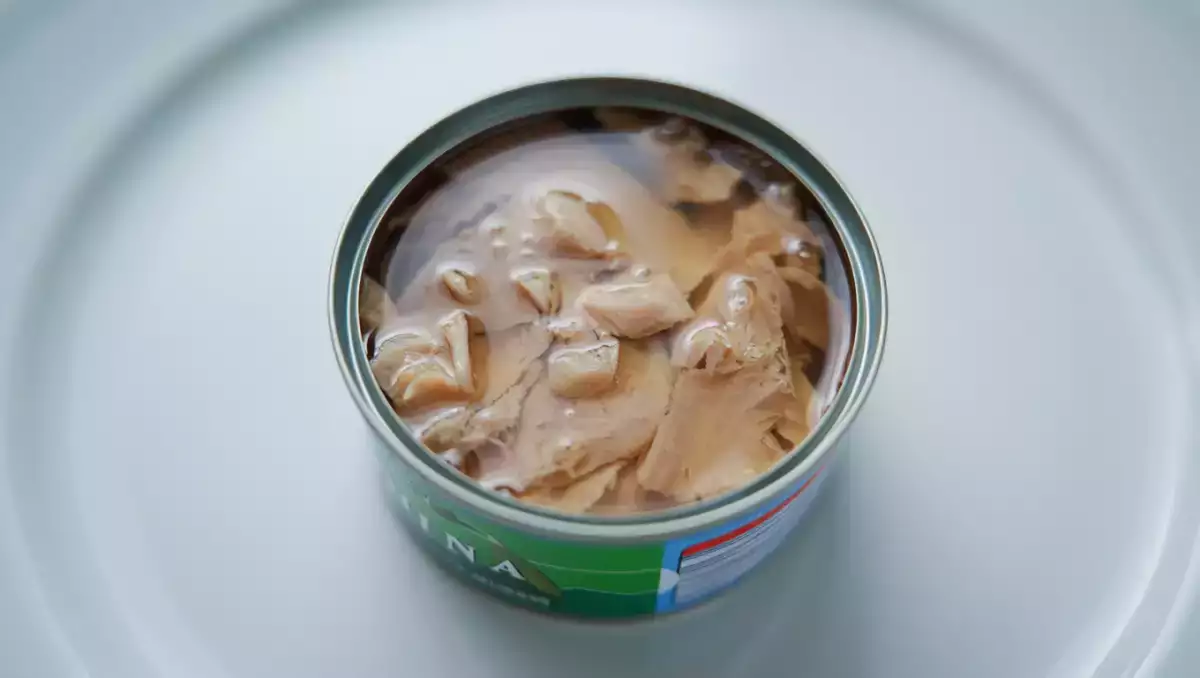
Convenient, rich in protein, easy to slip into a salad, pasta or sandwich... tuna is clearly one of the star products in many kitchens :)
The problem is, it's also a frequent topic of discussion when it comes to mercury.
And with good reason: some tuna can contain significant quantities of this heavy metal, especially when they belong to large predatory species.
So should we stop eating them altogether? Not necessarily.
But learning to choose better can really make a difference.
Why does tuna contain mercury?
Mercury is a metal naturally present in the environment, but industrial activities have greatly increased its presence in the oceans.
Once in the water, it transforms into methylmercury, a particularly problematic form that accumulates in marine organisms.
And the longer a fish lives and eats other fish... the more mercury it accumulates over time.
This is called bioaccumulation.
Since tuna is a major marine predator, it is logically among the fish most affected.
According to ANSES (French Agence nationale de sécurité sanitaire), exposure to methylmercury occurs mainly through consumption of fish and seafood, particularly large predatory fish such as tuna, swordfish and shark.
Not all tuna are created equal
And this is THE important point to remember.
Because in the supermarket, under the word "tuna", there are actually several different species.
Some are much higher in mercury than others.
White tuna (albacore or yellowfin): more concerned
Large tuna, such as albacore, yellowfin and bluefin, live long lives and reach large sizes.
As a result, they accumulate more mercury.
Canned albacore tuna is often richer in methylmercury than the small tuna used in some "skipjack" tuna preserves.
Skipjack: often the best choice
Skipjack tuna is generally considered one of the best compromises.
Why?
Because it's smaller, lives shorter and therefore accumulates fewer heavy metals.
It's often the one found in canned tuna "chunks" or in certain more affordable brands.
When the species is indicated on the packaging, choosing skipjack is often a good strategy!
Looking at the species on the label changes everything
The problem is that many consumers never look at this information.
Yet it's often indicated in small print on the can.
Here are some useful names to look out for:
To be preferred more often :
- Skipjack tuna
- Skipjack
- Katsuwonus pelamis
Limit more often:
- Albacore tuna
- Yellowfin
- Bluefin tuna
Fresh tuna is often heavier than canned tuna
It's a common misconception that fresh tuna is necessarily "better".
Nutritionally, it can indeed be interesting.
But when it comes to mercury, large fresh tuna steaks often come from larger, more contaminated species.
Some analyses show that concentrations can be much higher in some fresh tuna than in small canned skipjack.
Pregnant women and children must be particularly vigilant.
Methylmercury can affect the development of the nervous system, especially in the foetus and young children.
For this reason, health authorities recommend that pregnant women limit their consumption of large predatory fish.
ANSES advises varying fish species and limiting consumption of the most contaminated fish.
The same applies to young children, whose bodies are more sensitive to repeated exposure to heavy metals.
Should I stop eating tuna?
No.
Because fish is still a very interesting food from a nutritional point of view.
Tuna provides :
- Quality proteins
- Omega-3
- Vitamin D
- Selenium
- and several essential minerals
The real challenge is not to totally eliminate tuna... but to avoid excessive and repeated consumption of the most contaminated species.
The best strategy: vary the fish
This is probably the most important piece of advice.
Instead of eating tuna several times a week, it is better to alternate with other fish that are generally less contaminated:
- Sardines
- Mackerel
- Herrings
- Trout
- Salmon
- Anchovies
In addition to often being lower in mercury, these fish are also excellent in omega-3!
 Adèle Peyches
Comments