Should you peel mushrooms before you cook them? Simple rules to help you decide when to peel
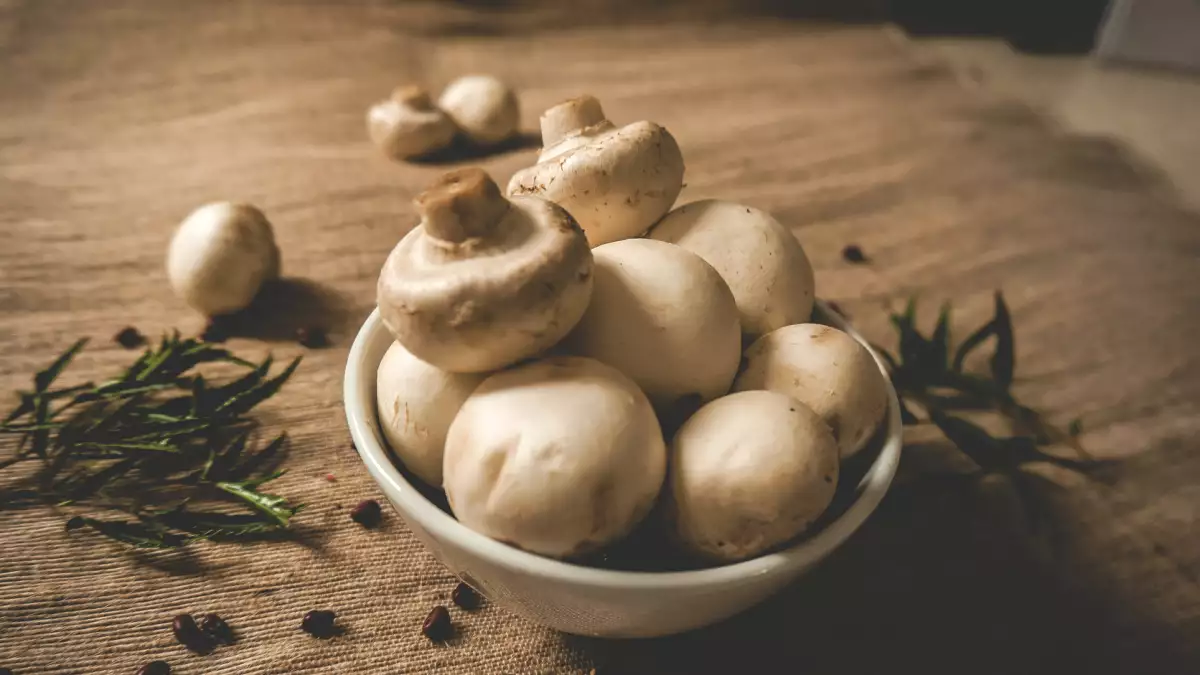
There are certain cooking techniques we repeat without really remembering who taught them to us. Peeling a button mushroom might be one of them: you lift that thin layer from the cap with the tip of the knife, pull it gently, and a white, smooth, almost flawless surface appears underneath. It seems logical to think that the mushroom is now cleaner and better prepared for cooking.
But it’s one thing for it to look neater and quite another to actually need peeling. Are we removing dirt, a tough part, something that shouldn’t be eaten… or simply a perfectly edible layer? The answer depends less on the knife than on the condition of the mushroom and what we plan to do with it.
What are we removing when we peel a mushroom?
The common button mushroom, Agaricus bisporus, has a thin outer layer on its cap that is completely edible. It is not a tough or fibrous skin that needs to be removed for the mushroom to be pleasant to eat. In a fresh specimen, it can be cooked perfectly with this layer intact.
In fact, peeling mushrooms means discarding a usable part of the food. A study published in 2017 in European Food Research and Technology separately analyzed the stem, the peeled cap, and the outer layer of white, brown, and portobello mushrooms. Of the parts studied, the outer layer contained the highest amounts of several of the minerals, phenolic compounds, and indole compounds analyzed. The researchers themselves concluded that, from that perspective, removing it was not justified.
That doesn’t make the mushroom skin a nutritional supplement, nor does it mean that peeling it results in a significant loss to our diet. It does, however, debunk a fairly widespread misconception: that the skin isn’t waste that must necessarily be removed.
And should you clean them?
Here's another one of those little, never-ending kitchen debates: how to clean mushrooms without damaging them.
From a culinary standpoint, if mushrooms have only a few traces of substrate on them, a soft brush or a damp cloth will remove them without adding unnecessary moisture. If they’re dirtier, they can be quickly rinsed under the faucet and dried thoroughly afterward. It’s best not to let them soak.
Harold McGee’s famous experiment also showed that mushrooms absorb much less water than their reputation as “sponges” would suggest. And from a food safety standpoint, the general recommendation for fresh produce is to wash them under running water before preparing or eating them. The key for subsequent cooking is not to leave them damp.
Not even the best cookbooks agree
The truth is that even classic cuisine doesn't prescribe a single way to do things.
Julia Child, Simone Beck, and Louisette Bertholle, in *Mastering the Art of French Cooking*, recommend trimming the base of the mushroom, rinsing the mushrooms quickly, and drying them with a cloth before slicing them. They do not include peeling as a standard step. Craig Claiborne goes even further in *The New York Times Menu Cookbook*: in a mushroom salad recipe, he specifically states that the stems should be trimmed but not peeled.
Auguste Escoffier, on the other hand, demonstrates that context matters. In *Le Guide Culinaire*, for stuffed or grilled mushrooms, he instructs readers to wash and dry them without peeling them; for mushroom purée, however, he does call for removing the outer layer. Even within the same classical repertoire, therefore, peeling appears as a technique linked to specific preparations and not as a mandatory step before cooking any mushroom.
Larousse Gastronomique offers another perspective on wild mushrooms: it advises preserving their aroma by avoiding both peeling and washing, and by cleaning them first with a damp cloth and then with a dry one. It isn’t exactly referring to the same product as a tray of cultivated mushrooms, but it helps explain why there isn’t a single, universal rule in cooking.
So, when does it actually make sense to peel them?
Although peeling a fresh button mushroom isn’t generally necessary, there are circumstances in which doing so makes culinary sense.
The first is purely aesthetic. Once peeled, the cap becomes exceptionally white, uniform, and smooth. In a dish where the mushroom is used whole, sliced very thinly, or plays an important visual role, a chef may deliberately seek that finish. It’s not a matter of safety or cleanliness—it’s presentation.
The second reason has to do with the condition of the surface. A mushroom that has been stored for a few days may have small areas that are dry, scuffed, or slightly discolored. If the rest of the mushroom is firm, smells good, and looks fresh,removing that layer can improve the final appearance and mouthfeel. Some chefs do the same with large mushrooms whose surface has lost its delicacy.
That doesn’t mean peeling can revive a past-its-prime mushroom. If it’s slimy, gives off an unpleasant odor, or shows obvious signs of spoilage, removing the outer layer won’t solve the problem.
There’s a third reason: a specific recipe may call for an especially delicate texture. In a refined dish, a very clean garnish, or certain classic presentation techniques, removing the thin outer layer can be part of the preparation. It’s a technical decision to achieve a particular result, not a rule to apply to Tuesday’s omelet.
And finally, there’s stubborn dirt. If a localized spot doesn’t come off easily with a brush or cloth, removing a small surface portion may be more practical than damaging the entire mushroom by trying to scrub it. Peeling the entire cap to remove a small spot, on the other hand, is usually unnecessary.
The important part happens after peeling
When it comes to sautéed mushrooms, whether or not you peel them matters much less for the final result than what happens next in the pan.
They must be thoroughly dry, the pan must be hot enough, and the mushrooms need space. If we pile too many together, the water they release accumulates, and they end up steaming in their own moisture before they can brown. This concern for drying them thoroughly is already evident in classical cuisine and still makes much more sense than making peeling a requirement.
So the next time a tray of mushrooms appears on the counter, it’s worth taking a look at them before reaching for the peeler. If they’re fresh and their surface is in good condition, it’s usually enough just to clean them. Peeling them is reserved for when there’s a specific reason to do so.
 Patricia González
Comments