Smoked salmon: pitfalls to avoid and guidelines for making the right choice
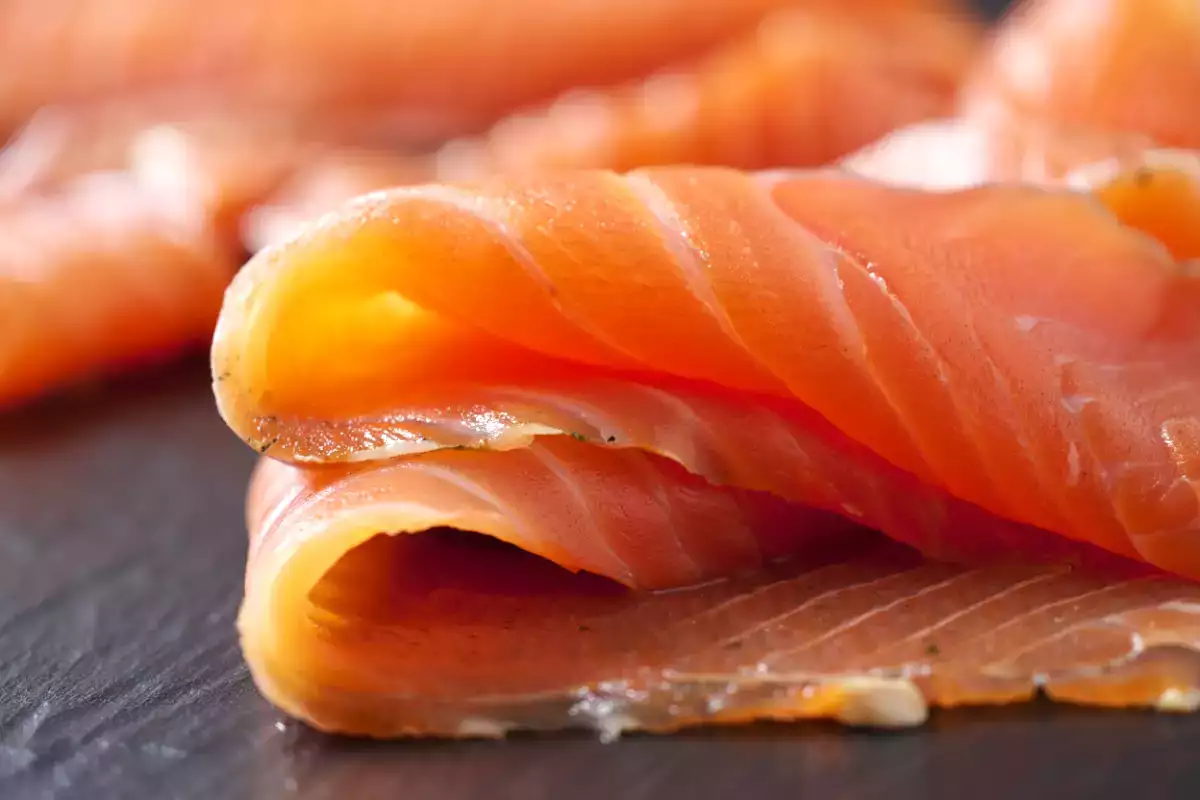
Smoked salmon is a staple on American holiday boards - think Christmas brunch, New Year’s Eve platters, bagels and lox on January 1st - and it shows up all year long in salads, toasts, and “fancy but easy” dinners. But behind that chic, festive image is a much more complicated reality. Origin, farming conditions, processing methods, even food-safety controls… not all smoked salmon is created equal.
A popular but controversial product
In the U.S., salmon is big business: Americans eat roughly 1.9 kg (about 4.2 lb) of salmon per person per year, and the U.S. is now the largest market in the world for Atlantic salmon, accounting for about 22% of global consumption.
Most of the smoked salmon you see in U.S. grocery stores is farmed Atlantic salmon imported from Chile, Norway, Canada, and Scotland, even though the salmon actually caught in U.S. waters (mainly Alaska sockeye) is overwhelmingly wild.
Intensive farming with controversial treatments
This huge demand comes with controversy. Open-net salmon farms have been criticized for high stocking densities, sea-lice infestations, chemical treatments, escapes into the wild, and pollution under the pens, raising environmental and animal-welfare concerns.
On top of that, smoked salmon is a ready-to-eat product, so if hygiene slips at any point in processing, there’s a real food-safety issue: in the last few years, the FDA has overseen multiple Listeria-related recalls of cold-smoked salmon sold under major retail brands like Biltmore, Kirkland (Costco), and Haifa.
A diet that disrupts the entire marine chain
Salmon remains a carnivorous fish. In fish farms, they are fed on flours and oils derived from small fish such as anchovies and sardines. The problem is that these species are the staple diet of many fish, birds and marine mammals.
Some of this industrial fishing is carried out in developing countries, particularly in West Africa, often to the detriment of local fishermen. To circumvent these criticisms, some producers replace these meals with soya, indirectly contributing to deforestation in South America.
Heavy metals and antibiotics: another point of vigilance
Another concern is salmon feed, which is frequently contaminated with PCBs, dioxins, mercury and other heavy metals. These contaminants then concentrate in the fatty flesh of the fish.
Chile, the world's leading producer, has also been noted for its massive use of antibiotics following several health crises. This practice has encouraged the emergence of bacterial resistance, to the point where certain brands now use the words "antibiotic-free" as a marketing argument.
How to choose the best quality smoked salmon?
Knowing the species and origin
There is no perfect solution.
Atlantic salmon (Salmo salar), the most commonly smoked, comes almost exclusively from intensive farming.
Wild Pacific salmon (Oncorhynchus), rarer and drier, suffers from overfishing.
No choice is ideal, but knowing the species helps you understand what you're buying.
Check the salting method
A good benchmark: salting with dry salt. This traditional method produces denser, firmer flesh.
Conversely, brine injection salting is often synonymous with spongier, more watery fish. It also artificially increases the weight of the product. If the salmon is salted with dry salt, this is usually indicated... because the product is more expensive.
Pay attention to smoking
Give preference to precise indications such as "smoked with beech, oak or chestnut wood".
Lack of precision may conceal the use of liquid smoke, a vaporized flavoring. In this case, the words "smoke flavoring" must appear in the list of ingredients.
Real smoking is always clearly claimed.
Observe slicing and appearance
Slices should be wide, even, with no brown muscle, fatty streaks, blood spots or visible bones.
Salmon hearts", sliced from the middle of the fish in the Scandinavian style, generally offer better textural quality.
Labels: useful, but not miraculous
- Label Rouge: imposes criteria on farming and processing, but does not guarantee the absence of pollutants.
- Organic: guarantees better farming conditions and a more controlled diet, but here again, the risk of heavy metals remains, as salmon is a predatory fish.
Labels are benchmarks, not absolute guarantees.
Smoked salmon remains a pleasure product, but it deserves to be eaten with care!
Reading labels, knowing how products are made and not just relying on price or marketing claims can help you make more informed choices.
At Christmas, as at the rest of the year, it's better to eat less, but better, by focusing on quality, transparency and products that are more respectful of the environment... and of consumers.
 Adèle Peyches
Comments