Stop eggplants soaking up oil: simple chef-tested tips to make them melt-in-your-mouth reliably
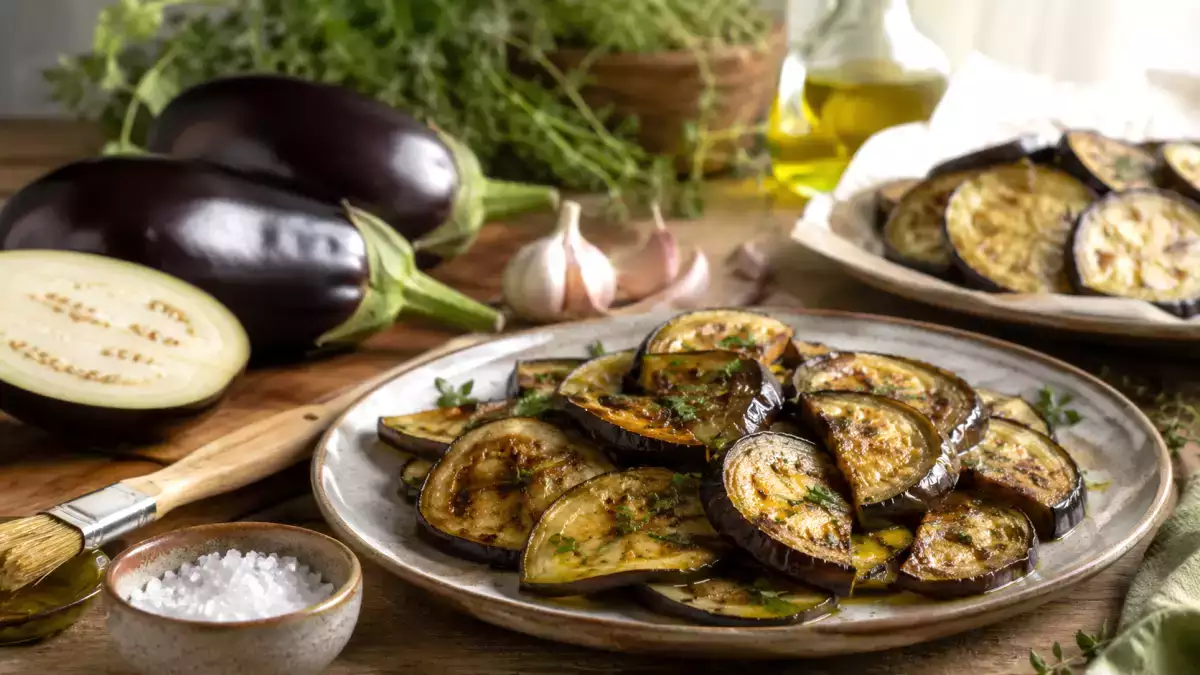
Have you ever wanted to make some beautiful, golden-brown eggplant in a skillet… only to watch your drizzle of oil disappear in three seconds?
Add a little more.
Then a little more.
Then “just a drizzle” more.
And in the end, the eggplants taste good, sure… but they’ve soaked up almost as much oil as a sponge…
Don’t worry, it’s not you. Eggplant has very porous flesh that easily absorbs fat, especially when sliced or cubed. But here’s the good news: with a few simple tricks, you can make tender, flavorful eggplant without drowning it in oil!
The simplest tip: pre-cook them
If you want tender eggplant without using too much oil, the best trick is to pre-cook them before browning them.
A few minutes of steaming, microwaving, or even cooking in an air fryer will tenderize the flesh. Then, when you pan-fry them, they’ll need much less oil to cook properly.
It’s kind of a clever shortcut: let the pre-cooking do the work, then use the skillet just for the flavor, color, and that lovely golden crust we love.
The result: eggplants that are tender on the inside, lightly charred on the outside, but much less greasy. And honestly, whether in a stir-fry, with pasta, or in a warm salad, it makes all the difference ;)
Salt: An Old-Fashioned Remedy That Really Works
Another well-known method: draining the eggplants.
Cut them into rounds or cubes, sprinkle them lightly with salt, then let them sit for about 20 minutes. They’ll release a little water. Next, just rinse them quickly if needed, then be sure to dry them thoroughly with a clean dish towel or paper towels.
This step helps tenderize the flesh and reduces the “sponge-like” effect during cooking. It’s especially useful if you’re preparing eggplant slices for grilling or pan-frying.
Be careful, though: don’t use a mountain of salt! The idea isn’t to turn the eggplants into salty chips, but simply to help them lose a little moisture.
Do not pour the oil directly into the pan
Here’s a simple little mistake: putting a lot of oil in the pan, then adding the eggplant.
The problem is that the first pieces to come into contact with the oil will soak it all up right away. The others will stay dry, and you’ll be tempted to add even more.
Our tip: Instead, brush the eggplant with a little oil before cooking. That way, the oil is distributed more evenly on all sides, and you’ll use much less of it.
You can also toss the eggplant pieces in a bowl with a small amount of oil, spices, garlic, paprika, thyme, or oregano. Only then should you add them to the very hot skillet.
It’s simple, but really effective :)
A very hot skillet is essential
If the pan isn’t hot enough, the eggplants will cook slowly, soften, release water… and absorb more oil.
Ideally, start with a hot skillet over medium-high heat. Add the eggplants in a single layer, without crowding them, then let them brown gently before stirring.
Yes, you may need to cook them in two batches if the pan is small. But that’s better than putting everything in at once and ending up with eggplants simmering in their own juices.
Here’s a handy tip to keep in mind: the less you stir the pieces at the beginning, the more time they have to brown. And the more they brown, the more flavorful they become!
For a melt-in-your-mouth result, be sure to cover it
Once the eggplants are nicely browned, you can turn down the heat and cover them for a few minutes.
It’s a simple trick, but it helps a lot. The steam created under the lid finishes cooking the inside without needing to add any more oil.
The result is tender eggplant, perfect for serving with rice, pasta, grilled meat, fish, or even as a topping for toast.
If they start to stick a little, add a tiny spoonful of water instead of another drizzle of oil. It will create steam and help the eggplants finish cooking without making the dish too heavy.
In the oven or in the air fryer?
When you want tender eggplant that cooks on its own, the oven and the air fryer are both great options.
Simply slice the eggplants, brush them lightly with oil, add the seasonings, and let them cook. They’ll turn out tender, golden, and almost caramelized; without having to flip them in a pan full of oil.
The air fryer is especially handy when it’s hot outside or when you want to save time. It lets you achieve a roasted texture with very little fat, and without having to turn on the big oven.
Perfect for preparing eggplant to add to a salad, sandwich, pasta dish, or spread.
So, what's the takeaway?
To keep the eggplants from absorbing too much oil, the secret is simple: prepare them a little while before cooking.
You can let them drain, pre-cook them, brush them with oil instead of pouring it directly into the pan, use a very hot pan, and then cover them to finish cooking gently.
With these simple steps, the eggplants stay tender, flavorful, and much less greasy. And then, you won’t need to empty the whole bottle of olive oil to enjoy a delicious meal ;)
Now that you know all this, all that’s left to do is grab a nice eggplant, a little garlic, some herbs… and whip up a sunny dish just the way we like it!
 Adèle Peyches
Comments