Stretchflation: price increases hidden behind larger formats
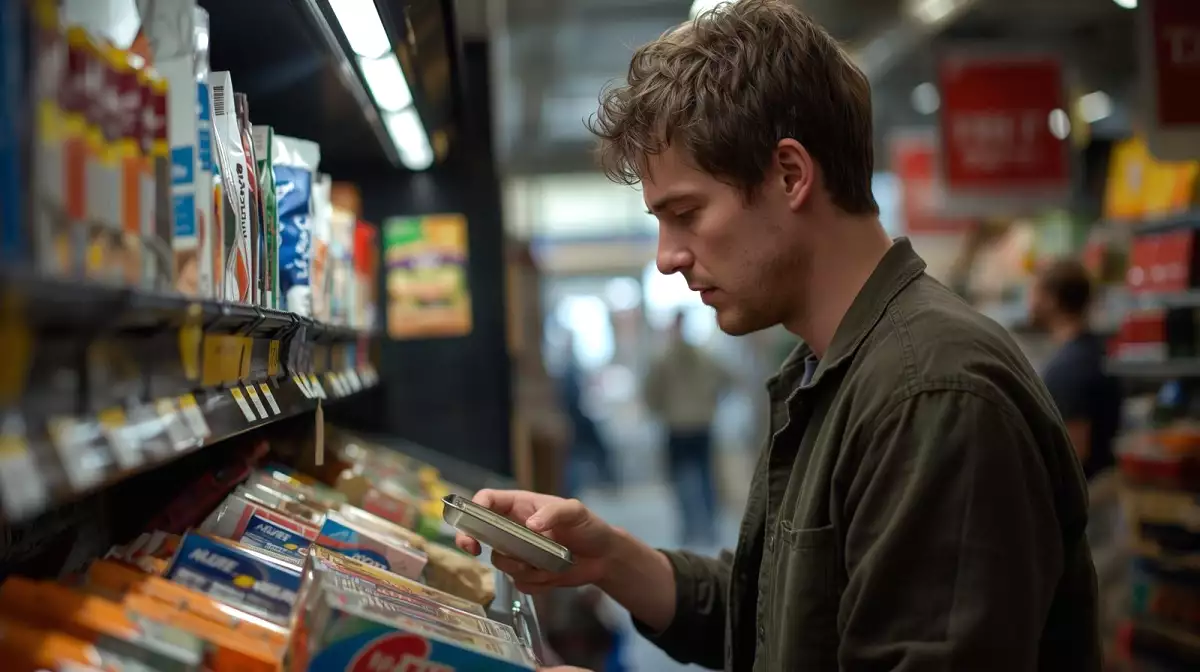
Much has already been said about shrinkflation. You buy the same product as before, at the same price, except it contains less. And you don't always realize it right away...
But another practice is also beginning to make itself felt on the shelves. It's more discreet, and even gives the impression of being good news.
In a survey conducted by foodwatch, the consumer protection association, this method is highlighted: stretchflation. The principle is simple. The size of a product increases slightly, often by just a few grams, but the price goes up even more. As a result, you get the impression you're getting more... when in fact you're paying more per kilo.
What exactly is stretchflation?
The word stretchflation comes from stretch and inflation. It refers to a technique that consists in increasing the weight of a product, while applying a price increase greater than the increase in quantity.
In other words, the size is increased, but the price per kilo or liter climbs even faster.
And this is precisely what foodwatch is denouncing. Because, at first glance, it looks like a win-win situation for the consumer.
Why does it feel like a bargain?
Because a bigger package often gives a positive impression. We tell ourselves that the product is more "generous", that it will last longer, or that it's a better plan.
And that's exactly what marketing promotes, with claims like "more generous format" or "new format, more of".
The problem is that the price increase is not displayed in any obvious way. It's not explained. And it's obviously not advertised as such.
The price per kilo is displayed... but an essential piece of information is missing
On paper, you'd think this wouldn't be a problem, as the price per kilo or liter is always indicated on the shelf.
But in reality, it's much more complicated than that.
When a product changes format, the old version disappears from the shelves. And it's virtually impossible to remember the price per kilo of the old format, since it's no longer displayed anywhere.
As a result, even if the information is there, it doesn't necessarily help you spot the increase. And we continue to buy as usual.
That's why stretchflation is hard to detect.
Shrinkflation, cheapflation, stretchflation: what are the differences?
Foodwatch explains that stretchflation is part of a series of practices that make supermarket prices less legible.
To put it simply:
- Shrinkflation is when we reduce quantity without lowering price.
- Cheapflation is when you change the recipe to reduce costs, while keeping the same price.
- Stretchflation is when you increase the quantity slightly, but the price rises more sharply, so the price per kilo goes up.
In all three cases, the aim is the same: to make it easier to pass on a price increase.
What foodwatch denounces behind stretchflation
Beyond the products concerned, foodwatch explains that the heart of the problem lies in the food industry's lack of transparency.
Packaging changes little. Formats evolve on the sly. And brands don't make it clear that there has been a change in weight or price, or in what direction.
According to foodwatch, this opacity is reinforced by vague rules, which do not oblige brands to clearly indicate changes in quantities.
Under these conditions, it becomes very difficult to understand what you're really buying, and what you're paying for.
How to avoid being duped?
Fortunately, there's a very simple reflex.
Always look at the price per kilo or liter.
Even if the format seems bigger. Even if the packaging has barely changed. Even if the product displays a "new format".
This is the most reliable indicator of a price increase.
Another tip can also help: on your everyday products, the ones you buy all the time, try to keep in mind an idea of the usual price. You don't have to remember everything. But for a few products, it's already easier to spot an increase.
Stretchflation is a price increase hidden behind a slightly larger format
You may think you're getting more, but in reality, the price per kilo or liter often increases disproportionately.
These are the findings of a survey carried out by foodwatch, which condemns an opaque practice that is hard to spot on a daily basis. And today, with inflation and shopping budgets on the rise, it's exactly the kind of thing that annoys people even more.
The only real thing to remember is simple: don't trust the packet, trust the price per kilo.
 Adèle Peyches
Comments