Tennis players' energy snacks during breaks: what they eat and why
After the year-end break, tennis is finally back in the spotlight. The first tournaments of the season once again ignite the attention of fans, and on the horizon is the first big event: the Australian Open, the Slam that opens the year under the sun and heat of Melbourne.
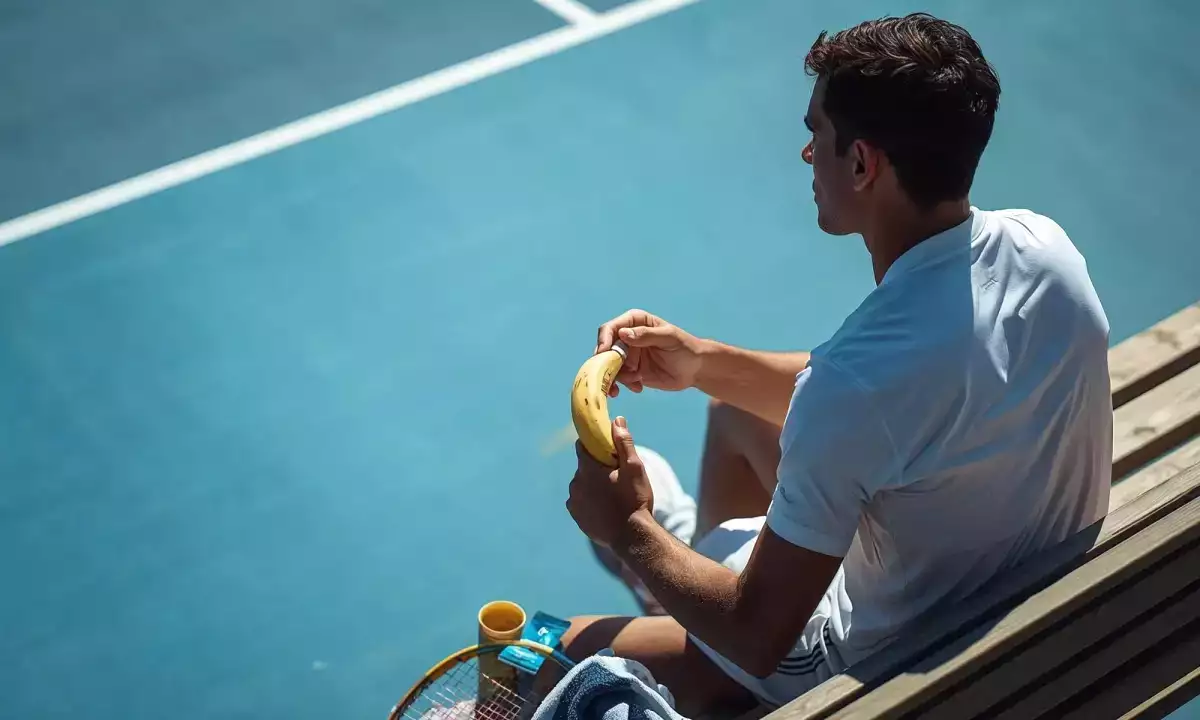
And it is while watching the first matches that many notice a curious detail: what tennis players eat during game breaks. Between court changes, we see bananas, bars, gels, small bottles with colored liquids. Quick, repeated, almost ritualistic gestures. But behind those snacks is a precise strategy. Because during a tennis match, food is never random.
Why breaks are also key times for eating
A tennis match is not a continuous effort, but a sequence of bursts of energy and very short recoveries. This puts pressure on the body's sugar reserves.
According to many sports nutritionists working on the professional circuit, waiting until the end of the match to replenish is a mistake. Breaks then become the only useful time to maintain energy, clarity and continuity.
One does not eat out of hunger, but to avoid the slump before it comes.
The snacks we really see tennis players eating
If you watch the matches carefully, especially in tournaments on cement and with high temperatures, you will notice that the snacks are always the same. That's because they work. Here are the most commonly used energy snacks during breaks:
Banana
This is the signature snack of tennis. It provides easily usable carbohydrates, is digestible even under stress, and contains potassium, which is useful for muscle function.
Soft energy bars
Not crunchy, not high in fat. They are formulated to melt easily in the mouth and provide quick sugars without weighing you down.
Energy gels
Used especially during long matches or tough times. They provide immediate glucose, often accompanied by sodium.
Dates or dehydrated fruit
Small amounts, concentrated energy, fast chewing.
Drinks with carbohydrates and minerals
Not just water: sodium, potassium and sugars are needed to compensate for sweating and energy depletion.
As many sports nutrition professionals explain, the key word is tolerability: a snack must provide energy without creating heaviness, bloating or digestive distractions. On the field, it is not important to eat "more," but to eat what the body can use immediately, especially under stress and in high temperatures.
Why don't they eat "normal food"
During a tennis match, the body is focused almost exclusively on physical exertion. Blood flow is mainly directed to the working muscles, while digestion takes a back seat. This is why foods high in fat, fiber or protein take longer to digest and can cause heaviness, bloating or stomach discomfort, compromising comfort and performance.
Snacks chosen by tennis players have three key characteristics:
- they digest quickly
- they provide immediate energy
- they do not interfere with performance
On the court, satiety and taste take a back seat.
Physical energy yes, but mostly mental energy
In tennis, the mental component is decisive. A drop in blood sugar can lead to:
- loss of concentration
- hasty choices
- increased unforced errors
Energy snacks also help the brain stay sharp at key moments in the match. It is no accident that many players take carbohydrates right before decisive games or tie-breaks.
The role of the team: nutrition studied point by point
Behind every snack we see on the court is not just the habit of the individual player, but the work of an entire team. In major tournaments, such as Slams, many tennis players are followed by sports nutritionists and athletic trainers who study nutrition based on match duration, weather conditions, and style of play.
Some players, for example, increase carbohydrate intake on hot days or choose different snacks if the match is scheduled in the middle hours. This shows that nutrition in tennis is flexible and individualized, not a fixed formula that applies to everyone.
The detail that makes a difference, even off the field
With the return of tennis and the start of the new season, tennis players' snacks are back in the spotlight. They are not a detail, but an integral part of performance.
The message from the court is clear: the right food, at the right time, helps the body perform better. And this is a lesson that applies far beyond tennis.
 Daniele Mainieri
Comments