The Pope's wine disappeared in 48 Hours: the story of the cuvée everyone wanted to taste
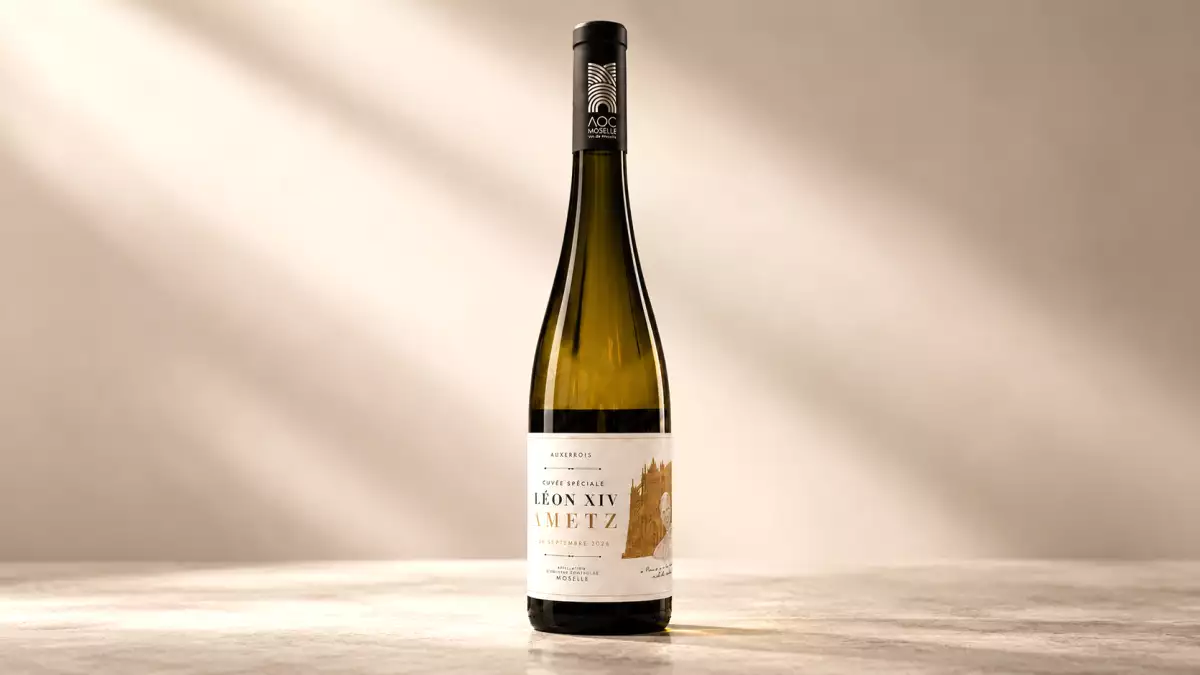
In France, all it took was a small cuvée (created almost on the sly) to turn a papal visit into a story of wine, terroir, and curiosity.
For Pope Leo XIV’s arrival in Metz, a young winemaker from the Moselle region prepared 500 special bottles: they were all gone within 48 hours. It wasn’t a major launch, nor was it a massive production run, but rather a simple, local idea: to bottle a memory, capturing the flavor of the terroir with a label designed to stand the test of time.
A cuvée created for a special visit
The idea came about during a conversation with Archpriest Cédric Triponez. At first, they had even considered a beer, partly because the winemaker had recently started a brewing business. Then wine almost naturally became the obvious choice: because of its connection to Christian tradition, the symbolic value of the vine, and the desire to showcase the region through something more distinctive.
The result? A limited production of 500 bottles, sold through the bishop’s boutique, which attracted attention far beyond expectations. In just two days, the cuvée was already sold out.
Why did the pope's wine sell out so quickly?
The answer lies in a highly effective combination: a limited edition, a rare event, strong symbolic value, and deep local roots. A bottle linked to a papal visit isn’t simply a wine to bring to dinner; it becomes a memento, something to keep in the cellar, give as a gift, or share stories about with friends.
The factors that have sparked curiosity are clear:
- a very limited production run, making it hard to find;
- a direct link to Pope Leo XIV’s visit to Metz;
- a custom label featuring references to the city and the pope;
- a local grape variety, Auxerrois, little known to the general public;
- an affordable price, set at 18 euros, which made the bottle appealing even as a souvenir.
In short: it wasn’t just a bottle. It was a story ready to take home.
What kind of wine is the papal cuvée?
The grape variety highlighted here is Auxerrois, a white variety found in certain areas of eastern France, often overlooked but capable of producing soft, pleasant, and food-friendly wines. In this case, rather than relying on a famous name, the cuvée showcases a local identity.
What is Auxerrois?
It is a white grape variety primarily associated with certain cool regions of Central and Northeastern Europe. It can produce round, delicate wines that pair well with food.
How much does a bottle cost, and where could you buy it?
The sale was linked to the Metz Bishopric’s boutique, as part of the initiatives organized for the papal visit. The proceeds also served a practical purpose: to help finance the event, which involved significant organizational costs.
Can you still buy the Pope’s wine?
According to available information, the initial run of 500 bottles sold out in two days. Barring new stock or private resales, the bottle has quickly become hard to find.
The label, the cathedral, and the value of memory
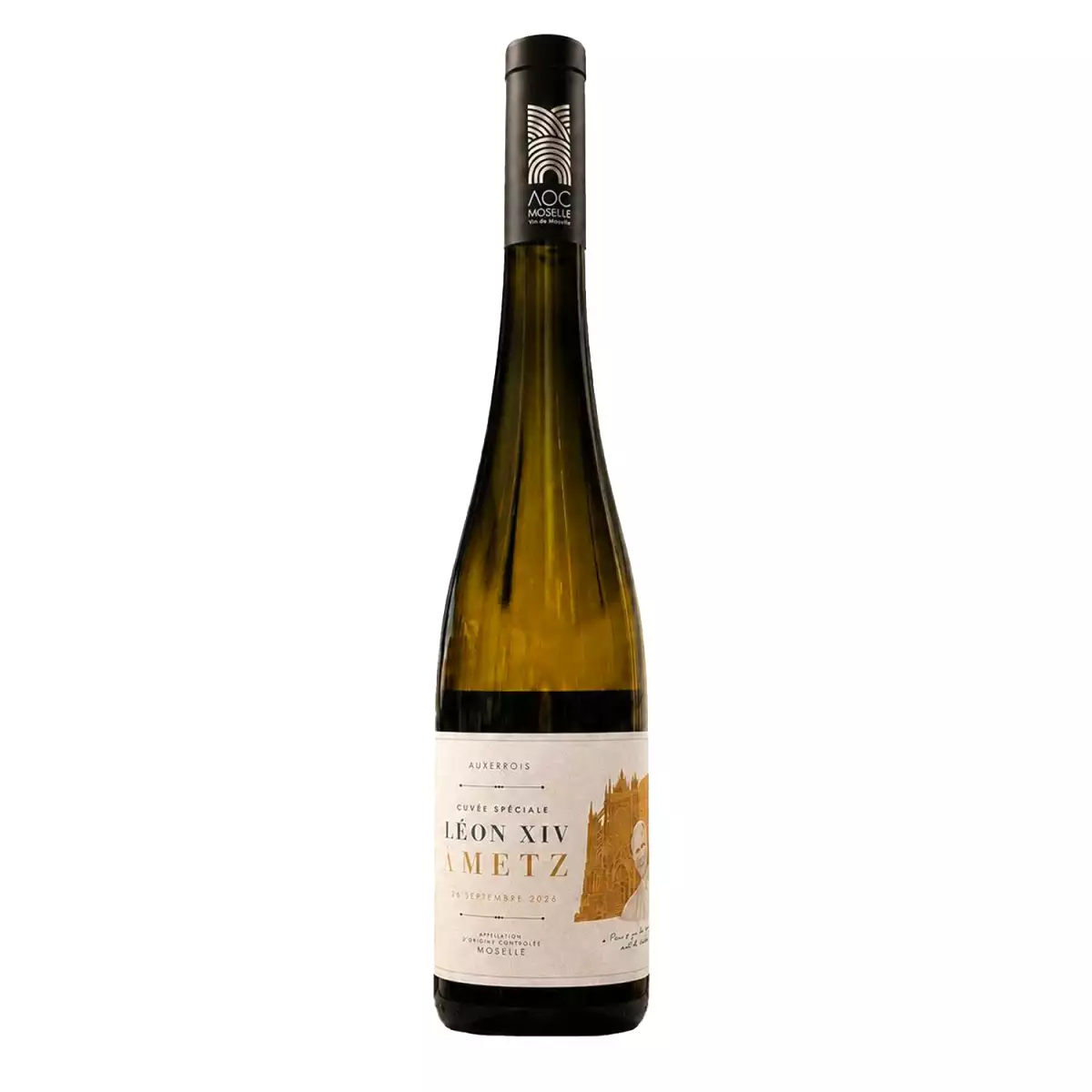
The project came at a rather hectic time for a producer: the height of the harvest. Between grapes to monitor, a bustling winery, and extremely tight deadlines, creating the cuvée required a small team: the diocese, communications, graphic design, printing, and, of course, the domaine.
Why is a commemorative bottle so appealing?
Because it combines two very human desires: to taste something delicious and to preserve a memory. A bottle can remain unopened for years, end up in a display case, be opened with family, or given as a gift.
From the Moselle to wine tourism: a short story with many interpretations
The producer, who has taken over the family estate, is seeking to develop new ventures: craft beer, seminar spaces, hospitality, and wine tourism. In a wine-growing region that receives less media attention than Bordeaux, Burgundy, or Champagne, a story like this can shine a spotlight on a more understated territory.
The interesting point, for those who love wine and food, is precisely this: a special bottle can serve as a gateway to a grape variety, a region, and a different way of experiencing wine.
What does this Papal cuvée teach us about wine today?
Of course, one simple recommendation remains: wine should be enjoyed with curiosity and moderation. But this cuvée clearly demonstrates just how a bottle can become much more than a drink . It can be a souvenir, a culinary tidbit, a gesture of regional identity, and even a small cultural phenomenon.
And in the end, the most intriguing question remains: what did this much-coveted wine actually taste like?Those who managed to buy it hold the answer in their hands. Everyone else, at the very least, has a perfect story to tell at the next toast.
 Daniele Mainieri
Comments