Torta de laranja: how to obtain a juicy Portuguese orange cake roll, worthy of a pastry shop

The Portuguese orange roll named Torta de laranja isn’t just “another jelly roll.” It’s its own thing: a super thin cake you roll up while it’s still warm, made from a batter so liquid it almost looks like a mistake when it goes into the oven... then comes out tender, moist, and bursting with sweet orange flavor that makes you instantly want a second slice. The secret is in what you don’t see: eight eggs (yes, eight) and a short bake that leaves the crumb almost custardy.
And precisely because it’s such a simple dessert, it doesn’t forgive carelessness. There’s no filling to hide an overbaked sponge, no cream to disguise a bad roll. Here, basic technique and a bit of organization are everything.
If you’re looking for a quick dessert that tastes straight out of a Portuguese café (one of those cakes where you cut a slice and are already thinking about the next) this is it. So grab two clean kitchen towels, a rimmed baking sheet, parchment paper and a whisk… and let’s get to it.
What makes this Portuguese roll different?
Unlike the “classic” Swiss roll (which is more spongy and sturdy), this version uses a very fluid batter that sets fast and stays flexible. Cornstarch gives just enough structure without making it bready, butter adds softness, and the orange does the heavy lifting: aroma, freshness, and that unmistakable “Portuguese bakery” vibe that transports you without leaving your kitchen.
The ingredients change everything
The giveaway is right on the ingredient list: eight eggs. It’s not overkill; it’s what creates that soft, almost creamy texture and lets the cake stand on its own without any filling. The cornstarch adds structure without turning it floury, the butter rounds everything out, and the sugar doesn’t just sweeten; it helps form a thin, delicate surface that rolls well and feels great when you bite into it.
Ingredients and materials (for 8 servings)
Ingredients:
- 8 eggs
- 1 cup sugar
- 2 organic oranges
- 2 Tbsp corn starch
- 1 tsp baking powder
- 1/4 cup butter
- 1 oz sugar for decoration
Materials:
- Baking tray/baking sheet
- Greaseproof paper
- Electric whisk or food processor
- 2 clean kitchen towels
Step 1: Beat eggs and sugar
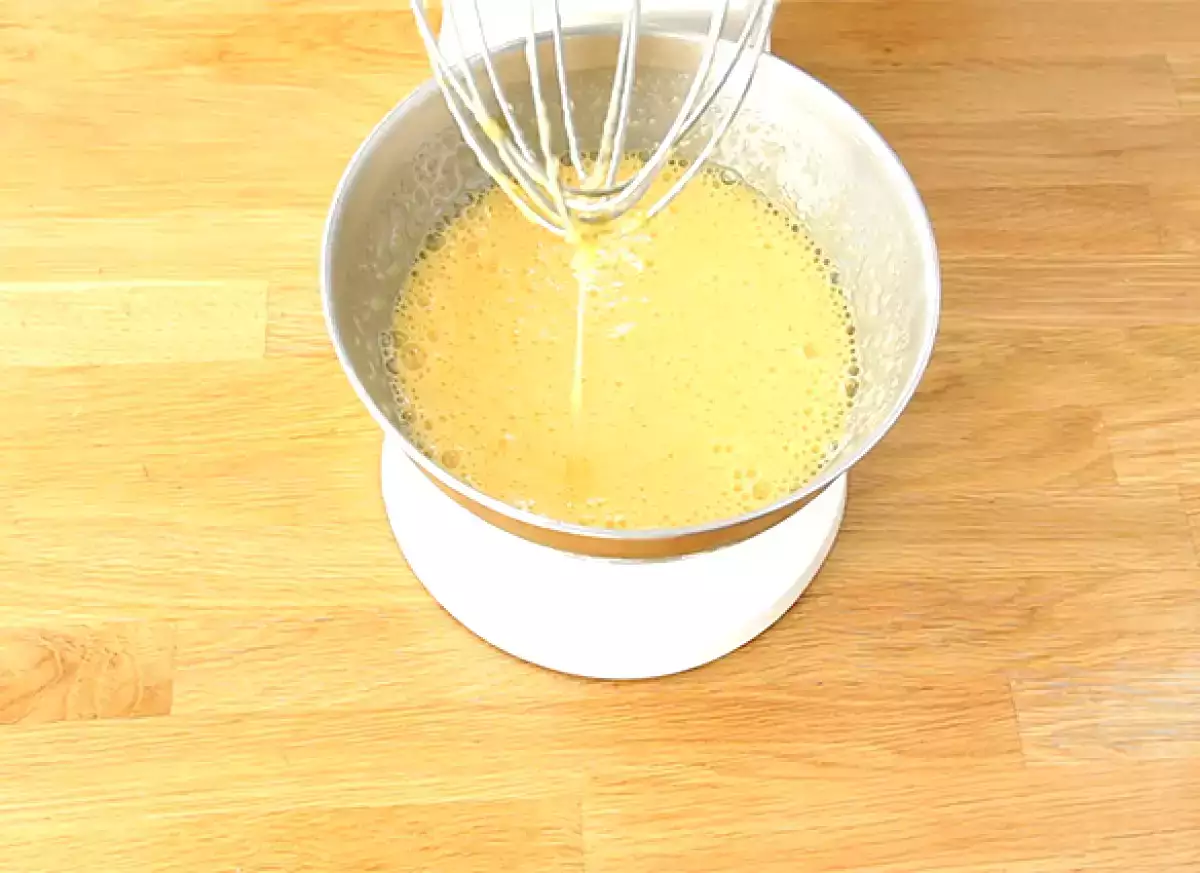
In a large bowl, beat the eggs with the sugar. Add the zest of one orange and the juice of the two oranges.
Here it is important to beat well: you are not looking for a meringue, but a clearer mixture with some volume. This is what helps the result to be thin and not heavy.
Step 2: Incorporate butter and dry ingredients
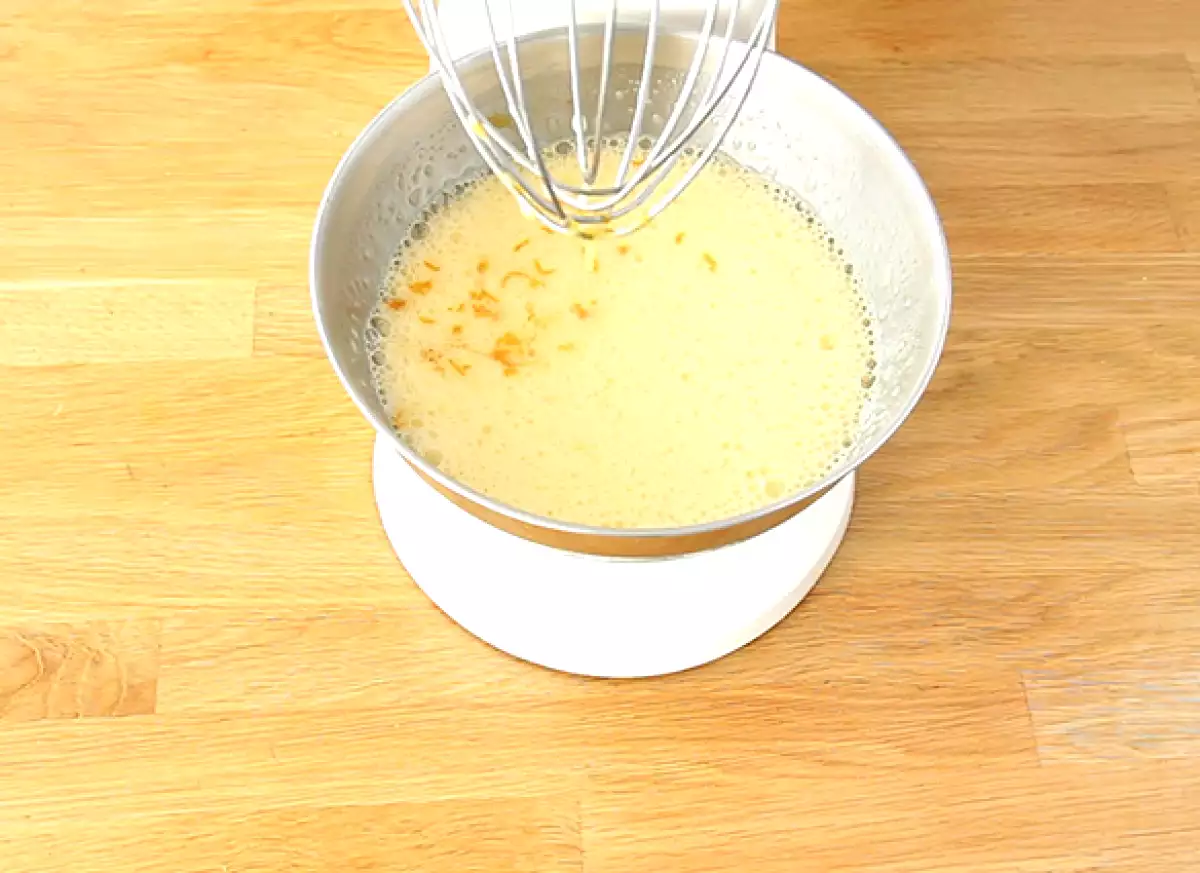
Add the melted butter, cornstarch and baking powder. Whisk until integrated. The mixture may seem very fluid: this is normal. Do not try to "correct" it.
Step 3: Prepare the tray

Grease the tray, place baking paper and lightly grease the paper again. Pour the mixture and spread it as evenly as possible.
Step 4: Short baking

Bake for 15 minutes at 350 °F/180 ºC, with the oven previously preheated. The point is: curdled and elastic. If you dry it too much, it will be tough when rolled.
Step 5: The key moment: unmolding and rolling up
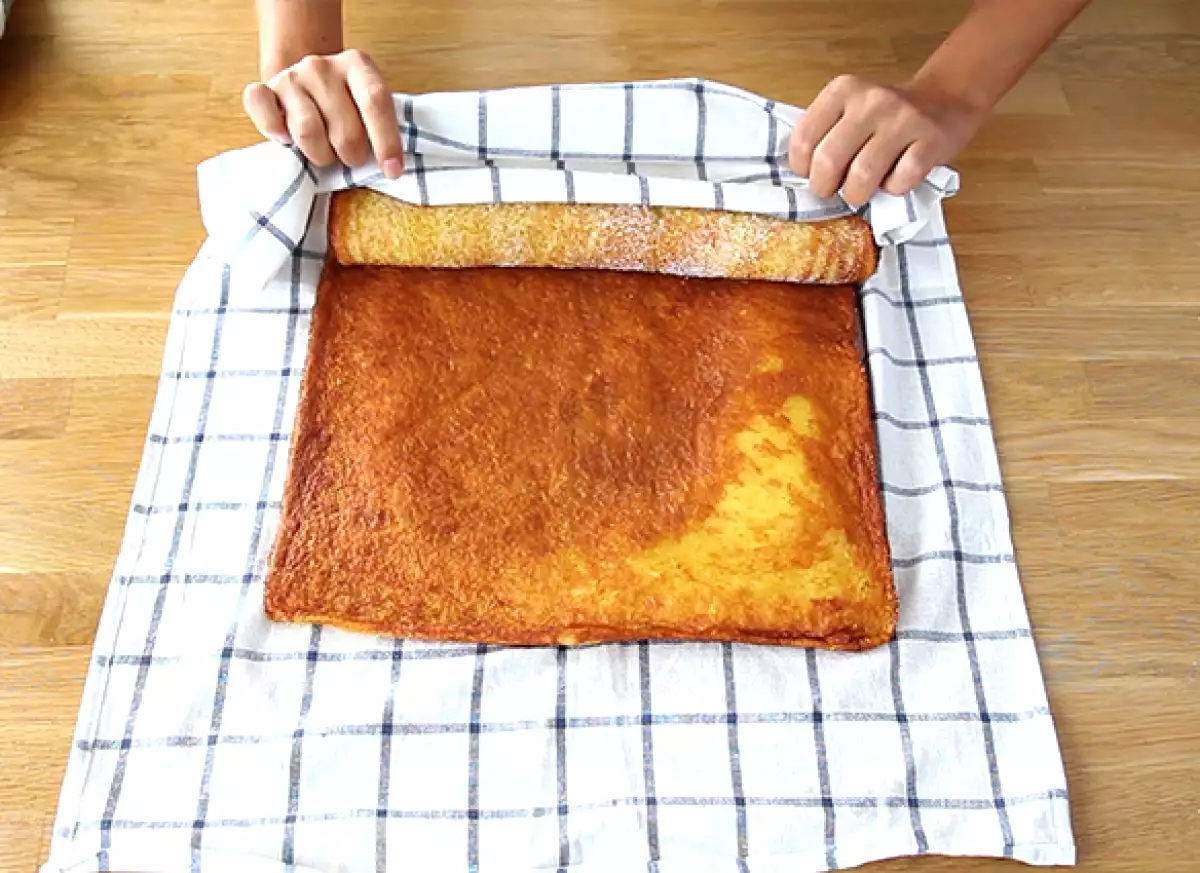
Remove from the pan and unmold immediately on a clean cloth. Sprinkle sugar over the surface.
Place another cloth on top and turn it over. Carefully remove the paper and roll it up (with the cloth) while still warm so that it "learns" its shape. Allow it to cool once it is rolled up so that it keeps its shape. Then, carefully remove the cloths, place it on a tray and finish with a touch of sugar if you like.
Step 6: Enjoy it

The only thing left for you to do is to enjoy it. It is only heavenly, but the most typical thing to do is to accompany it with a strong coffee on the side, as tradition dictates.
My extra tips
This cake is very simple but here are some typical stumbles:
- Adjusting the ingredients because you've noticed the batter is runny: This is the typical scare. You look at it, think that it is not going to set, and you are tempted to "fix it" with more flour. Mistake. Trust, this mixture is fluid, in the oven, it curdles quickly and remains flexible.
- Over baking: Although it depends on the oven, 15 minutes are usually enough. If it dries out, it will break when rolled.
- Waiting to unmold: This point is critical. If you let the "sponge cake" cool on the tray, the cake loses its elasticity, it will seize and break when rolling. And no, it is not an "aesthetic" drama; the real problem is when it cracks open, it loses juiciness.
 Patricia González
Comments