Washing vegetables with soap? Cool running water is the safer default
Saturday 19 September 2026 17:00 - Juliette Hess
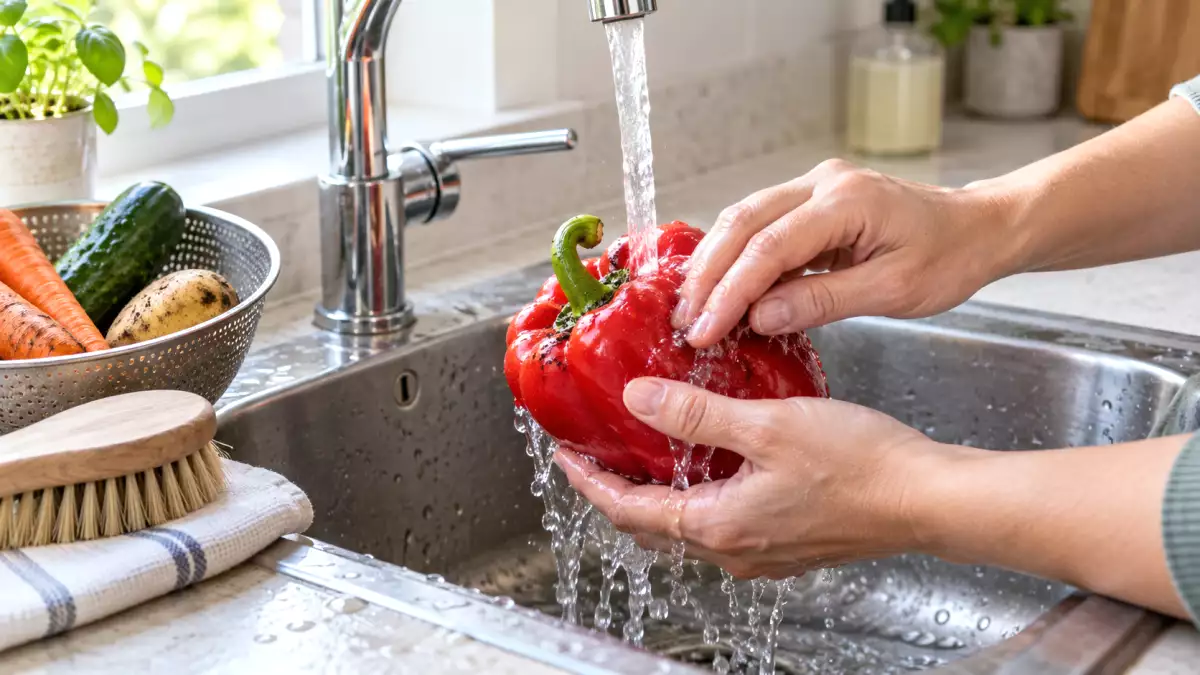
The safer default is much simpler: cool running water, clean hands, a clean brush for firm produce and careful drying. Soap, detergents and many commercial produce washes are not recommended for fruits and vegetables because produce can absorb residues, and those residues may make you sick.
The goal is not to sterilize vegetables at home. It is to remove dirt, grit and surface contamination without adding a new chemical risk.
Why soap is the wrong tool for vegetables
Soap is useful for washing hands, but it is not meant to be eaten. Vegetables and fruits can have porous surfaces, cuts, stems, skins or folds where residues may cling or absorb.
That is why the advice is direct: do not wash produce with soap, detergent, bleach or household cleaners. These products are not designed to be used on food.
Even if you rinse well afterwards, the risk is that you have solved one problem by creating another.
That is why the advice is direct: do not wash produce with soap, detergent, bleach or household cleaners. These products are not designed to be used on food.
Even if you rinse well afterwards, the risk is that you have solved one problem by creating another.
The safer default: plain running water
For most vegetables, the best starting point is plain cool running water. Hold the produce under the tap and gently rub the surface while rinsing.
Running water helps carry away dirt and surface debris. Rubbing helps loosen what is stuck to the skin, leaves or folds.
This method is simple, cheap and practical, which is why it should be the default before cutting, cooking or eating fresh vegetables.
Running water helps carry away dirt and surface debris. Rubbing helps loosen what is stuck to the skin, leaves or folds.
This method is simple, cheap and practical, which is why it should be the default before cutting, cooking or eating fresh vegetables.
Wash before peeling or cutting
One easy mistake is to skip washing when the peel will be removed. But dirt and bacteria on the outside can be transferred inside by a knife, peeler, cutting board or your hands.
That means vegetables such as cucumbers, carrots, potatoes, squash and melons should still be rinsed before peeling or cutting.
Think of washing as protecting the cutting step, not only the edible skin.
That means vegetables such as cucumbers, carrots, potatoes, squash and melons should still be rinsed before peeling or cutting.
Think of washing as protecting the cutting step, not only the edible skin.
Use a brush for firm vegetables
Firm vegetables and fruits with tough skins can hold dirt in grooves, dimples or rough patches. Use a clean vegetable brush while rinsing under running water.
This is especially helpful for potatoes, carrots, cucumbers, winter squash and melons. The brush should be clean and used for produce, not for dishes or general cleaning.
After brushing, rinse again and dry with a clean towel or paper towel.
This is especially helpful for potatoes, carrots, cucumbers, winter squash and melons. The brush should be clean and used for produce, not for dishes or general cleaning.
After brushing, rinse again and dry with a clean towel or paper towel.
Leafy greens need a slightly different approach
Leafy greens can trap grit between leaves. Remove damaged outer leaves first, then separate the leaves and rinse them well.
For very gritty greens, a short swish in a bowl of clean cold water can help loosen soil. Lift the greens out rather than pouring the dirty water back over them, then rinse and dry.
Avoid long soaking. The goal is to remove grit, not leave leaves sitting in water until they lose quality.
For very gritty greens, a short swish in a bowl of clean cold water can help loosen soil. Lift the greens out rather than pouring the dirty water back over them, then rinse and dry.
Avoid long soaking. The goal is to remove grit, not leave leaves sitting in water until they lose quality.
Do not rely on vinegar or produce wash as a magic fix
Vinegar rinses and produce washes are often promoted online, but they are not necessary for normal home washing. They can also change taste, texture or create a false sense of security.
The most useful routine is still basic food safety: wash hands, rinse produce under running water, scrub firm produce, dry well and keep clean foods away from raw meat, poultry or seafood.
A complicated wash is not automatically a safer wash.
The most useful routine is still basic food safety: wash hands, rinse produce under running water, scrub firm produce, dry well and keep clean foods away from raw meat, poultry or seafood.
A complicated wash is not automatically a safer wash.
Drying matters more than people think
After washing, dry vegetables with a clean towel, paper towel or salad spinner. Drying helps remove remaining moisture and some loosened surface material.
It also improves cooking and storage. Wet salad turns soggy faster, wet mushrooms steam instead of browning, and wet herbs spoil more quickly.
A good wash is not finished until the produce is clean and reasonably dry.
It also improves cooking and storage. Wet salad turns soggy faster, wet mushrooms steam instead of browning, and wet herbs spoil more quickly.
A good wash is not finished until the produce is clean and reasonably dry.
When not to wash again
Some packaged greens are labelled pre-washed, triple-washed or ready to eat. These products are designed to be used as sold.
Rewashing them at home can introduce contamination from sinks, hands, bowls or towels if the kitchen setup is not clean.
If the package says the product is ready to eat, the safer move is usually to keep it cold, use clean utensils and follow the date and storage instructions.
Rewashing them at home can introduce contamination from sinks, hands, bowls or towels if the kitchen setup is not clean.
If the package says the product is ready to eat, the safer move is usually to keep it cold, use clean utensils and follow the date and storage instructions.
A simple vegetable-washing routine
Use this routine before preparing fresh vegetables:
1. Wash your hands with soap and water before handling produce.
2. Remove bruised or damaged areas before preparing or eating.
3. Rinse under cool running water and gently rub the surface.
4. Scrub firm produce with a clean vegetable brush.
5. Dry with a clean towel, paper towel or salad spinner.
This is enough for everyday home cooking.
1. Wash your hands with soap and water before handling produce.
2. Remove bruised or damaged areas before preparing or eating.
3. Rinse under cool running water and gently rub the surface.
4. Scrub firm produce with a clean vegetable brush.
5. Dry with a clean towel, paper towel or salad spinner.
This is enough for everyday home cooking.
The takeaway
Do not wash vegetables with soap. It may feel cleaner, but it is not the safer choice.
For most produce, cool running water, gentle rubbing, a clean brush for firm items and thorough drying are the best defaults. Wash before cutting or peeling, handle leafy greens carefully and keep produce away from raw animal foods.
Food safety does not always require a stronger product. Sometimes the safer habit is the simpler one.
For most produce, cool running water, gentle rubbing, a clean brush for firm items and thorough drying are the best defaults. Wash before cutting or peeling, handle leafy greens carefully and keep produce away from raw animal foods.
Food safety does not always require a stronger product. Sometimes the safer habit is the simpler one.
 Juliette Hess
I have been creating culinary content for Petitchef since 2017.
I love travelling and discovering new dishes, trying out new food trends and exploring new restaurants.
I’m a huge fan of pasta and noodles in all their forms ❤ from udon noodles to tagliatelle, I love cooking them and even making them from scratch!
I’m currently preparing, filming and photographing your next recipe, and I hope you’ll enjoy it!
I love travelling and discovering new dishes, trying out new food trends and exploring new restaurants.
I’m a huge fan of pasta and noodles in all their forms ❤ from udon noodles to tagliatelle, I love cooking them and even making them from scratch!
I’m currently preparing, filming and photographing your next recipe, and I hope you’ll enjoy it!
Comments