Weeknight dinners feel slow? Prep ingredients, not whole meals
Monday 14 September 2026 12:00 - Juliette Hess
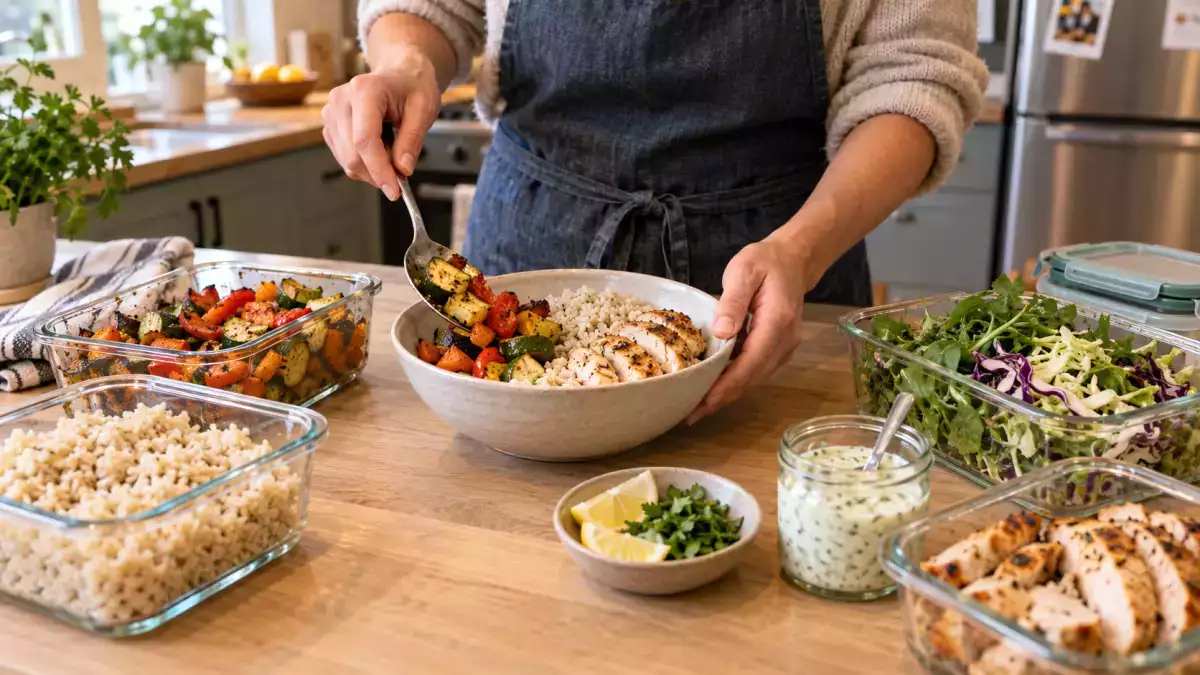
Restaurants think differently. They do not prep every finished dish in advance. They prep ingredients: washed greens, cooked grains, chopped vegetables, sauces, roasted vegetables, proteins, herbs and garnishes. Then, when service starts, those prepared parts become many different dishes quickly.
That is the trick to steal for weeknight dinners: prep ingredients, not meals. Instead of locking yourself into five finished dinners, create a small set of flexible components that can become bowls, pastas, salads, wraps, soups, omelets or sheet-pan dinners in minutes.
Why ingredient prep works better than rigid meal prep
Traditional meal prep often asks you to predict exactly what you will want to eat several days later. Ingredient prep gives you options instead.
A container of cooked rice can become a stir-fry, grain bowl, soup add-in or quick side. Roasted vegetables can go into pasta, wraps, salads or eggs. A sauce can change the whole direction of dinner.
The goal is speed with flexibility: enough work done ahead to make dinner fast, but not so much that every meal is already decided.
A container of cooked rice can become a stir-fry, grain bowl, soup add-in or quick side. Roasted vegetables can go into pasta, wraps, salads or eggs. A sauce can change the whole direction of dinner.
The goal is speed with flexibility: enough work done ahead to make dinner fast, but not so much that every meal is already decided.
Think like a restaurant: build components
A restaurant kitchen relies on mise en place, which means everything needed for service is prepared and ready before cooking begins. At home, that does not need to be complicated.
You can borrow the idea by preparing a few components: one grain or starch, one protein, two vegetables, one sauce and one crunchy or fresh finish.
With those parts ready, dinner becomes assembly plus a little heat, not a full cooking project from zero.
You can borrow the idea by preparing a few components: one grain or starch, one protein, two vegetables, one sauce and one crunchy or fresh finish.
With those parts ready, dinner becomes assembly plus a little heat, not a full cooking project from zero.
Start with one base
Choose one base that can work in several meals: rice, quinoa, couscous, pasta, potatoes, lentils or beans. Cook it once and store it plain so it can go in different directions.
Plain rice can become fried rice, a burrito bowl, a curry base or a side for fish. Potatoes can become a hash, salad, soup add-in or quick skillet dinner.
The key is not to season the base too narrowly. Keep it flexible.
Plain rice can become fried rice, a burrito bowl, a curry base or a side for fish. Potatoes can become a hash, salad, soup add-in or quick skillet dinner.
The key is not to season the base too narrowly. Keep it flexible.
Prep vegetables in different textures
Vegetables are more useful when they are not all prepared the same way. Try keeping one raw option and one cooked option ready.
For example, store washed greens or shredded cabbage for salads, wraps and bowls, plus roasted carrots, peppers, zucchini or broccoli for warm dinners.
This gives you contrast: fresh crunch when dinner needs lift, cooked vegetables when dinner needs comfort.
For example, store washed greens or shredded cabbage for salads, wraps and bowls, plus roasted carrots, peppers, zucchini or broccoli for warm dinners.
This gives you contrast: fresh crunch when dinner needs lift, cooked vegetables when dinner needs comfort.
Cook or marinate one protein
A prepared protein makes weeknight dinners feel complete faster. It can be as simple as boiled eggs, cooked chicken, tuna, tofu, lentils, chickpeas, beans, shrimp or a marinated protein ready to cook.
The restaurant-style trick is to keep it usable in more than one meal. A neutral protein can become Mediterranean with lemon and herbs, Asian-inspired with soy and sesame, or comforting with tomato sauce and pasta.
If you season too strongly at the start, you reduce your options later.
The restaurant-style trick is to keep it usable in more than one meal. A neutral protein can become Mediterranean with lemon and herbs, Asian-inspired with soy and sesame, or comforting with tomato sauce and pasta.
If you season too strongly at the start, you reduce your options later.
Make one sauce that changes everything
A sauce is often the difference between ingredients and dinner. Keep one simple sauce ready: vinaigrette, yogurt sauce, pesto, tahini dressing, tomato sauce, peanut sauce or herb oil.
The same roasted vegetables and grain base can taste completely different depending on the sauce. That is how ingredient prep avoids the boredom of eating the same meal repeatedly.
Sauce is the fastest way to make leftovers feel intentional.
The same roasted vegetables and grain base can taste completely different depending on the sauce. That is how ingredient prep avoids the boredom of eating the same meal repeatedly.
Sauce is the fastest way to make leftovers feel intentional.
Add a finish so dinner feels fresh
Restaurants finish dishes with small details: herbs, lemon, toasted nuts, seeds, grated cheese, pickles, crispy onions or a drizzle of oil. At home, those details make quick dinners taste less like leftovers.
Keep one or two finishes ready and visible. Fresh herbs, lemon wedges, toasted seeds or grated cheese can make a bowl, soup or pasta feel newly cooked.
This is a small habit, but it has a big effect on how satisfying a fast dinner feels.
Keep one or two finishes ready and visible. Fresh herbs, lemon wedges, toasted seeds or grated cheese can make a bowl, soup or pasta feel newly cooked.
This is a small habit, but it has a big effect on how satisfying a fast dinner feels.
A simple Sunday ingredient prep plan
You do not need to spend the whole day cooking. A useful prep session can be short and focused:
Cook one base: rice, potatoes, pasta, quinoa or lentils.
Prep two vegetables: one raw and one cooked.
Prepare one protein: cooked, marinated or ready to assemble.
Make one sauce: something that works with several meals.
Set up one finish: herbs, lemon, seeds, nuts or cheese.
That is enough to make several dinners faster without turning Sunday into a catering job.
Cook one base: rice, potatoes, pasta, quinoa or lentils.
Prep two vegetables: one raw and one cooked.
Prepare one protein: cooked, marinated or ready to assemble.
Make one sauce: something that works with several meals.
Set up one finish: herbs, lemon, seeds, nuts or cheese.
That is enough to make several dinners faster without turning Sunday into a catering job.
How those components become dinners
Once the ingredients are ready, dinner combinations become easier. Rice, roasted vegetables, protein and sauce become a bowl. Pasta, vegetables and cheese become a quick skillet dinner. Greens, grains, beans and vinaigrette become a filling salad.
The same components can also become wraps, omelets, soup toppings, tacos or a sheet-pan reheat with a fresh finish.
This is why ingredient prep is so useful: the same work can become several different meals.
The same components can also become wraps, omelets, soup toppings, tacos or a sheet-pan reheat with a fresh finish.
This is why ingredient prep is so useful: the same work can become several different meals.
Storage matters
Store ingredients separately when possible. Keep sauces in small jars, crunchy toppings dry, washed greens lined with paper towel and cooked ingredients in airtight containers.
Label anything that is easy to forget and keep the most perishable foods at the front of the fridge. If something needs to stay crisp, do not trap it with wet ingredients too early.
Good storage protects the whole point of ingredient prep: fast dinners that still taste fresh.
Label anything that is easy to forget and keep the most perishable foods at the front of the fridge. If something needs to stay crisp, do not trap it with wet ingredients too early.
Good storage protects the whole point of ingredient prep: fast dinners that still taste fresh.
The takeaway
If weeknight dinners feel slow, do not start by planning five complete meals. Start by preparing useful ingredients.
A base, a protein, vegetables, a sauce and a fresh finish can turn into many dinners with very little extra work. That is the restaurant trick home cooks can actually use.
Prep ingredients, not meals, and you get the best part of meal prep without the boredom: faster dinners, fewer dishes and more choices.
A base, a protein, vegetables, a sauce and a fresh finish can turn into many dinners with very little extra work. That is the restaurant trick home cooks can actually use.
Prep ingredients, not meals, and you get the best part of meal prep without the boredom: faster dinners, fewer dishes and more choices.
 Juliette Hess
I have been creating culinary content for Petitchef since 2017.
I love travelling and discovering new dishes, trying out new food trends and exploring new restaurants.
I’m a huge fan of pasta and noodles in all their forms ❤ from udon noodles to tagliatelle, I love cooking them and even making them from scratch!
I’m currently preparing, filming and photographing your next recipe, and I hope you’ll enjoy it!
I love travelling and discovering new dishes, trying out new food trends and exploring new restaurants.
I’m a huge fan of pasta and noodles in all their forms ❤ from udon noodles to tagliatelle, I love cooking them and even making them from scratch!
I’m currently preparing, filming and photographing your next recipe, and I hope you’ll enjoy it!
Comments