Why does chicken release so much liquid in the pan and the seasoning seem to vanish while cooking?
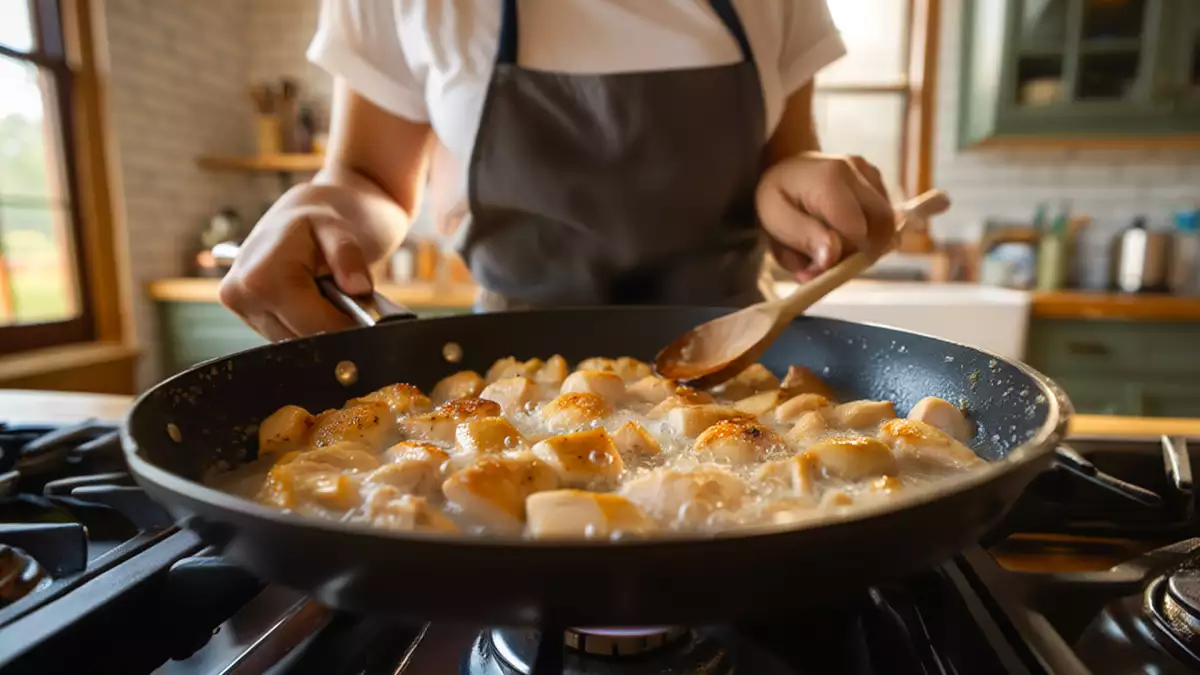
You put chicken in the skillet expecting that classic sound of meat sizzling and browning… but within seconds, something strange happens: liquid starts pooling at the bottom. Instead of searing, the chicken seems to cook in its own water, losing color, texture, and even flavor. It is a common kitchen problem—and one of the most frustrating.
What many people do not realize is that this simple detail can reveal more than it seems. It is not just bad luck or a random cooking mistake. There are specific reasons behind it, and they have to do with both the quality of the chicken and the way it is prepared. Understanding what is really happening can completely change the final result on your plate.
What is that “water” in the skillet?
The liquid that appears in the pan is not exactly plain water.
It is a mix of:
- the natural moisture in the meat
- dissolved proteins
- juices from inside the chicken
When chicken heats up, it starts releasing these liquids. But the amount can vary a lot.
And that is where the problem begins.
The main reason: chicken quality
Not all chicken is the same.
In many cases, excess liquid comes from:
1. Chicken with added or retained water
Some chicken goes through processing that can make it hold more water.
That means when it hits the hot skillet, much of that liquid comes out.
The result? Instead of browning, the chicken starts steaming.
2. Frozen chicken, even after thawing
If the chicken has been frozen, ice crystals can damage some of the muscle fibers.
That makes it more likely to release liquid as it cooks.
This is one reason thawed chicken can sometimes seem to “cook in its own water” instead of searing properly.
3. The type of cut
Chicken breast tends to release more liquid because it is very lean.
Cuts with a little more fat, such as thighs, often hold onto their juices better and stay more tender during cooking.
The most common skillet mistake
Even with good chicken, you may be causing the problem without realizing it.
The biggest mistake: adding too much chicken to the pan at once.
When that happens:
- the skillet temperature drops
- the chicken does not sear properly
- it starts to steam instead of brown
The result: more liquid and less flavor.
How to keep chicken from releasing too much water
Here is what really helps:
1. Use a very hot skillet
Before adding the chicken, make sure the skillet is truly hot.
That first contact with heat is what helps the surface sear instead of immediately releasing moisture.
2. Do not overcrowd the pan
Leave space between the pieces.
If the chicken pieces are too close together, steam gets trapped and browning becomes much harder.
3. Pat the chicken dry first
Use paper towels to remove excess surface moisture before cooking.
This small step makes a big difference.
4. Do not move it constantly
Let the chicken sit long enough to form a crust before turning it.
If you keep stirring or flipping too early, it will have a harder time browning.
5. Choose the product carefully
When possible, choose fresh chicken and pay attention to how much liquid is already sitting in the package.
If a certain product always releases a lot of water, it may be worth switching brands or buying from a different source.
What this really reveals
When chicken releases a lot of water in the skillet, it may indicate:
- lower quality
- more intensive processing
- improper cooking technique
In other words, it is not only about how you cook. It is also about what you are buying.
A common myth
Many people think this is “normal with any chicken.”
That is not completely true.
A better-quality chicken, cooked the right way, tends to:
- sear better
- release less liquid
- develop more flavor
- brown more evenly
So if your chicken is releasing water in the skillet, do not ignore it.
It is a clear sign that something (whether the quality of the meat or the cooking method) can be improved.
And once you get those details right, the result changes completely: more flavor, better texture, and that golden browning that makes all the difference.
 Mirella Mendonça
Comments