Why is Camembert sold in a wooden box?
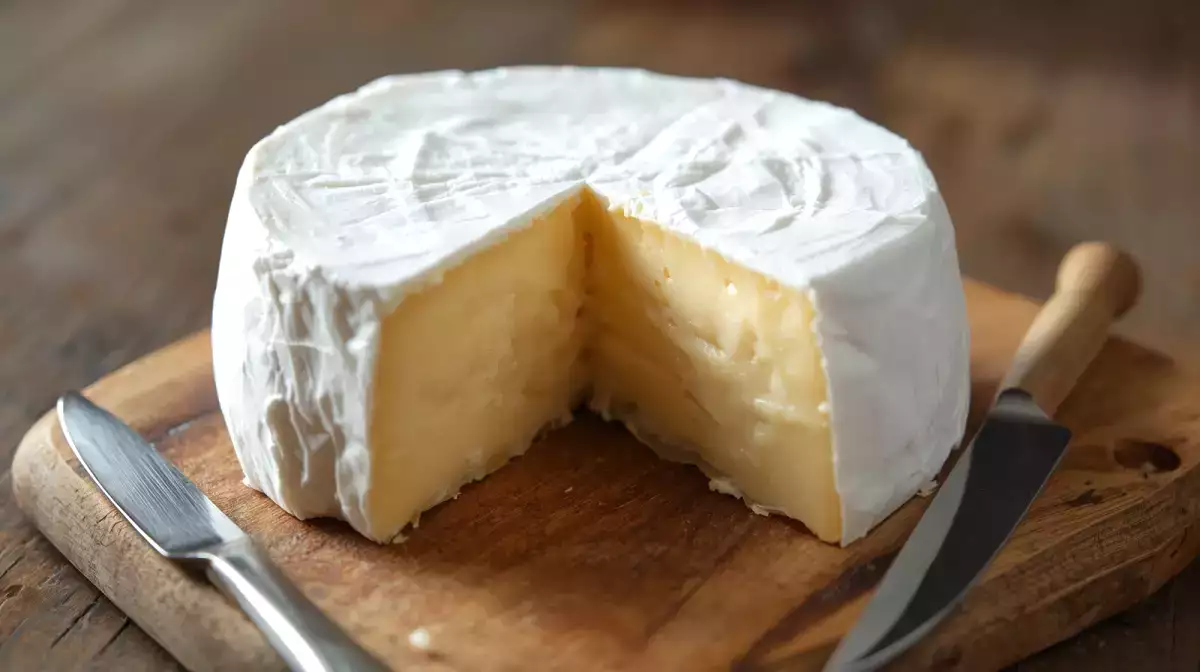
It's round, light, sometimes a little stained by the cheese... and yet, the Camembert wooden box is anything but a simple decorative packaging. If it has survived the centuries without really changing, it's not because of nostalgia, but because it meets very concrete needs: to protect, transport, mature and identify this emblematic cheese.
Behind this small everyday object lies an industrial, technical and even marketing history.
Originally a question of survival... of cheese
Camembert is a fragile cheese. Very fragile, in fact. Its soft paste, bloomy rind and high moisture content make it difficult to transport without damaging it.
Before the end of the XIXᵉ century, it was simply transported on a bed of straw. This was neither practical nor very reliable for long-distance travel.
Around 1890, a Norman engineer named Ridel, the son of a cabinetmaker and a native of the city Vimoutiers, had a decisive idea: to replace straw with a wooden box specially designed for Camembert. He even invented the machine needed to mass-produce these boxes from lightweight wood.
The result: Camembert could finally travel without warping... and conquer Paris, then the rest of France.
Why wood, and not another material?
The choice of wood was not random. Boxes are traditionally made from poplar (and sometimes spruce), which are lightweight, low-odour and breathable.
In practical terms, the wooden box makes it possible to :
- protect the cheese from impact,
- allow air to circulate, essential for further maturing,
- slightly absorb humidity, preventing the Camembert from "suffocating" or leaking too quickly.
In other words, the box doesn't just transport the Camembert: it plays an active role in its development.
A box that also ripens cheese
Unlike hermetically sealed packaging, the wooden box accompanies the life of the Camembert. It creates an ideal microclimate, where the cheese can continue to mature gently, without drying out or fermenting uncontrollably.
This is also why Camembert cheese continues to change texture and taste even after purchase. The wooden box doesn't stop time: it regulates it.
A medium for identity... and marketing
Another innovation made possible by the wooden box is the label. Previously, it was impossible to clearly identify the cheese's origin or producer.
The box now becomes a veritable information medium:
- name of cheese,
- place of manufacture,
- brand name,
- sometimes even illustrations and medals.
It was at this point that Camembert began to become a recognizable, identifiable... and exportable product.
What about the metal box?
A lesser-known fact: at the beginning of the XXᵉ century, some Camemberts destined for export, notably to England, traveled... in metal cans, crimped like traditional canned goods.
Convenient for shipping, but unsuitable for maturing and taste. This solution remained marginal, as wooden cans became the best compromise between protection and quality.
A not-so-folkloric tradition
Even today, when plastic and composite materials are available, the wooden box remains relevant. It's lightweight, biodegradable, renewable, and perfectly suited to Camembert.
It's one of those rare cases where tradition is not a brake on modernity, but a technical solution that's still valid.
And for the record...
According to a very popular - but historically debatable - legend, Camembert was perfected in 1791 by a Norman farmer, Marie Harel, aided by a priest from Brie who had taken refuge in her home during the French Revolution.
What we know with more certainty, however, is that traces of cheeses very similar to Camembert exist as early as the XVIᵉ century, around 1570. In other words, this cheese already had a long history... long before it had its box.
The fact that Camembert is sold in a wooden box is no coincidence, nor is it simply a nod to the past.
That's because this box :
- protects the cheese,
- promotes ripening,
- facilitates transport,
- and contributes to its identity.
It's a simple, yet effective little box, just like Camembert itself!
 Adèle Peyches
Comments