Why meat sometimes forms a strange foam? The simple explanation that will change kitchen habits
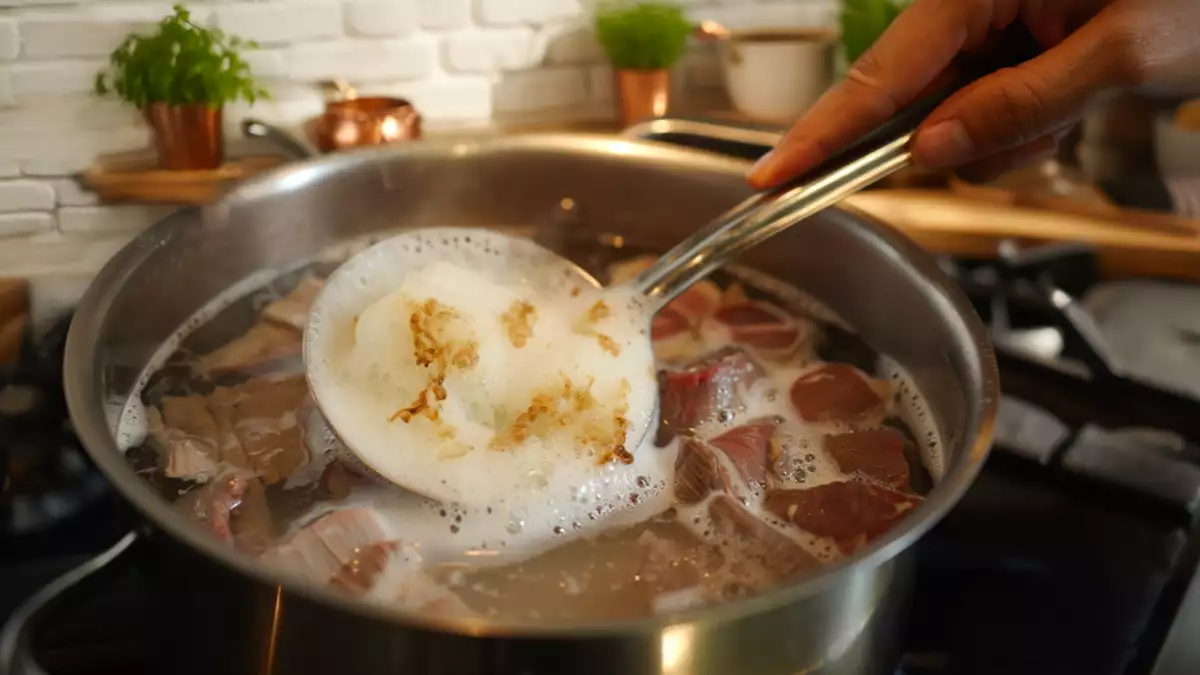
You've probably noticed it: all you have to do is put meat on to cook and, within a few minutes, a foam begins to appear on the surface. It has a strange, grayish appearance and many people look at it suspiciously, thinking it's dirt or even a sign that something is wrong with the food. It's not uncommon to see people rushing to remove everything, almost as an automatic reflex.
But what few people know is that this reaction is completely natural and more common than it seems. In fact, this foam says a lot about what is happening inside the pan, and understanding its true meaning can change the way you cook and interpret this very common moment in the kitchen.
What is that foam anyway?
Despite its uninviting appearance, foam is not dirt in the sense that many people imagine.
It is mainly made up of:
- meat proteins
- small particles of blood
- natural impurities released during cooking
When the meat comes into contact with hot water, these proteins begin to coagulate ("solidify"), rising to the surface and forming this foam.
So it's a bad thing?
Not necessarily.
This foaming is a completely natural process.
It doesn't mean that
- the meat is spoiled
- the food is contaminated
- there is something "wrong" with the preparation
In fact, it just shows that the meat is reacting to the heat.
So why do so many people remove it?
Mainly for two reasons:
1. Appearance
Foam can make the broth cloudy and less appetizing.
2. Taste and texture
If not removed, it can
- make the broth heavier
- slightly alter the flavor
- give the dish a less "clean" feel
That's why chefs often remove it. Not for safety, but for final quality.
Should you take it off or not?
It depends on what you want:
- For clear, more refined broths: yes, it's worth removing
- For simple everyday dishes: not mandatory
- For food safety: it makes no difference
In other words: it's more of a culinary choice than a rule.
A detail that not many people know
The more slowly you heat the meat, the more foam tends to appear.
This is because
- the proteins are released gradually
- they have time to rise to the surface
In faster or sealed cooking, this hardly happens at all.
The biggest myth about this foam
Many people believe that it is a "toxin" or "dangerous dirt".
This is a myth.
Foam may contain small natural impurities, but it is neither toxic nor dangerous
The foam that appears when cooking meat is not a mistake or something alarming.
It's just the natural result of proteins reacting to heat.
You can remove it to improve its appearance and taste - but there's no need to panic when you see it.
In the end, what seems strange at first glance is just another detail of the normal way food works in the kitchen.
 Mirella Mendonça
Comments