Batch cooking during heat waves: the common mistake that could raise fridge temperatures fast
Wednesday 12 August 2026 12:00 - Adèle Peyches
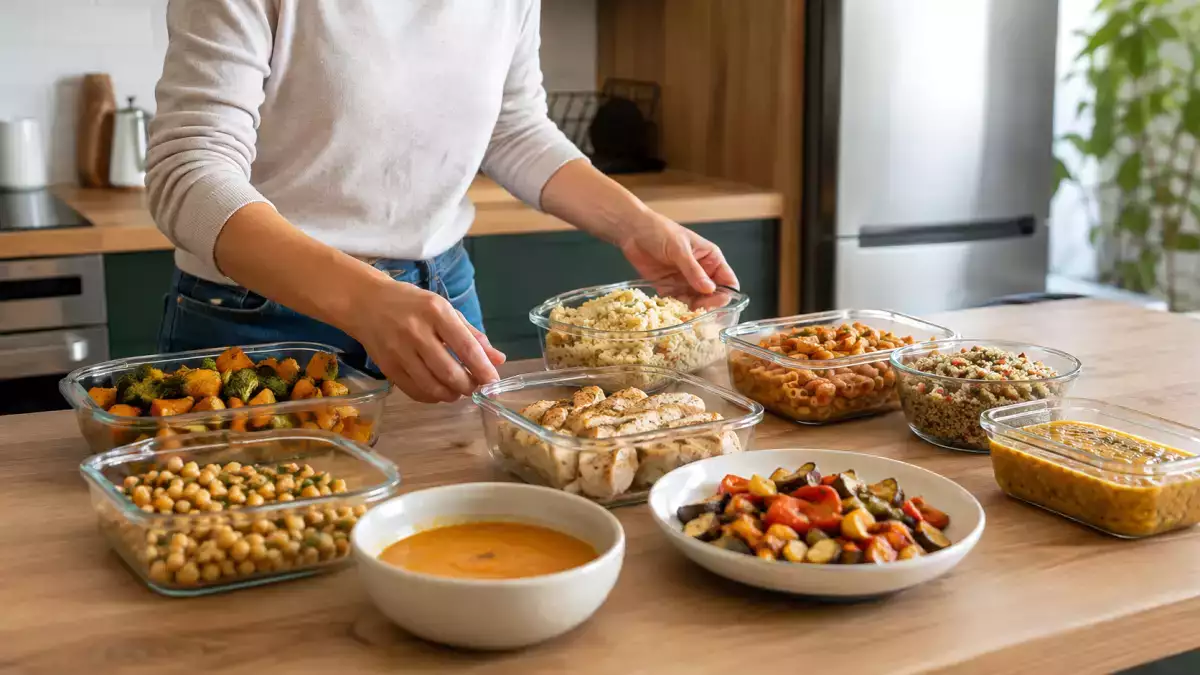
Because putting ten still-hot dishes in the fridge isn’t just a matter of space. A large lasagna, a steaming soup, a piping-hot curry, or a warm vegetable stir-fry can cause the temperature inside the fridge to rise. The result: the dishes cool down more slowly, and the food already in the fridge may also be exposed to unsafe temperatures.
With several departments under an orange heat wave alert, this is no trivial matter. The good news? You don’t have to give up batch cooking. You just need to avoid the classic mistake: putting large, hot dishes in the fridge all at once. Small containers, separate portions, air circulation, a thermometer, and the two-hour rule—these are the habits that make all the difference.
Why a hot dish can be a problem in the fridge
The purpose of a refrigerator is to keep food at a low temperature to slow the growth of microorganisms. However, it is not designed to quickly cool several large, piping-hot dishes at the same time, especially when the kitchen is already hot.
If you put a large dish that’s still very hot in the fridge, it will give off heat for a while. This heat can slow down the cooling of the dish itself, but it can also warm up nearby foods: yogurt, cheese, leftovers, deli meats, desserts, sauces… In short, everything that’s already waiting patiently in the fridge.
The problem is even more pronounced with large, deep containers. A pot of soup or a large gratin cools much more slowly than a single serving spread out in a shallow container. On the outside, the dish may seem lukewarm, while in the center, it remains hot for a long time.
If you put a large dish that’s still very hot in the fridge, it will give off heat for a while. This heat can slow down the cooling of the dish itself, but it can also warm up nearby foods: yogurt, cheese, leftovers, deli meats, desserts, sauces… In short, everything that’s already waiting patiently in the fridge.
The problem is even more pronounced with large, deep containers. A pot of soup or a large gratin cools much more slowly than a single serving spread out in a shallow container. On the outside, the dish may seem lukewarm, while in the center, it remains hot for a long time.
The two-hour rule: simple, but essential
The right thing to do is not to leave dishes sitting on the counter all evening. Official guidelines recommend not leaving food at room temperature for more than two hours before refrigerating it.
In practice, this means you should start cooling the food as soon as it’s done cooking. You shouldn’t put piping-hot food in the refrigerator, but you also shouldn’t let dishes sit out indefinitely. The goal is to bring the temperature down quickly, then store the food in the refrigerator under proper conditions.
In hot weather, you need to monitor this timeframe even more closely. A kitchen at 28 or 30°C is nothing like a cool kitchen in the middle of winter. The warmer the room, the more you need to avoid letting the food sit out for too long.
In practice, this means you should start cooling the food as soon as it’s done cooking. You shouldn’t put piping-hot food in the refrigerator, but you also shouldn’t let dishes sit out indefinitely. The goal is to bring the temperature down quickly, then store the food in the refrigerator under proper conditions.
In hot weather, you need to monitor this timeframe even more closely. A kitchen at 28 or 30°C is nothing like a cool kitchen in the middle of winter. The warmer the room, the more you need to avoid letting the food sit out for too long.
Small, shallow boxes: the simple action that makes all the difference
To cool a dish quickly, the best tip is to divide it up. Instead of leaving a large pot of sauce, a big batch of rice, or an entire gratin in its dish, spread the mixture out into shallow containers.
The thinner the layer, the faster the heat dissipates. This is especially useful for soups, sauces, curries, stews, cooked grains, or roasted vegetables. The same principle applies to pasta and rice: spread out in a large dish, they cool much faster than when piled up in a compact heap.
Another advantage: your portions will already be ready for the week. You avoid opening and closing a large container multiple times, and you only reheat what you need.
The thinner the layer, the faster the heat dissipates. This is especially useful for soups, sauces, curries, stews, cooked grains, or roasted vegetables. The same principle applies to pasta and rice: spread out in a large dish, they cool much faster than when piled up in a compact heap.
Another advantage: your portions will already be ready for the week. You avoid opening and closing a large container multiple times, and you only reheat what you need.
Don't pack the fridge like a game of Tetris
After a batch-cooking session, you often feel tempted to cram everything in no matter what. Bad idea! If the containers are pressed right up against each other, cold air can’t circulate properly. And without air circulation, cooling becomes much less effective.
Try to leave a little space between the containers, especially right after you’ve put the meals away. Also, avoid placing all the hot containers on the same shelf. It’s better to spread them out, let them “breathe,” and then rearrange them once everything is thoroughly chilled.
And above all, don’t put highly perishable foods in the refrigerator door. This area is often less cold and more exposed to temperature fluctuations every time the door is opened. Prepared meals, fish, meat, cream-based sauces, and delicate dairy products should be kept in the coldest part of the refrigerator.
Try to leave a little space between the containers, especially right after you’ve put the meals away. Also, avoid placing all the hot containers on the same shelf. It’s better to spread them out, let them “breathe,” and then rearrange them once everything is thoroughly chilled.
And above all, don’t put highly perishable foods in the refrigerator door. This area is often less cold and more exposed to temperature fluctuations every time the door is opened. Prepared meals, fish, meat, cream-based sauces, and delicate dairy products should be kept in the coldest part of the refrigerator.
The refrigerator thermometer: a little-appreciated tool
People often assume that a refrigerator is “necessarily cold.” However, its actual temperature can vary depending on its location, how full it is, the age of the appliance, how often the door is opened, or the heat in the kitchen.
A refrigerator thermometer lets you check that the area where you store prepared meals stays cold enough. This is especially useful in the summer, when the fridge has to work harder and is opened frequently for drinks, fruit, or prepared meals.
After a big batch-cooking session, monitor the temperature for a few hours. If it rises too much or takes a long time to drop back down, it may be a sign that the containers were too hot, too numerous, or packed too tightly.
A refrigerator thermometer lets you check that the area where you store prepared meals stays cold enough. This is especially useful in the summer, when the fridge has to work harder and is opened frequently for drinks, fruit, or prepared meals.
After a big batch-cooking session, monitor the temperature for a few hours. If it rises too much or takes a long time to drop back down, it may be a sign that the containers were too hot, too numerous, or packed too tightly.
Should I let it cool on the counter, in cold water, or in the freezer?
The countertop can be used for initial cooling, but not for too long. The goal is to reduce the heat without exceeding the two-hour limit outside the refrigerator. To speed up the process, you can transfer the food to a wide dish, stir a soup or sauce, or place the covered container in a cold water bath, being careful not to let any water get into the food.
The freezer, on the other hand, is not a heat dump. Placing a very large, piping-hot dish in there can also reheat food that’s already frozen on the surface. However, a portion that’s already been cooled to room temperature—properly wrapped and not too thick—can be frozen quickly if it’s meant for later in the week.
The right order: divide the food, let it cool quickly, then store it in the refrigerator or freeze it in portions. Don’t put a large, piping-hot block of food directly into the freezer.
The freezer, on the other hand, is not a heat dump. Placing a very large, piping-hot dish in there can also reheat food that’s already frozen on the surface. However, a portion that’s already been cooled to room temperature—properly wrapped and not too thick—can be frozen quickly if it’s meant for later in the week.
The right order: divide the food, let it cool quickly, then store it in the refrigerator or freeze it in portions. Don’t put a large, piping-hot block of food directly into the freezer.
The method that makes batch cooking truly convenient
Batch cooking is still a great idea, even in the heat of summer. You just have to think of it as a process: cooking, cooling, portioning, and storing. If one step gets held up, all the benefits of being organized can backfire on you.
The key is simple: don’t stack large, hot dishes in the fridge. Divide the food into small containers, let air circulate, follow the two-hour rule, check the temperature, and freeze anything that won’t be eaten right away.
The result: a fridge that stays truly cold, food that keeps better, and a well-organized week without turning your fridge into a miniature sauna. And honestly, during a heat wave, that’s already a big win.
The key is simple: don’t stack large, hot dishes in the fridge. Divide the food into small containers, let air circulate, follow the two-hour rule, check the temperature, and freeze anything that won’t be eaten right away.
The result: a fridge that stays truly cold, food that keeps better, and a well-organized week without turning your fridge into a miniature sauna. And honestly, during a heat wave, that’s already a big win.
 Adèle Peyches
Editorial manager who just can't wait for winter to enjoy fondue! Passionate about gastronomy and always on the lookout for new culinary gems, I first studied law before returning to my first love: the taste of good products and the joy of sharing around the table :)
Comments