Will cut fruit brown immediately? Practical, lemon-free methods to keep slices fresh and appealing
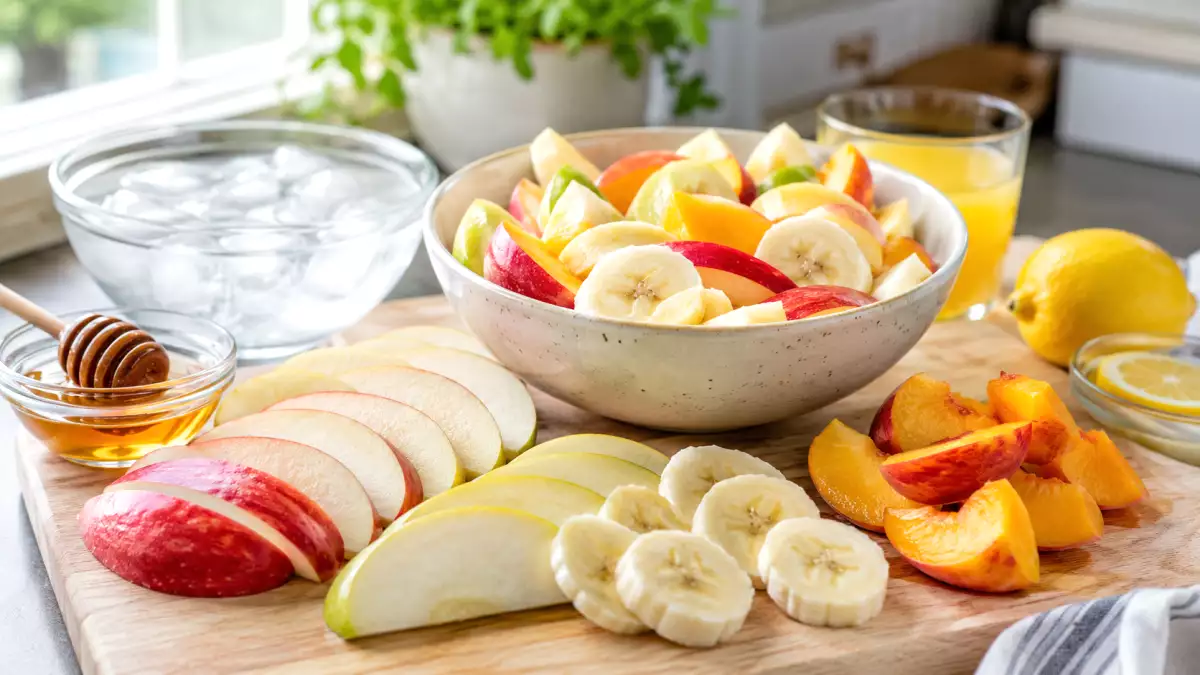
You prepare a beautiful, colorful fruit salad, step away for a few minutes, and when you return, the apples, pears, and bananas already seem to have lost all their freshness. The fruit is still edible, but that brownish color makes it decidedly less appealing.
The best-known remedy is lemon juice. It works, but it can leave a tart aftertaste that not everyone likes, especially when the fruit is going into a cake, the kids’ snack, or a dish with a delicate flavor.
The good news is that lemon isn’t your only option. There are other simple methods to prevent cut fruit from turning brown, some of which are gentler on the flavor and particularly convenient when you need to prepare the fruit in advance.
Why does cut fruit turn brown?
When you cut an apple, a pear, a banana, or an avocado, the inside comes into contact with the oxygen in the air. This contact triggers a reaction called enzymatic oxidation, which is responsible for the appearance of the typical brown spots.
Browning doesn’t necessarily mean the fruit has gone bad. It’s mainly a cosmetic change, although over time the texture, aroma, and freshness may change.
To slow down the process, you should therefore limit contact with the air, lower the pH of the surface, or create a thin protective barrier around the pieces of fruit.
How can you keep fruit from turning brown without using lemon?
One of the simplest methods is to briefly soak the fruit in very cold water. The water temporarily limits direct contact with oxygen and helps keep the pieces fresher and crispier.
The process is easy:
- fill a bowl with cold water;
- add a few ice cubes;
- soak the freshly cut fruit for about 3–5 minutes;
- drain and gently pat dry;
- transfer it immediately to an airtight container.
This method is especially recommended for apples and pears intended for fruit salads, mixed fruit salads, or snacks. It doesn’t completely prevent oxidation, but it can slow it down without altering the fruit’s flavor.
Does honey really keep fruit from turning brown?
Yes, a solution of water and honey can help keep pieces of fruit from browning. Honey contains compounds that slow down oxidation and create a light protective film on the surface.
Simply dissolve a tablespoon of honey in a cup of cold water and soak the fruit for about 30 seconds to a minute. After draining it, there’s no need to rinse it, unless you want to completely remove the sweet taste.
This method is particularly well-suited for apples and pears, especially when served as a snack or used in a fruit salad. It’s less suitable, however, for savory dishes or recipes where you don’t want to add sweetness.
Pineapple or orange juice instead of lemon
Other juices high in acidity can also slow down the browning of fruit. Orange juice has a milder taste than lemon juice, while pineapple juice adds a sweet note that pairs well with fruit salads.
Simply pour a small amount over the fruit pieces and stir gently to distribute it evenly over the entire surface. There’s no need to completely soak the fruit: a thin layer is enough to reduce contact with the air.
Pineapple juice is also convenient because it pairs well with bananas, apples, pears, and peaches. Orange juice , on the other hand, is ideal for fruit salads served at breakfast or as a light dessert.
Does salt water change the taste?
It may seem like an unusual remedy, but a very dilute solution of water and salt can slow down oxidation without making the fruit salty.
Dissolve about half a teaspoon of salt in half a liter of water, soak the fruit for a few minutes, and then rinse it quickly. The amount of salt should be minimal: a solution that’s too concentrated could alter the flavor and texture.
This method works especially well for apples and pears that you plan to take with you when you’re out and about. After rinsing, the fruit should be dried thoroughly and stored in an airtight container.
How should you store cut fruit in the refrigerator?
Even the chosen method loses its effectiveness if the fruit is left uncovered. The container is therefore just as important as the treatment used.
Cut fruit should be placed in a clean, dry, and tightly sealed container, preferably one that’s the right size. A container that’s too large leaves more air inside.
To store it properly:
- put it in the refrigerator as soon as possible;
- avoid leaving it at room temperature for many hours;
- separate very ripe fruit from firmer fruit;
- use airtight containers or resealable bags;
- drain any liquid that has accumulated at the bottom.
Covering the surface with plastic wrap in direct contact with the fruit can also be helpful, especially for avocados, bananas, and fruit purees. By reducing the amount of air, browning slows down significantly.
Which fruit turns brown the fastest?
Apples, pears, bananas, and avocados are among the foods most susceptible to oxidation. Peaches and apricots can also turn brown, especially when they are very ripe.
Strawberries, kiwis, pineapples, citrus fruits, and berries, on the other hand, tend to retain their color better, although once cut, they become more delicate and can quickly lose their texture.
The choice of method therefore depends on the type of fruit and its intended use. For a sweet fruit salad, honey, orange juice, or pineapple juice are practical options. For a neutral preparation, cold water or lightly salted water may be more suitable.
How long does cut fruit last?
In general, cut fruit should be eaten as soon as possible, preferably within one or two days. Some very delicate fruits, such as ripe bananas, peaches, and strawberries, may lose their texture even sooner.
Anti-browning treatments help preserve color, but they do not keep the fruit fresh indefinitely. If you notice a fermented odor, mold, a slimy texture, or unusual liquid, it’s best not to eat it.
To prepare a fruit salad in advance, it’s best to cut the more durable fruits first and add bananas and other delicate ingredients just before serving. This way, the salad will remain colorful, appealing, and fresh without having to mask everything with lemon juice.
 Leandra Masha
Comments