Are stuffed, mimosa and deviled eggs actually the same... or have we been mixing them up all along?
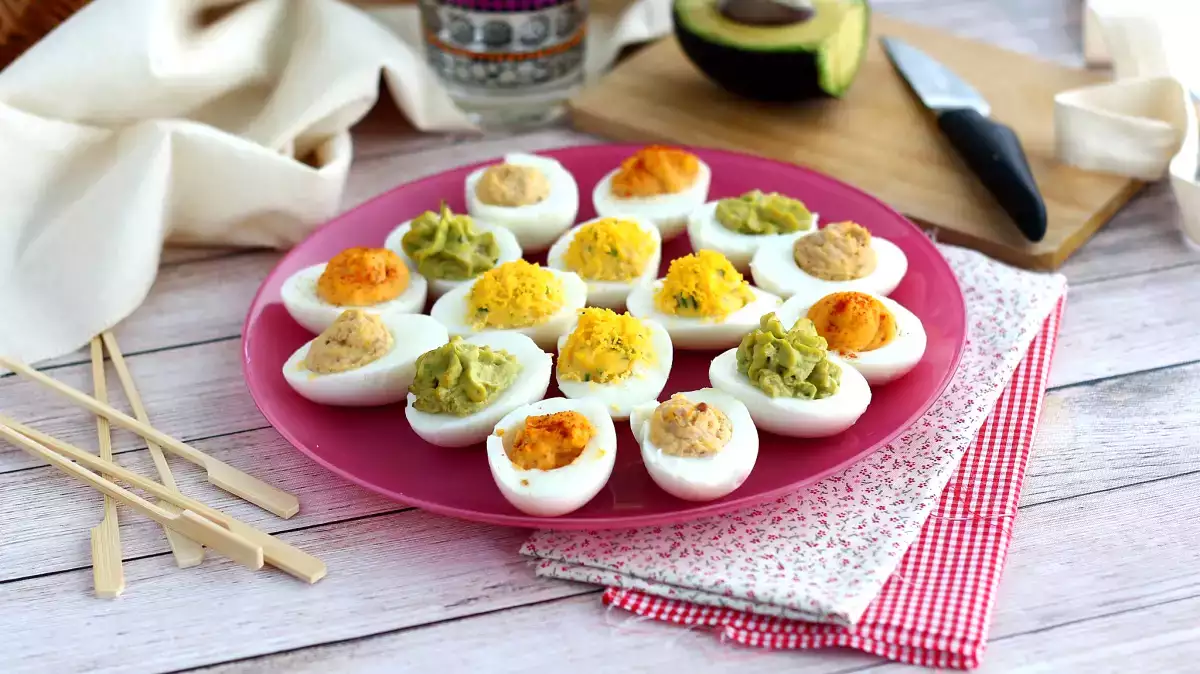
Few discussions seem more innocent than one about hard-boiled eggs. Until someone sets a platter on the table and the clarifications begin: are these stuffed eggs, or not? Are they mimosa eggs? In the United States , they’re called deviled eggs. And then the appetizer stops being an appetizer and turns into a seminar.
The truth is less convoluted, but more interesting: they all belong to the same family, even though they aren’t exactly the same. They share a basic idea—boiling eggs, cutting them open, removing the yolk, mixing it with something tasty, and putting it back into the white—but each name tells a different story.
Stuffed Eggs: the big family
“Stuffed eggs” is the umbrella term. It applies to almost any hard-boiled egg that’s been hollowed out and refilled. In Spain, people usually think of the home-style version: egg yolk, tuna, mayonnaise, sometimes tomato sauce, bell pepper, surimi, or whatever’s in the fridge. It’s a recipe for summer, Christmas, cold buffets, and a mom who doesn’t ask if you want one because she’s already put three on your plate.
There’s no single, set-in-stone formula. That’s precisely what makes them so appealing. They can be served cold, breaded, with sauce, with seafood, or with a simple pantry-based filling. Stuffed eggs don’t boast an untouchable recipe: they endure because they go with almost anything.
Basic Stuffed Eggs Recipe:
Hard-boil 6 eggs, let them cool, peel them, and cut them in half. Remove the yolks and mix them with 1 can of drained tuna, 2 or 3 tablespoons of mayonnaise, 1 tablespoon of tomato sauce, and salt. Stuff the egg whites and top with red bell pepper, olives, or grated yolk.
Deviled eggs: the most delicate French version
Mimosa eggs, or œufs mimosa, are more specific. They also start with a hard-boiled egg and the yolk mixed with mayonnaise, although in some more elaborate versions, that base is lightened with mousseline sauce: a lighter, airier mayonnaise that usually contains whipped cream or whipped egg whites. But above all, they’re defined by one key touch: they’re finished with grated or crumbled cooked egg yolk on top. That yellow powder resembles the mimosa flower, hence the name.
They are the elegant cousins of stuffed eggs. Less “I opened a can of tuna” and more “I prepared a cold appetizer.” The difference isn’t always in the ingredients, but in the intention: the mimosa aims to be refined, light, and instantly recognizable. It can be made with mayonnaise, a delicate mousseline, mustard, herbs, tuna, anchovies, or pickles, but without that sprinkling of yellow egg yolk, it loses part of its identity.
Basic Mimosa Egg Recipe:
Boil 6 eggs, let them cool, and cut them in half. Set aside one yolk. Mix the rest with 3 tablespoons of mayonnaise, one teaspoon of mild mustard, salt, and pepper. Fill the egg whites with the mixture and grate the reserved yolk on top. Add chives if you want to give it a fresh touch.
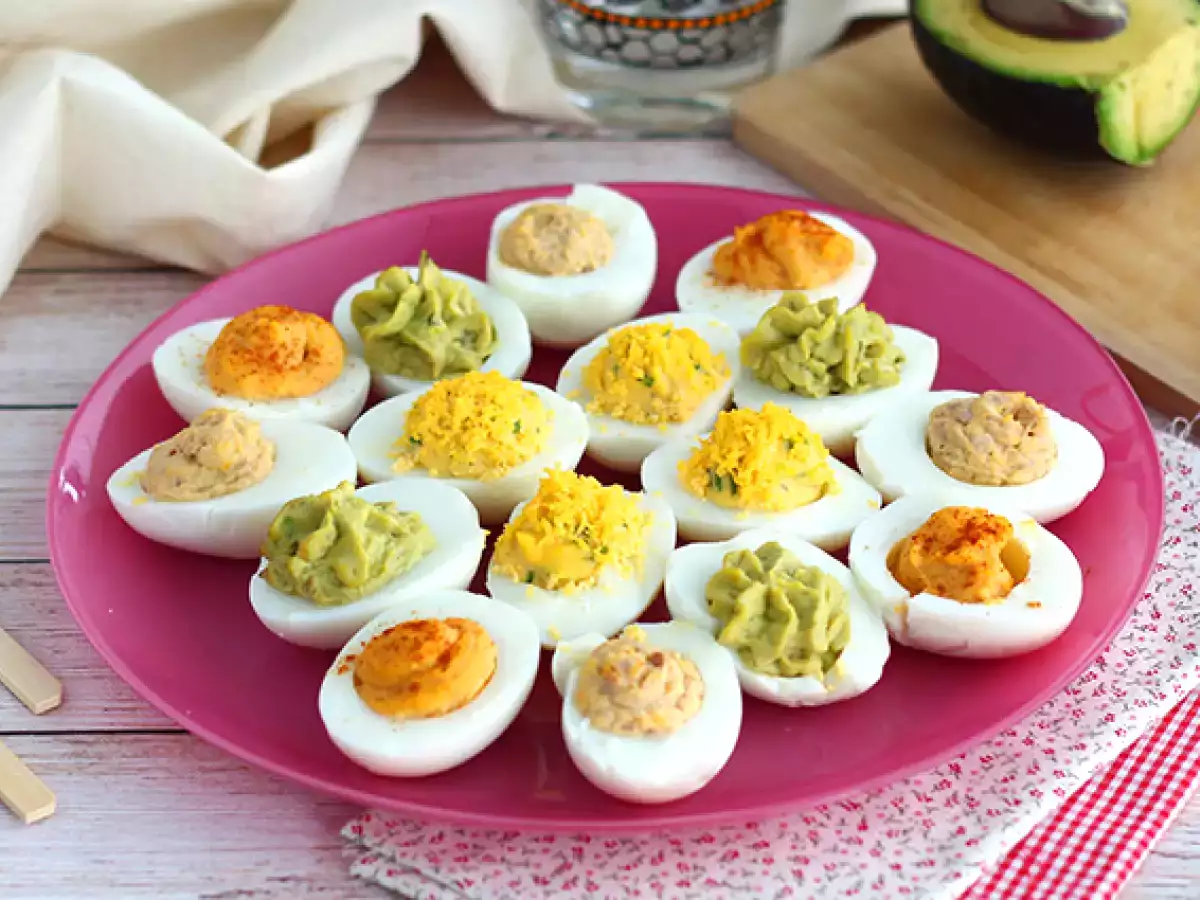
For an easy and effective recipe, nothing beats good deviled eggs. An appetizer that will please both children and adults, and that you can adapt to everyone's tastes. Here we offer several alternatives: the classic recipe and variations with avocado,...
Deviled Eggs: The Egg That Got Spicy
The deviled eggs are part of Anglo-Saxon tradition and are now closely associated with the United States, especially as an appetizer at parties, family meals, and gatherings. The word “deviled” comes from a British culinary custom: calling dishes that are heavily seasoned, spiced, or spicy “deviled.” Here, the yolk isn’t just mixed with mayonnaise; it usually includes mustard, vinegar, pepper, paprika, cayenne, hot sauce, or pickles.
Simply put: while mimosa eggs aim for delicacy, deviled eggs aim for a kick. They don’t have to be scorching hot, but they should have that cheerful punch that justifies the name. That’s why they work so well as a party appetizer: they’re small, creamy, and a little “cheeky.”
Basic Deviled Eggs Recipe:
Boil 6 eggs, let them cool, peel them, and cut them in half. Mix the yolks with 3 tablespoons of mayonnaise, 1 teaspoon of Dijon mustard, 1 teaspoon of vinegar, a few drops of hot sauce, salt, and pepper. Fill the egg whites and top with paprika, chives, or chopped pickles.
Which came first?
The technique is much older than its modern names. In Rome, seasoned eggs were already being served as part of the start of a meal, and medieval cookbooks feature recipes for hard-boiled eggs stuffed with yolks mixed with herbs, spices, or sauces.
Medieval cookbooks also feature preparations much closer to the modern concept of stuffed eggs. A 13th-century Andalusian recipe describes hard-boiled eggs that are cracked open, hollowed out, and refilled with the yolk mixed with cilantro, spices, onion juice, murri (a fermented, salty sauce typical of medieval Arab cuisine), oil, and salt. They weren’t mimosa eggs or deviled eggs, but the concept was already there.
But we shouldn’t cheat history. Those weren’t “mimosa eggs” or deviled eggs as we understand them today. They were precursors. Mayonnaise, store-bought mustard, ground paprika, pastry bags, and appetizer platters would come much later.
So, are they the same thing?
Not exactly. The main difference is this: stuffed eggs are the general category; mimosa eggs are a French version topped with grated hard-boiled yolk; and deviled eggs are stuffed eggs from the Anglo-Saxon tradition, usually more spicy, tangy, or hot.
But they’re not entirely unrelated dishes either. They all stem from the same brilliant idea: turning a hard-boiled egg (which on its own can be rather plain) into a creamy, affordable, and festive bite.
Perhaps that’s why they’ve traveled so well. Because while they change names, sauces, and accents, they’ve been solving the same problem for centuries: what to put on the table when we want something simple, impressive, and the kind of dish you eat two at a time.
 Patricia González
Comments