Avoid soggy bread: simple expert tips for making pan con tomate that stays crisp and flavorful
Friday 21 August 2026 17:00 - Juliette Hess
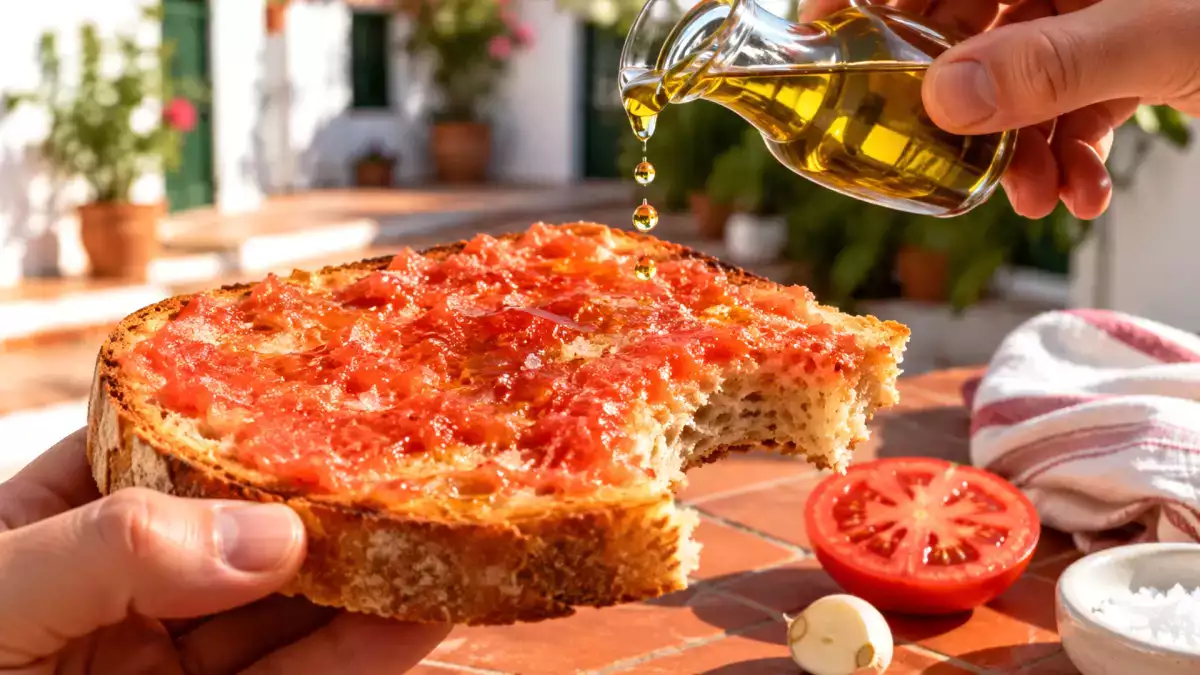
The good news is that soggy pan con tomate is completely avoidable. The secret is not adding more ingredients or making the dish fancy. It is choosing the right bread, toasting it properly, using ripe tomatoes in the right way, and serving the whole thing while the contrast is still alive: crisp bread, juicy tomato, fragrant olive oil and flaky salt.
Think of pan con tomate as a lesson in balance. The bread should be sturdy enough to hold the tomato, the tomato should be ripe enough to melt into the surface, and the olive oil should make everything glossy without drowning it. When it works, it is one of the greatest summer bites on earth.
Start with the right bread
The bread is not just a platform. It is half the dish. If the bread is too soft, thin or fluffy, it will surrender immediately to the tomato juice. For pan con tomate, you want bread with structure, crust and character. A rustic country loaf, sourdough, ciabatta, baguette-style bread or Spanish-style pan de cristal can all work if they toast up crisp and have enough body.
Food & Wine notes that Spanish chefs look for bread that can support tomato and olive oil without becoming soggy, while still adding its own texture and flavour. That is the whole game. The bread needs little pockets, ridges and crags to catch the tomato, but it also needs enough toastiness to resist collapsing.
A useful rule: if the bread would make a flimsy sandwich, it is probably too delicate for pan con tomate.
Food & Wine notes that Spanish chefs look for bread that can support tomato and olive oil without becoming soggy, while still adding its own texture and flavour. That is the whole game. The bread needs little pockets, ridges and crags to catch the tomato, but it also needs enough toastiness to resist collapsing.
A useful rule: if the bread would make a flimsy sandwich, it is probably too delicate for pan con tomate.
Toast harder than you think
Lightly warmed bread is not enough. Pan con tomate needs toast with real structure. The outside should be crisp, golden and slightly rough, because that rough surface helps grab the garlic and tomato. A soft centre is fine, but the surface needs backbone.
You can toast the bread under a grill, in a toaster, on a griddle pan or over barbecue coals. The point is to drive off some surface moisture and create a crisp barrier before the tomato arrives. If your bread is thick, toast both sides. If it is very open-crumbed, watch it closely so the edges do not burn before the middle crisps.
The best test is simple: rub the toast gently with a cut garlic clove. If the surface rasps the garlic slightly, you are in the right zone. If the bread bends sadly, toast it longer.
You can toast the bread under a grill, in a toaster, on a griddle pan or over barbecue coals. The point is to drive off some surface moisture and create a crisp barrier before the tomato arrives. If your bread is thick, toast both sides. If it is very open-crumbed, watch it closely so the edges do not burn before the middle crisps.
The best test is simple: rub the toast gently with a cut garlic clove. If the surface rasps the garlic slightly, you are in the right zone. If the bread bends sadly, toast it longer.
Choose ripe tomatoes, not watery tomatoes
Pan con tomate lives or dies by the tomato. You want fruit that is ripe, fragrant and juicy, but not so watery that it floods the bread. Summer tomatoes are ideal because they have sweetness and acidity at the same time. Plum tomatoes, beefsteak tomatoes, heirloom tomatoes or very ripe vine tomatoes can all work beautifully.
Avoid fridge-cold, bland tomatoes if you can. Cold tomatoes taste muted, and this dish has nowhere for weak flavour to hide. Let tomatoes come to room temperature, taste them first, and season accordingly. If the tomato is sweet and lively, you need very little help. If it is mild, a little extra salt and excellent olive oil become even more important.
Avoid fridge-cold, bland tomatoes if you can. Cold tomatoes taste muted, and this dish has nowhere for weak flavour to hide. Let tomatoes come to room temperature, taste them first, and season accordingly. If the tomato is sweet and lively, you need very little help. If it is mild, a little extra salt and excellent olive oil become even more important.
Rub or grate? Pick your texture
There are two popular approaches. The first is to cut a ripe tomato in half and rub it directly onto the toast, letting the pulp catch on the rough bread. This is wonderfully simple and keeps the texture light. The second is to grate the tomato flesh on a box grater, discard the skin, season the pulp, and spoon it over the toast.
The direct-rub method is classic and fast. The grated method gives you more control, especially if you are making several pieces at once. But here is the soggy-bread warning: if your grated tomato mixture is very wet, let it sit in a sieve for a minute or spoon from the top rather than pouring all the watery juice onto the bread.
The aim is tomato pulp, not tomato soup.
The direct-rub method is classic and fast. The grated method gives you more control, especially if you are making several pieces at once. But here is the soggy-bread warning: if your grated tomato mixture is very wet, let it sit in a sieve for a minute or spoon from the top rather than pouring all the watery juice onto the bread.
The aim is tomato pulp, not tomato soup.
Use garlic like seasoning, not wallpaper paste
Garlic is optional in some versions, but it is very welcome if used with restraint. Take a cut clove and rub it gently over the hot toast. The rough surface will catch the garlic oils, giving the bread fragrance without turning the dish harsh or overpowering.
Do not mince raw garlic and spread it thickly unless you enjoy alarming everyone at the table. Pan con tomate is about freshness and balance. A gentle garlic rub gives you aroma, warmth and depth, while still letting the tomato stay in charge.
Do not mince raw garlic and spread it thickly unless you enjoy alarming everyone at the table. Pan con tomate is about freshness and balance. A gentle garlic rub gives you aroma, warmth and depth, while still letting the tomato stay in charge.
Add olive oil with confidence, but not chaos
Good olive oil is essential. It rounds the tomato, enriches the bread and gives the dish its glossy, Mediterranean finish. But too much oil too early can soften the bread faster, especially if the tomato is already juicy.
There are two smart options. You can drizzle a little olive oil onto the toasted bread before the tomato to create flavour and a slight barrier. Or you can add the tomato first, then finish with oil on top. Either way, use a good extra-virgin olive oil and avoid drowning the toast. The goal is shine, not a puddle.
There are two smart options. You can drizzle a little olive oil onto the toasted bread before the tomato to create flavour and a slight barrier. Or you can add the tomato first, then finish with oil on top. Either way, use a good extra-virgin olive oil and avoid drowning the toast. The goal is shine, not a puddle.
Salt at the right moment
Salt is small but mighty here. It wakes up the tomato, sharpens the olive oil and makes the whole tapa taste complete. Use flaky sea salt if you have it, or a small pinch of fine salt if that is what is in the kitchen.
If you are grating tomatoes in advance, season lightly and taste before serving. Salt draws moisture from tomatoes, so if the mixture sits too long, it can become wetter. That does not mean you cannot prep it briefly, but do not salt a bowl of grated tomatoes and abandon it for an hour unless you plan to drain it.
If you are grating tomatoes in advance, season lightly and taste before serving. Salt draws moisture from tomatoes, so if the mixture sits too long, it can become wetter. That does not mean you cannot prep it briefly, but do not salt a bowl of grated tomatoes and abandon it for an hour unless you plan to drain it.
Serve immediately: the non-negotiable rule
The simplest anti-soggy rule is also the most important: serve pan con tomate immediately. This is not a make-ahead canapé. It is a dish built on contrast, and contrast has a timer. The tomato begins softening the bread the moment it lands.
If you are hosting, toast the bread ahead of time, prepare the tomatoes, and assemble just before serving. Better yet, turn it into a little DIY moment: put the toast, tomato, garlic, oil and salt on the table and let everyone build their own. That keeps the bread crisp and adds a bit of cheerful tapas theatre.
If you are hosting, toast the bread ahead of time, prepare the tomatoes, and assemble just before serving. Better yet, turn it into a little DIY moment: put the toast, tomato, garlic, oil and salt on the table and let everyone build their own. That keeps the bread crisp and adds a bit of cheerful tapas theatre.
Add Serrano ham for a tapas-style upgrade
Once the basic pan con tomate is crisp and juicy, you can turn it into a more substantial tapa with Serrano ham. The ham brings saltiness, depth and a silky texture that pairs beautifully with sweet tomato and toasted bread. It still feels simple, but it becomes more satisfying for an aperitif, brunch or casual summer dinner.
The key is to keep the same anti-soggy logic. Toast the bread well, rub with garlic if you like, add the tomato, finish with olive oil and salt, then place the ham on top at the last moment. This keeps the bread lively and the ham delicate.
The key is to keep the same anti-soggy logic. Toast the bread well, rub with garlic if you like, add the tomato, finish with olive oil and salt, then place the ham on top at the last moment. This keeps the bread lively and the ham delicate.
Tomato and serrano ham toast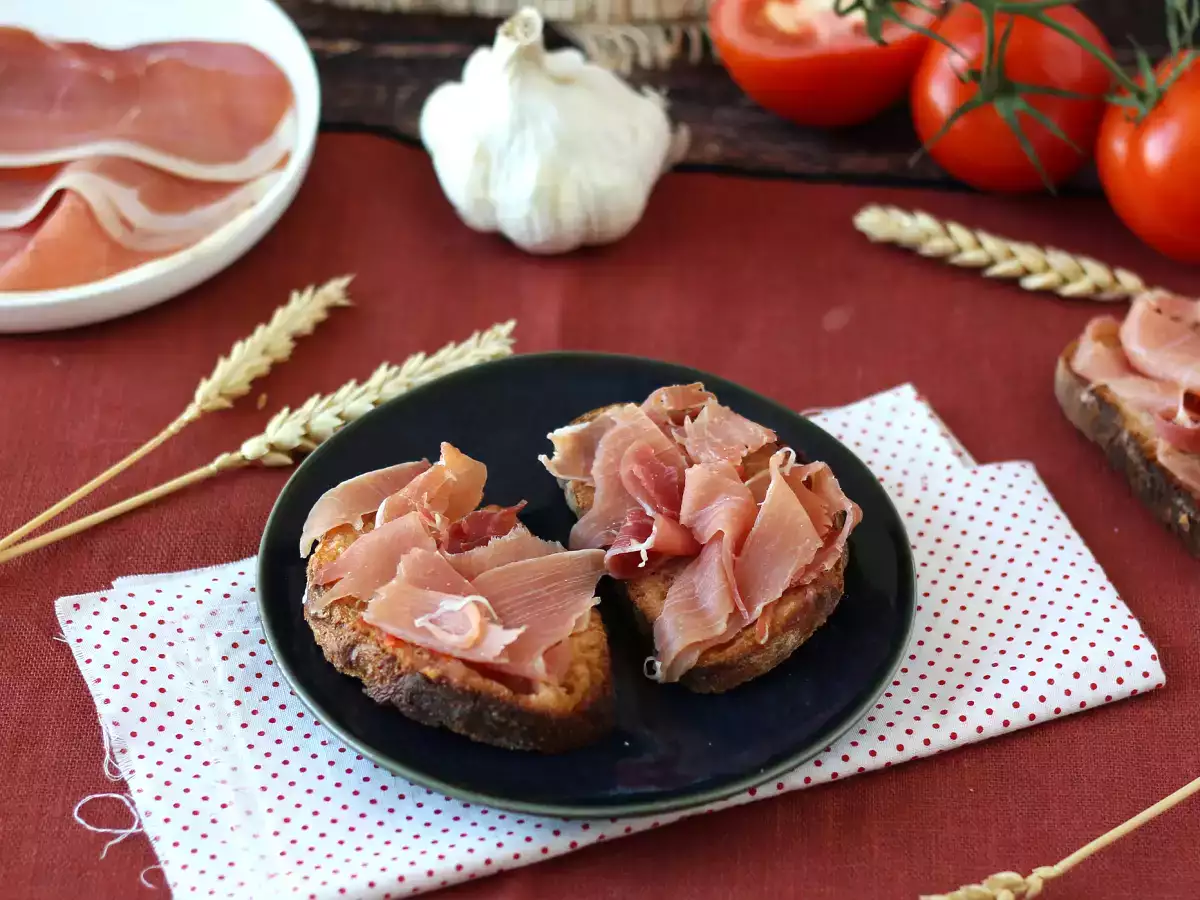
For a super-simple, quick, no-cook meal, we always turn to open-faced toasts ! Today, we’re making a version with delicious Spanish flavors, inspired by the famous "pan con tomate" , the well-known tapa made with toasted bread rubbed with garlic and...
Common mistakes that make pan con tomate soggy
The biggest mistake is using bread that is too soft. The second is not toasting it enough. The third is dumping watery tomato liquid onto the bread instead of using pulp. The fourth is assembling everything too early and expecting the toast to remain heroic.
Other small errors matter too: using fridge-cold tomatoes, adding too much oil, skipping salt, or slicing the bread too thin. Pan con tomate is simple, so every detail is visible. The good news is that fixing it is easy: sturdy bread, strong toast, ripe tomato, controlled juice, good oil, salt and speed.
Other small errors matter too: using fridge-cold tomatoes, adding too much oil, skipping salt, or slicing the bread too thin. Pan con tomate is simple, so every detail is visible. The good news is that fixing it is easy: sturdy bread, strong toast, ripe tomato, controlled juice, good oil, salt and speed.
The takeaway
Great pan con tomate is all about contrast. You want crisp bread and juicy tomato, not wet bread and watery topping. Choose a sturdy loaf, toast it properly, use ripe room-temperature tomatoes, drain excess juice if needed, season well and assemble right before eating.
That is the whole secret. No fuss, no overthinking, no soggy disappointment. Just a golden slice of toast, a ripe tomato, a drizzle of olive oil, a pinch of salt and maybe a little Serrano ham if you are feeling festive. Summer tapas does not need to be complicated. It just needs to be crunchy.
That is the whole secret. No fuss, no overthinking, no soggy disappointment. Just a golden slice of toast, a ripe tomato, a drizzle of olive oil, a pinch of salt and maybe a little Serrano ham if you are feeling festive. Summer tapas does not need to be complicated. It just needs to be crunchy.
 Juliette Hess
I have been creating culinary content for Petitchef since 2017.
I love travelling and discovering new dishes, trying out new food trends and exploring new restaurants.
I’m a huge fan of pasta and noodles in all their forms ❤ from udon noodles to tagliatelle, I love cooking them and even making them from scratch!
I’m currently preparing, filming and photographing your next recipe, and I hope you’ll enjoy it!
I love travelling and discovering new dishes, trying out new food trends and exploring new restaurants.
I’m a huge fan of pasta and noodles in all their forms ❤ from udon noodles to tagliatelle, I love cooking them and even making them from scratch!
I’m currently preparing, filming and photographing your next recipe, and I hope you’ll enjoy it!
Comments