Baked potatoes that are mushy and lack a crispy crust? The mistake that ruins the browning and the simple step to take before putting them in the oven to make them crispy on the outside and soft on the inside
Friday 9 October 2026 21:00 - Daniele Mainieri
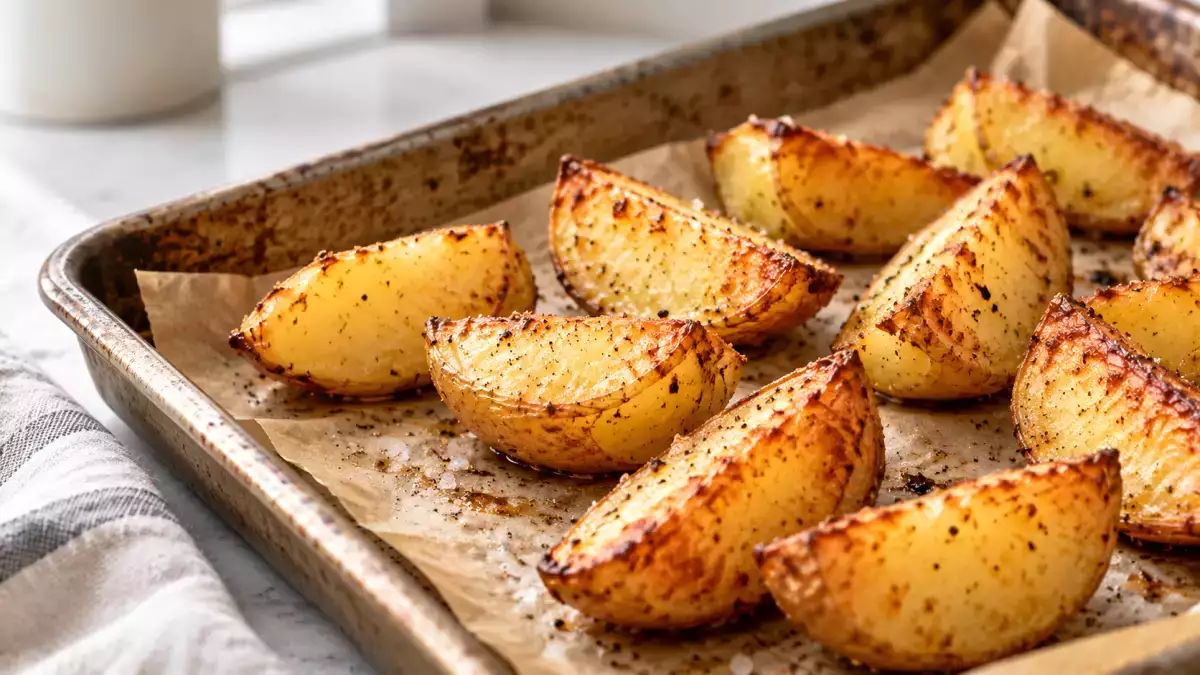
Baked potatoes seem like a super-easy recipe: you cut them, season them, pop them in the oven, and wait for that wonderful aroma. But then comes the moment of truth: instead of a golden, crispy crust, we end up with pale, soggy, and somewhat lackluster potatoes on our plates.
The thing is, that crispy crust doesn’t just depend on the oven temperature, it depends on what happens before you put them in the oven. The detail that makes all the difference? Managing the starch and moisture properly.
Why do baked potatoes stay soft and not form a crust?
When baked potatoes don’t turn out crispy, there’s almost always a very simple technical reason: there’s too much moisture left on the surface. Water is the enemy of browning, because it must evaporate first, and only then can the reaction that makes the surface browned, dry, and appetizing begin.
The second obstacle is excess starch. After being cut, potatoes release a whitish film: if it remains on the surface, it tends to create a sticky coating that’s more likely to steam than to roast. That’s why the potatoes seem cooked—perhaps even soft on the inside—but don’t develop that crispy crust we expect on the outside.
Basically, if the potatoes go into the oven while they’re still damp, cold, and sticky, the oven has to do double duty: dry them out and then brown them. It often doesn’t do this very well, especially if the baking sheet is full or if the pieces are piled up.
The second obstacle is excess starch. After being cut, potatoes release a whitish film: if it remains on the surface, it tends to create a sticky coating that’s more likely to steam than to roast. That’s why the potatoes seem cooked—perhaps even soft on the inside—but don’t develop that crispy crust we expect on the outside.
Basically, if the potatoes go into the oven while they’re still damp, cold, and sticky, the oven has to do double duty: dry them out and then brown them. It often doesn’t do this very well, especially if the baking sheet is full or if the pieces are piled up.
The mistake that ruins the crust: skipping the rinsing and drying steps
The most underrated step is this: after cutting the potatoes, you need to remove some of the surface starch and dry them very thoroughly. Skipping this step is the mistake that makes baked potatoes mushy, shiny, and not very golden.
The method is simple. Cut the potatoes into wedges or cubes, place them in a bowl of cold water, and let them soak for at least 20–30 minutes. The water will become slightly cloudy: that’s the starch washing away. Then drain them and—here comes the crucial step—dry them thoroughly with a clean dish towel or paper towels.
Wet potatoes won’t turn out crispy: that’s the rule to remember. Even a tiny bit of water can turn baking into a mini steaming session. And steam, while useful in many recipes, isn’t a crisp skin’s best friend.
The method is simple. Cut the potatoes into wedges or cubes, place them in a bowl of cold water, and let them soak for at least 20–30 minutes. The water will become slightly cloudy: that’s the starch washing away. Then drain them and—here comes the crucial step—dry them thoroughly with a clean dish towel or paper towels.
Wet potatoes won’t turn out crispy: that’s the rule to remember. Even a tiny bit of water can turn baking into a mini steaming session. And steam, while useful in many recipes, isn’t a crisp skin’s best friend.
What to do before putting them in the oven
Before baking the potatoes, it’s a good idea to follow a few simple steps. It’s not complicated, but it makes all the difference between a run-of-the-mill side dish and potatoes that are crispy on the outside and soft on the inside.
Another useful tip is to preheat the baking sheet in the oven before adding the potatoes. When the pieces touch a surface that’s already hot, they immediately start sizzling and create a drier base.
- Choose the right potatoes: yellow-fleshed varieties are excellent for a well-balanced texture.
- Cut them into similar-sized pieces: this way, they’ll cook evenly, and you won’t end up with some burnt and others undercooked.
- Rinse them or let them soak: this helps remove the surface starch.
- Dry them thoroughly: this is the most important step for a dry, golden-brown surface.
- Toss them in a bowl: oil, salt, rosemary, garlic, or spices should coat each piece well.
- Space them out widely on the baking sheet: if they touch too much, they’ll release moisture and become mushy.
Another useful tip is to preheat the baking sheet in the oven before adding the potatoes. When the pieces touch a surface that’s already hot, they immediately start sizzling and create a drier base.
Oven, baking sheet, and temperature: the details that matter
At what temperature should you bake potatoes to make them crispy? A high temperature is essential: generally 200–220°C, preferably using the convection setting when available. The intense heat helps moisture evaporate quickly and promotes browning.
But be careful: it’s not enough to just turn up the oven if the baking sheet is as packed as a bus during rush hour. Potatoes need space. If they’re stacked on top of each other, they’ll release steam onto one another, and that crispy crust will wave goodbye from the window.
The type of baking dish also matters. A wide, shallow dish—preferably metal—allows for more direct cooking compared to a tall glass or ceramic dish, which tends to trap more moisture. Baking paper is convenient, but it shouldn’t turn into a wet blanket: if the potatoes are dry and well-oiled, it will work just fine.
But be careful: it’s not enough to just turn up the oven if the baking sheet is as packed as a bus during rush hour. Potatoes need space. If they’re stacked on top of each other, they’ll release steam onto one another, and that crispy crust will wave goodbye from the window.
The type of baking dish also matters. A wide, shallow dish—preferably metal—allows for more direct cooking compared to a tall glass or ceramic dish, which tends to trap more moisture. Baking paper is convenient, but it shouldn’t turn into a wet blanket: if the potatoes are dry and well-oiled, it will work just fine.
Is it better to boil the potatoes first?
Do you need to boil the potatoes before putting them in the oven? It’s not necessary, but it can really help if you want a more interesting texture. A quick pre-cook in boiling salted water—5 to 7 minutes for medium-sized pieces—softens the inside and makes the surface slightly uneven. Those little rough spots, once seasoned with oil and placed in a hot oven, become perfect spots for browning.
After parboiling, however, the same rule still applies: drain well and let them dry. You can also gently shake the potatoes in the colander to roughen the edges. There’s no need to be rough with them—just a slight shake is enough to create a surface that better “grabs” the oil.
After parboiling, however, the same rule still applies: drain well and let them dry. You can also gently shake the potatoes in the colander to roughen the edges. There’s no need to be rough with them—just a slight shake is enough to create a surface that better “grabs” the oil.
When to Add qalt to baked potatoes
When should you salt baked potatoes? You can salt them before baking, but don’t overdo it—and, most importantly, only after you’ve dried them off. Salt draws out moisture: if you season potatoes that are still damp and then let them sit for a long time, you risk ending up with a shiny, wet bowl.
The most practical way is to season them just before putting them in the oven: extra-virgin olive oil, salt, pepper, rosemary, and, if you like, a crushed clove of garlic. There should be just enough oil to coat the pieces, not to submerge them. Too little oil prevents them from drying properly, and too much oil makes them heavy; the right amount is when each piece is just slightly glistening.
The most practical way is to season them just before putting them in the oven: extra-virgin olive oil, salt, pepper, rosemary, and, if you like, a crushed clove of garlic. There should be just enough oil to coat the pieces, not to submerge them. Too little oil prevents them from drying properly, and too much oil makes them heavy; the right amount is when each piece is just slightly glistening.
Our recipe to try
If you want to put these tips into practice right away, you can start with a simple, tried-and-true recipe. It’s perfect for anyone who loves baked potatoes with the skin on, with a rustic flavor, a soft interior, and a golden crust.
Use it as a base and customize it with rosemary, paprika, thyme, unpeeled garlic, or a pinch of black pepper. The important thing is not to forget the key step: first pat dry, then season, then bake.
Oven roasted potatoes, the classic recipe
Potatoes are clearly the perfect accompaniment that can be served with all sauces! Economical, practical, and available in a whole range of preparations, this tuber never ceases to surprise us. And today, we offer you a perfect recipe for your...
Use it as a base and customize it with rosemary, paprika, thyme, unpeeled garlic, or a pinch of black pepper. The important thing is not to forget the key step: first pat dry, then season, then bake.
A quick reminder so you don't make the same mistake again
When you’re wondering how to make crispy baked potatoes, think less about magic and more about managing moisture. The goal is simple: remove excess moisture, apply high heat, and leave space on the baking sheet.
So, before you eagerly turn on the oven, remember these three steps: soak or rinse to remove the starch, dry thoroughly, and don’t overcrowd the baking sheet. They’re small steps, but they really make a difference in the final texture.
In the end, perfect baked potatoes aren’t complicated—they’re the ones that get a little extra care before baking. And yes, that clean dish towel will become your secret weapon for achieving that crispy skin.
So, before you eagerly turn on the oven, remember these three steps: soak or rinse to remove the starch, dry thoroughly, and don’t overcrowd the baking sheet. They’re small steps, but they really make a difference in the final texture.
In the end, perfect baked potatoes aren’t complicated—they’re the ones that get a little extra care before baking. And yes, that clean dish towel will become your secret weapon for achieving that crispy skin.
 Daniele Mainieri
Every day, I dive into the world of food and wine with curiosity, always looking for new flavours, recipes and inspiring discoveries to share. From traditional family dishes to the latest food trends, including pairings that make all the difference. I’ve been working in food & wine communication for over 10 years and I’m currently the Editorial Manager for the Italian edition of Petitchef.
Comments