Cooking tricks with a fork: the easiest (and most useful) multipurpose tool in your kitchen
There are utensils that promise to simplify your life and then end up in the back of the cupboard. And then there is the fork: an ordinary, cheap piece of cutlery, one of those found in every home, which unintentionally tends to be there even when everything else is missing. It functions as a small multipurpose tool in the kitchen.
We use it to eat, of course, but also to solve small domestic problems, improvise techniques and get out of trouble with surprising efficiency. With it you can beat a couple of eggs in a minute, whisk a vinaigrette when you don't feel like taking out the whisk, mash potatoes or vegetables for a quick purée... And that's just the beginning. Here are some of these everyday uses, some obvious, others less so, that explain why the fork deserves a place of its own in the drawer of must-haves. Let's discover together some unexpected uses of a simple fork.
1) Beat eggs without using the whisk attachment
2) Emulsify a vinaigrette in one minute.
A bound vinaigrette is better distributed and does not remain at the bottom. With a fork you achieve this by working the mixture against the edge of the bowl, as if you were "mashing" it. Start with vinegar (or lemon) and salt, and add the oil little by little while whisking. If there is mustard or honey, the fork crushes lumps and integrates it effortlessly.
3) Mash: rustic purees and customized textures
The fork does not leave a fine puree, and there in lies the grace: you control the texture. For boiled potatoes, mash gently (without overworking) and add butter and a little hot milk to integrate. With vegetables such as pumpkin, carrots or cauliflower, you get a quick side dish without a blender, with oil, salt and pepper. And with avocado or banana, you can adjust the point (more lumpy or thinner) and use it for toast.
4) Marking gnocchi with grooves
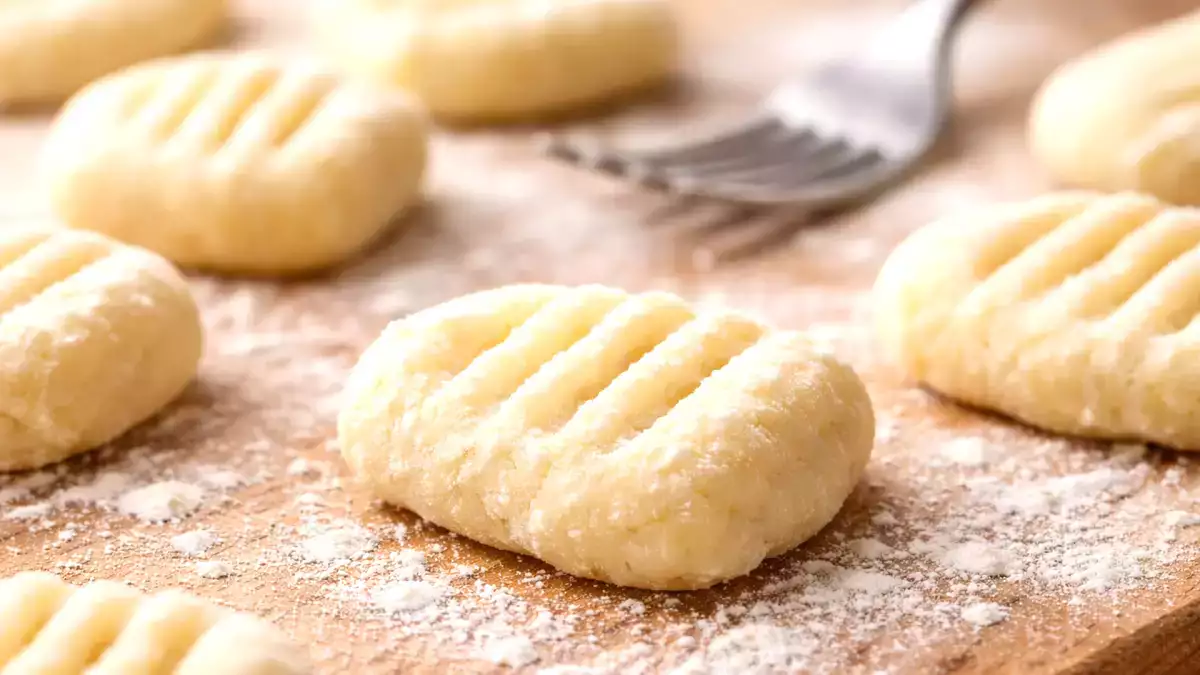
The grooves are not only to make them look nice: they help the sauce to hold. With the gnocchi on the fork, you roll it with your thumb and it marks. It's hard at first, but then it comes out quickly. If the dough sticks, a little flour on the fork and hands helps; if it cracks, it's probably too dry.
5) Deboning cooked fish with precision
In sardines or mackerel, the fork acts like a comb: it separates the meat and reveals fine bones without destroying the back. Pass the tines gently following the central spine, without crushing. It is very useful for salads, toasts or stuffing, where you want the fish clean but whole. In good light it becomes even easier.
6) Pitting cherries or olives
Rest the cherry or large olive on a board and push the pit with a pick, with a firm, straight gesture. This works best with fleshy pieces; smaller ones break up more of the pulp. Do this on kitchen paper to avoid staining, because it can splatter. It's a quick fix when you don't have a corer.
7) Prick the puff pastry so that it does not puff up.
If you need a flat puff pastry base (tartlets, mille-feuille, savory bases), pricking with a fork avoids bubbles and bulging. There is no need to overdo it: a regular pattern is enough to ensure even baking. If a recipe requires a very flat base, pricking can be combined with weight, but often only with a fork you can improve the result a lot.
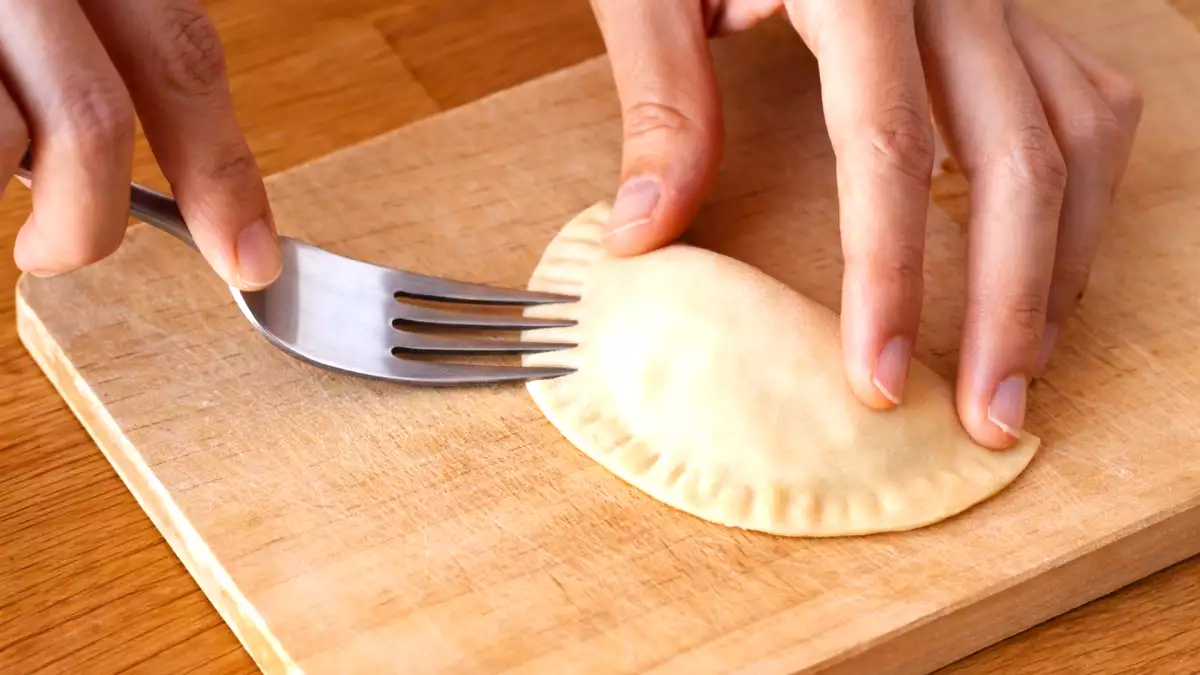
8) Sealing dumplings and dough edges
The fork crimps and decorates in one go, which is why it’s the classic method. Lightly moisten the edge of the dough with water or beaten egg, fold to close, then press firmly with the tines of a fork, without tearing the pastry. The little “tooth” marks look pretty and usually hold up well in the oven or in the pan. This trick is especially handy with thinner doughs, which can slip open if you just pinch them by hand.
4) Scrapping meat with two forks
For cooked chicken, pork or beef, two forks are a godsend: one holds and the other pulls in the opposite direction, and the meat opens in strands. It works best hot or warm and tenderly cooked; if it resists, it usually needs more time. Do it in the same pan or tray with its juices so that it does not dry out.
10) Decorate cookies with a simple pattern
Pressing the fork on the dough leaves clean and regular lines, without the need for stamps. It goes very well on butter or peanut cookies, because they flatten out and the drawing is marked. To prevent sticking, you can lightly dip the fork in sugar or flour. Keeping the same pressure on all of them gives a more uniform finish.
11) Texture drawing in glazes, creams and gratins
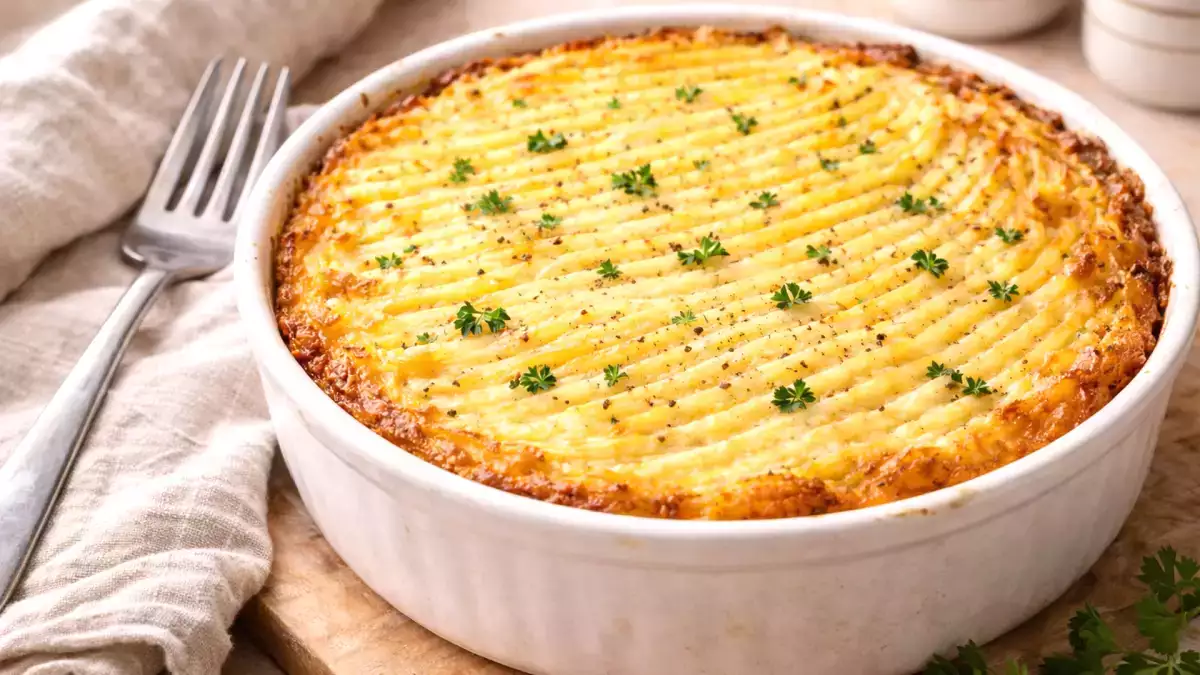
With a fork you can make stripes or waves that give a more attractive or showy finish without complication. This is a useful resource when a cream is too smooth and you want the dessert to have more visual impact. You can also use the back for smoother swirls or to smooth small areas or make patterns in certain gratins to gain presence in the plating. These are small details that elevate the presentation.
12) Check for doneness
The fork test is still one of the most reliable. Pierce the thickest part:
- If the fork slides in with no resistance, it’s done.
- If there’s still some “bite,” it needs more time.
This is especially useful with potatoes and other vegetables, where looks can be deceiving and cooking time depends a lot on size. That simple gesture helps you avoid pulling the side dish too early or overcooking it until it loses all texture.
13) Protecting the fingers in a spiralizer
Stick the fork into the end of the vegetable and use it as a grip to keep your hand away from the blade. It's a simple gesture that avoids cuts, especially when there is little left. It works well with zucchini, cucumber or carrots. Instead of squeezing with your fingers, the fork acts as a safe "handle".
14) As tongs or spatulas for turning food in the pan.
For thin fillets, mushrooms or vegetables, the fork gives a lot of precision: you hold the edge and turn without crushing. It is useful with delicate pieces that bend or break with a spatula. Be careful with non-stick pans: it is better to avoid metal to avoid scratching. But as a turning control, the gesture is very practical.
15) As a lemon squeezer
You stick the fork into the pulp and turn: it acts as an axis and breaks internal bags, getting more juice with less effort. If you do it slowly, fewer seeds fall out. If the lemon is hard, roll it first with your palm on the counter to soften it. It's a quick trick when there is no juicer.
16) Dish spaghetti in nest with ladle
Scoop a portion of spaghetti into a ladle, twist with a fork and the pasta rolls up. You drop it on the plate and it's a neat, restaurant-looking nest. It works best if the pasta is well bound with the sauce, because it holds its shape. It is a simple gesture that greatly enhances the presentation.
17) Removing chocolate shavings without a grater
When the chocolate is firm, scrape with a fork and flakes come out in seconds. They can be used to top custard, coffee or a sponge cake, and always give a better finish without effort. If you want thin shavings, scrape with less pressure; if you want them larger, press a little harder. A trick: cooling the chocolate makes it easier for it to break nicely.
18) Peeling ginger with fork edge
The tines scrape the skin without taking pulp, even in the nooks and crannies. Works better than knife and about the same as spoon, but with more control on small pieces.
What do you do with a fork when it's not your turn to eat?
If you've made it this far, you already know that a fork can be many things except "just a fork"; what about you, what do you use it for when you're not eating? What trick has gotten you out of a jam at home with one handy? What's that one trick you learned from someone? Have you invented one and been surprised that it worked? Let me know in the comments: I'm sure we'll come up with an even better list, and maybe your idea will be the one that solves another reader's day.
 Patricia González
Comments