Cut carrots for freezing without making them mushy: a quick, foolproof step-by-step guide now
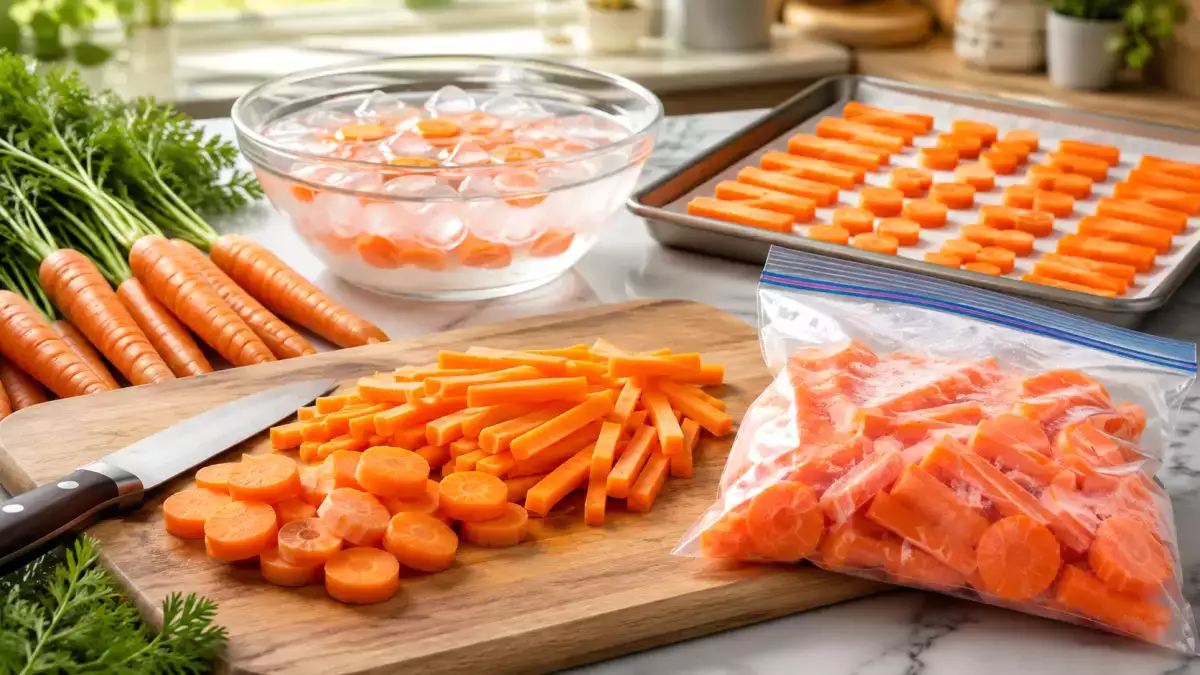
Freezing carrots seems like a very simple task: wash them, cut them up, put them in a bag, and pop them in the freezer. But when it comes time to cook them, instead of the firm, colorful rounds we imagined, we end up with mushy, waterlogged pieces.
The problem isn’t the freezer itself. What really makes a difference is how you cut the carrots, blanch them, cool them, and dry them. Skipping even just one of these steps can make a big difference in the result.
Why do frozen carrots get mushy?
Carrots contain water. During freezing, ice crystals form that can damage the structure of plant cells. When the vegetables are thawed, some of the water is lost, and the texture is inevitably less crisp than that of fresh carrots.
This does not mean, however, that they have to become spongy or fall apart as soon as they hit the pot.
Blanching before freezing serves to slow down the activity of the enzymes responsible for the deterioration of color, flavor, and texture. In fact, the guidelines from the Italian National Institute of Health (Istituto Superiore di Sanità) identify blanching as an essential step for vegetables intended for freezing.
The right way to cut carrots for freezing
The first mistake to avoid is cutting the carrots into pieces of different sizes. Thin slices and large cubes don’t blanch at the same rate: some parts may end up overcooked, while others remain almost raw.
It’s best to choose the cut based on the recipes you make most often:
- thick rounds for soups and side dishes;
- evenly sized cubes for sautéed vegetables, sauces, and risottos;
- sticks for baking or sautéing;
- grated carrots for savory pies and fillings.
It’s best to avoid slices that are too thin, as they tend to get mushy quickly.
Can you freeze raw carrots?
Yes, carrots can be frozen raw, but that isn't always the best option. As the months go by, they may change color, develop a less pleasant flavor, and become mushy when cooked.
To preserve them longer, it’s best to blanch them before freezing. This quick step slows down the processes that alter their flavor, color, and texture.
Freezing them raw can be a quick solution when you already know you’ll be using them soon in pureed soups or minestrone. If, on the other hand, you want to build up a supply to keep in the freezer for several months, it’s best to blanch them first.
How can you freeze carrots without them getting mushy?
First, choose fresh, firm carrots with no damaged parts. A carrot that’s already soft won’t become firmer in the freezer.
Wash them thoroughly, trim the ends, and peel them. Then cut them into the desired size, trying to make the pieces as uniform as possible.
Meanwhile, bring a pot of plenty of water to a boil. Add the carrots and blanch them briefly:
- about 2 minutes for rounds, cubes, and sticks;
- about 5 minutes for small whole carrots.
The time should be counted from when the water returns to a boil. Do not cook the carrots all the way through: they should only be slightly softened.
If they stay in the water too long, they’ll go into the freezer already soft, and further cooking will make the situation worse.
Why do you have to put carrots in ice water?
As soon as the blanching is finished, the carrots should be transferred to a bowl of very cold water with a few ice cubes.
This step stops the cooking process immediately. Without rapid cooling, the residual heat would continue to cook the carrots even after they’ve been removed from the pot.
Leave them in the cold water for a few minutes, until they are completely cooled. Then drain them carefully.
Drying prevents ice and watery carrots
One of the most common mistakes is putting carrots in the freezer while they’re still wet. The water left on the surface turns to ice, causing the pieces to stick together and making the carrots waterier during cooking.
After draining them, place them on a clean dish towel or a few sheets of paper towels. Gently pat them dry and let them air dry for a few minutes.
They must be cold and completely dry before freezing.
How can I keep carrots from sticking together in the freezer?
To avoid ending up with a single orange block, it’s best to freeze them initially on a tray.
Spread the carrots on a baking sheet lined with parchment paper, making sure they don’t overlap. Place them in the freezer for a few hours, and once they’ve hardened, transfer them to food storage bags.
This way, they’ll stay separate, and you can take out just the amount you need.
Remove as much air as possible from the bag, seal it tightly, and write the freezing date on it.
How long do frozen carrots last?
If prepared and stored properly, carrots can last in the freezer for about 6–8 months.
Over time, they may lose some of their color and flavor, especially if the bag contains air or has a lot of frost buildup. That’s why it’s important to use tightly sealed containers and not leave the carrots exposed inside the freezer.
Do you need to thaw carrots before cooking them?
In most cases, this isn't necessary. Frozen carrots can be added directly to minestrone, risotto, soups, sauces, and stews.
Using them while still frozen helps limit water loss and reduces the risk of them becoming too mushy. Just keep an eye on the cooking time and don’t leave them on the heat any longer than necessary.
However, they are not recommended for salads or dips, because once frozen, they do not regain the texture of fresh carrots.
The result therefore depends on a few simple steps: cutting them evenly, blanching them briefly, using ice-cold water, drying them thoroughly, and freezing them on a tray. By following these steps, the carrots will remain convenient to use, flavorful, and much more enjoyable to serve.
 Leandra Masha
Comments