Did you get flowers for Valentine's Day? The pantry ingredient that helps them last longer
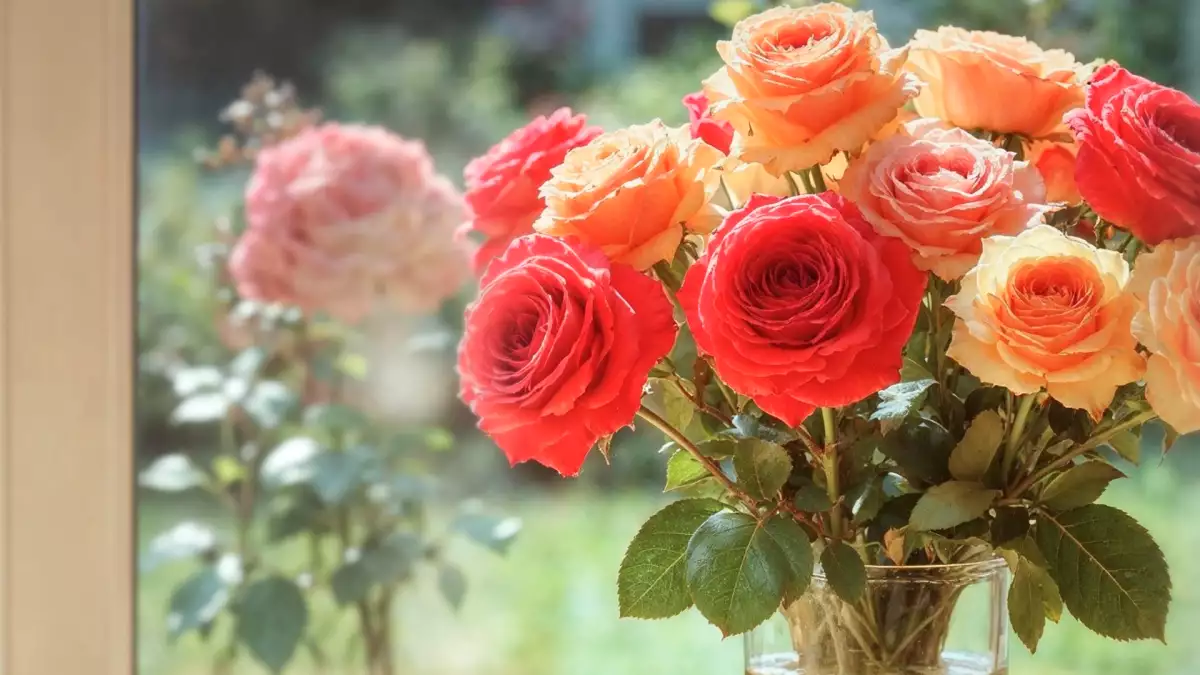
The bouquet arrives home impeccable, still with the florist's paper, and for a few hours it looks like it will last the whole week. Then the wear and tear begins: the water gets cloudy, the stems "drink" worse and the flowers lose their liveliness sooner than we would like. It is not so much bad luck as domestic biology: in a vase, the enemy is usually the same as always, bacteria.
Here comes an ingredient so common that it is hard to believe that it makes sense in a gastronomic article: sugar. Not as a magic trick, but as part of a simple preservative solution. In the cut flower arena, preservatives work in three ways: they provide carbohydrates (energy), adjust the acidity of the water to improve absorption, and add an agent that limits microbial growth. The combination "sugar + acid + a minimum dose of disinfectant" appears in technical and informative guides on cut flower preservation.
The homemade mixture
If your bouquet came with a flower food sachet, use it: it is formulated for this. If not, this domestic version is a good alternative.
For 1 liter of warm water:
- 1 tablespoon sugar
- 1 tablespoon lemon juice (or white vinegar)
- 1/2 teaspoon unscented household bleach (very little)
This proportion - with small variations according to the source - is the one that is repeated with more consistency when explaining why (nutrition + pH + microbial control).
Important: use normal bleach, not mixed with other products, and do not overdo it with the amount. In this case, more is not better.
How to apply it to make it work
The mixture helps, yes, but what prolongs the life of the bouquet is the whole "pack":
- Well-cleaned vase. First of all, wash the vase with hot soapy water. Reducing the initial bacterial load changes the outcome.
- Trim the stems diagonally (0.4-0.8 inches/1-2 cm) with knife or sharp scissors. And repeat the cutting every few days.
- Remove leaves under water. If they remain submerged, they degrade quickly and cloud the vase.
- Change the water regularly. The most reasonable guideline: every 2-3 days, or sooner if it looks cloudy. Take the opportunity to rinse the vase and renew the mixture.
- Smart location. Avoid direct sun and heat sources. And, if you can, don't put it next to the fruit bowl: some fruits release ethylene, a gas that accelerates the aging of plant tissues.
A Valentine's Day that lasts
In the end, the bouquet lasts longer when you treat it like what it is: a delicate food, only in flower form. A little sugar, clean water and two trims in time are usually enough to stretch the beautiful point a few more days.
 Patricia González
Comments