Does filling half your plate with vegetables make you lose weight? Not by itself
Friday 18 September 2026 17:00 - Juliette Hess
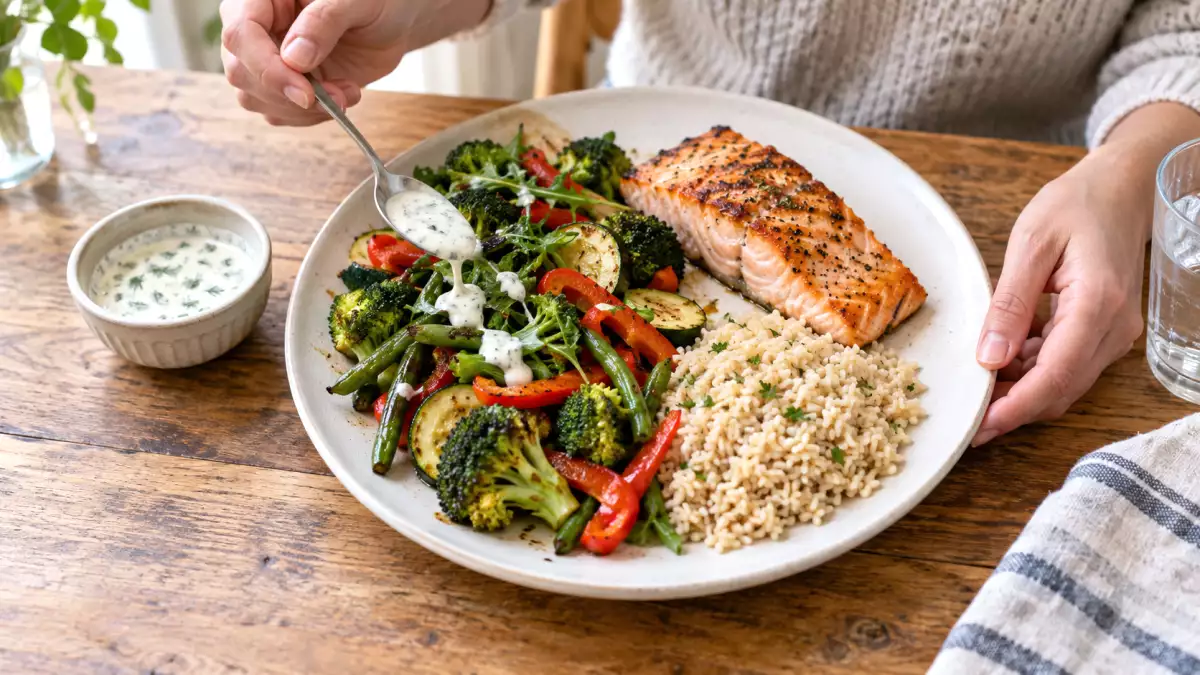
The method can help because non-starchy vegetables add volume, fibre, colour and texture for relatively few calories. They can make a meal feel fuller and more balanced, especially when they replace larger portions of fried foods, refined starches or heavy sauces. But vegetables on half the plate do not erase everything else on the plate.
Weight loss still depends on the whole pattern: portion sizes, cooking fats, sauces, snacks, drinks, protein, sleep, activity, medical factors and how consistently the pattern is repeated. So the better question is not “does the plate method cause weight loss?” It is: does it help you build meals that make weight management easier?
What the half-vegetable plate method actually means
The basic idea is visual: make about half the plate vegetables, then divide the other half between a protein source and a starchy food or whole grain.
This is not meant to be a mathematical diet rule. It is a simple way to build meals that are less dominated by large portions of refined starches, fried foods or calorie-dense sides.
The framework works best with non-starchy vegetables such as leafy greens, broccoli, peppers, courgette, cabbage, tomatoes, carrots, mushrooms or green beans. Potatoes, sweetcorn and peas can still fit into a healthy meal, but they behave more like starchy foods than salad greens.
This is not meant to be a mathematical diet rule. It is a simple way to build meals that are less dominated by large portions of refined starches, fried foods or calorie-dense sides.
The framework works best with non-starchy vegetables such as leafy greens, broccoli, peppers, courgette, cabbage, tomatoes, carrots, mushrooms or green beans. Potatoes, sweetcorn and peas can still fit into a healthy meal, but they behave more like starchy foods than salad greens.
Why it can help with weight management
Vegetables and fruits can reduce the total calories in a meal when they replace more calorie-dense foods without making the portion look tiny. This matters because many people struggle less with healthy eating when meals still feel generous.
Vegetables also bring fibre and water, which can support fullness. A plate with vegetables, protein and a sensible starch usually feels more satisfying than a small portion of diet food.
That is why the method can be useful: it changes the structure of the meal before you start counting every detail.
Vegetables also bring fibre and water, which can support fullness. A plate with vegetables, protein and a sensible starch usually feels more satisfying than a small portion of diet food.
That is why the method can be useful: it changes the structure of the meal before you start counting every detail.
Why it does not guarantee weight loss
The plate method does not automatically create a calorie deficit. A meal can be half vegetables and still become energy-dense if the vegetables are covered in butter, cream, cheese, oil-heavy dressing or fried toppings.
The other half of the plate also matters. Large portions of refined starches, fatty meats, sugary drinks, alcohol, desserts or frequent snacks can easily offset the benefit of adding more vegetables.
In other words, half a plate of vegetables helps the pattern, but it does not control the whole day.
The other half of the plate also matters. Large portions of refined starches, fatty meats, sugary drinks, alcohol, desserts or frequent snacks can easily offset the benefit of adding more vegetables.
In other words, half a plate of vegetables helps the pattern, but it does not control the whole day.
The rest of the plate needs structure too
A useful plate does not stop at vegetables. The protein quarter helps the meal feel satisfying, and the starch or whole-grain quarter gives energy and makes the meal practical.
Good protein options include fish, poultry, eggs, tofu, beans, lentils, yoghurt or lean meats. Better starch choices include whole grains, potatoes, brown rice, wholegrain pasta or beans, depending on the meal.
If the rest of the plate is unplanned, the vegetable half becomes decoration rather than a strategy.
Good protein options include fish, poultry, eggs, tofu, beans, lentils, yoghurt or lean meats. Better starch choices include whole grains, potatoes, brown rice, wholegrain pasta or beans, depending on the meal.
If the rest of the plate is unplanned, the vegetable half becomes decoration rather than a strategy.
The hidden calorie traps
The most common problem is not the vegetables. It is what comes with them. Creamy dressings, large amounts of oil, buttery cooking, cheese-heavy toppings, croutons, fried coatings and sweet sauces can change the meal quickly.
That does not mean the plate has to be dry or joyless. It means fats and extras should be used intentionally: a drizzle of olive oil, a spoonful of yoghurt dressing, some seeds, herbs, lemon or vinegar can add flavour without turning the vegetable half into the calorie center of the meal.
The goal is better balance, not punishment.
That does not mean the plate has to be dry or joyless. It means fats and extras should be used intentionally: a drizzle of olive oil, a spoonful of yoghurt dressing, some seeds, herbs, lemon or vinegar can add flavour without turning the vegetable half into the calorie center of the meal.
The goal is better balance, not punishment.
It also depends on what happens outside dinner
A half-vegetable dinner cannot carry the entire day if breakfast, snacks, drinks and desserts are pushing energy intake higher than the body uses.
Sugary drinks, alcohol, grazing, large coffee drinks, ultra-processed snacks and oversized portions can all influence weight management even when dinner looks balanced.
The plate method works best when it becomes part of a broader eating pattern, not a single healthy-looking meal placed in an otherwise unchanged day.
Sugary drinks, alcohol, grazing, large coffee drinks, ultra-processed snacks and oversized portions can all influence weight management even when dinner looks balanced.
The plate method works best when it becomes part of a broader eating pattern, not a single healthy-looking meal placed in an otherwise unchanged day.
Who may need a different approach
The half-vegetable plate method is not equally useful for everyone. Athletes, very active people, people with higher energy needs, children, pregnant people, older adults with low appetite and people recovering from illness may need more energy or protein than a standard plate suggests.
People managing diabetes, digestive conditions, eating disorders, kidney disease or other medical issues may also need more individual guidance.
A plate picture is a helpful tool, but it is not a medical plan.
People managing diabetes, digestive conditions, eating disorders, kidney disease or other medical issues may also need more individual guidance.
A plate picture is a helpful tool, but it is not a medical plan.
How to use the method in a realistic way
Start with one meal per day rather than trying to redesign everything at once. Choose vegetables you actually like, then add enough protein and a satisfying starch so the meal does not leave you searching for snacks an hour later.
Use a normal-sized plate, not a platter. Cook vegetables in a way that makes them appealing: roasted, grilled, steamed, stir-fried, raw, shredded into salads or added to soups and stews.
The method succeeds when it is repeatable.
Use a normal-sized plate, not a platter. Cook vegetables in a way that makes them appealing: roasted, grilled, steamed, stir-fried, raw, shredded into salads or added to soups and stews.
The method succeeds when it is repeatable.
The takeaway
The half-vegetable plate method can support weight management because it makes meals more structured, colourful, filling and less dominated by calorie-dense foods.
But it does not cause weight loss automatically. The rest of the plate, the sauces, the drinks, the snacks and the overall routine still matter.
Use it as a framework: half vegetables for volume and fibre, a quarter protein for fullness, a quarter starch for energy, and enough flexibility to keep eating enjoyable.
But it does not cause weight loss automatically. The rest of the plate, the sauces, the drinks, the snacks and the overall routine still matter.
Use it as a framework: half vegetables for volume and fibre, a quarter protein for fullness, a quarter starch for energy, and enough flexibility to keep eating enjoyable.
 Juliette Hess
I have been creating culinary content for Petitchef since 2017.
I love travelling and discovering new dishes, trying out new food trends and exploring new restaurants.
I’m a huge fan of pasta and noodles in all their forms ❤ from udon noodles to tagliatelle, I love cooking them and even making them from scratch!
I’m currently preparing, filming and photographing your next recipe, and I hope you’ll enjoy it!
I love travelling and discovering new dishes, trying out new food trends and exploring new restaurants.
I’m a huge fan of pasta and noodles in all their forms ❤ from udon noodles to tagliatelle, I love cooking them and even making them from scratch!
I’m currently preparing, filming and photographing your next recipe, and I hope you’ll enjoy it!
Comments