During a heatwave, how can you tell if your fridge is staying cold enough: practical checks to try
Friday 14 August 2026 12:00 - Juliette Hess
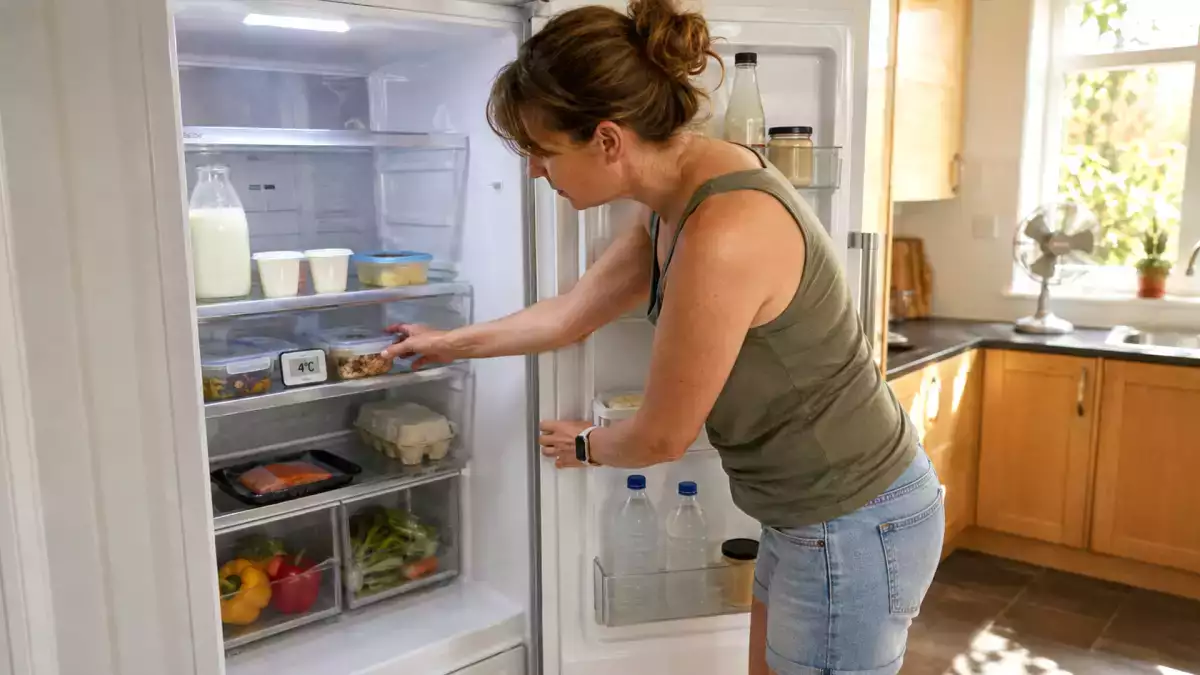
The cheerful answer is that checking is easy. The serious answer is that it matters. During hot weather, chilled foods can warm up faster when they are carried home, unpacked slowly, left on the counter or stored in a fridge that is struggling to keep up. Meat, fish, dairy, leftovers, cooked rice, cut fruit, deli foods and ready-to-eat salads all need proper chilling to stay safer.
The goal is not to panic every time the temperature rises. It is to make a few smart moves: check the fridge temperature, keep the door closed, cool leftovers quickly, avoid overloading the shelves and know when food has spent too long in the danger zone. Your fridge can be a heatwave hero, but only if it is actually doing its job.
What temperature should your fridge be?
In the UK, food-safety advice is clear: your fridge should be at 5°C or below, and the Food Standards Agency recommends the safe chilled range of 0°C to 5°C. In US guidance, the equivalent target is 40°F or below. Those numbers are not decorative. They help slow the growth of bacteria that can make food unsafe.
A heatwave is a good time to stop guessing. The dial inside a fridge is not always a temperature reading; it may simply be a power setting. That means “3” or “medium” does not necessarily tell you whether your yogurt, chicken or leftovers are safely chilled.
The simplest fix is to use a separate fridge thermometer. Put it inside, let it settle, and check it regularly during hot spells.
A heatwave is a good time to stop guessing. The dial inside a fridge is not always a temperature reading; it may simply be a power setting. That means “3” or “medium” does not necessarily tell you whether your yogurt, chicken or leftovers are safely chilled.
The simplest fix is to use a separate fridge thermometer. Put it inside, let it settle, and check it regularly during hot spells.
Where to put the thermometer
For a useful reading, place the thermometer in the middle of the fridge, not right next to the door. The door is usually warmer because it is opened often, and it is also affected by warm air every time someone stands there deciding what they want while slowly cooling the entire kitchen with indecision.
Check the reading after the fridge has been closed for a while. If it is above the recommended range, adjust the setting colder and check again later. If the fridge still cannot stay cold, especially during a heatwave, it may need maintenance, less crowding or a repair.
Think of the thermometer as a tiny kitchen truth-teller. No drama, just data.
Check the reading after the fridge has been closed for a while. If it is above the recommended range, adjust the setting colder and check again later. If the fridge still cannot stay cold, especially during a heatwave, it may need maintenance, less crowding or a repair.
Think of the thermometer as a tiny kitchen truth-teller. No drama, just data.
Why heatwaves make fridges work harder
A fridge works by moving heat out of the cabinet. During a heatwave, the surrounding room is warmer, food arrives home warmer, and the appliance may have to work harder to maintain a safe temperature. If the fridge is old, badly placed, overfilled or opened constantly, the problem gets worse.
Keep the fridge away from direct sunlight, ovens and radiators where possible. Make sure there is some space around it for ventilation, especially at the back. If the coils or vents are dusty, the appliance can be less efficient. During very hot weather, small maintenance habits can help the fridge perform better.
The fridge is not being moody. It is just battling a warm kitchen and a household that keeps opening the door for cold drinks.
Keep the fridge away from direct sunlight, ovens and radiators where possible. Make sure there is some space around it for ventilation, especially at the back. If the coils or vents are dusty, the appliance can be less efficient. During very hot weather, small maintenance habits can help the fridge perform better.
The fridge is not being moody. It is just battling a warm kitchen and a household that keeps opening the door for cold drinks.
Do not overload the fridge
A packed fridge might look efficient, but cold air needs room to circulate. If every shelf is crammed with tubs, bottles, bags and mystery foil parcels, the fridge may struggle to cool evenly. Some foods may stay cold while others sit in warmer pockets.
During a heatwave, organise the fridge so air can move. Put high-risk foods such as meat, fish, dairy, cooked rice, leftovers and ready-to-eat foods where they stay properly chilled. Avoid blocking vents. Use clear containers so you can find things quickly and close the door faster.
A tidy fridge is not just satisfying. It is a food-safety tool with shelves.
During a heatwave, organise the fridge so air can move. Put high-risk foods such as meat, fish, dairy, cooked rice, leftovers and ready-to-eat foods where they stay properly chilled. Avoid blocking vents. Use clear containers so you can find things quickly and close the door faster.
A tidy fridge is not just satisfying. It is a food-safety tool with shelves.
Keep the door closed as much as possible
Every time the fridge door opens, warm air gets in. During a heatwave, that warm air can be really warm. The fridge then has to cool everything down again, which takes time and energy. If children, housemates or snack-seeking adults keep opening the door just to browse, the temperature can creep up.
Try a heatwave rule: know what you want before you open the fridge. Keep drinks in one easy-to-reach place. Move frequently used items toward the front. If you are cooking, take out everything you need at once rather than opening the door ten times.
It sounds small, but in hot weather, small fridge habits add up.
Try a heatwave rule: know what you want before you open the fridge. Keep drinks in one easy-to-reach place. Move frequently used items toward the front. If you are cooking, take out everything you need at once rather than opening the door ten times.
It sounds small, but in hot weather, small fridge habits add up.
Cool leftovers quickly before storing
Leftovers are wonderful, but they need cooling and chilling properly. Hot food should not sit on the counter for hours, especially during a heatwave. Food-safety guidance commonly uses the two-hour rule: perishable foods should be refrigerated within two hours, and in very hot conditions, that window can be shorter.
To cool food faster, divide it into shallow containers, leave space for heat to escape briefly, then refrigerate promptly. Do not put a giant steaming pot straight into the fridge if it will warm everything around it. But do not leave it out all evening either. The goal is quick cooling, then proper chilling.
For rice, pasta, meat, fish and creamy dishes, be especially careful. These are not foods to abandon on a warm worktop while everyone forgets about them.
To cool food faster, divide it into shallow containers, leave space for heat to escape briefly, then refrigerate promptly. Do not put a giant steaming pot straight into the fridge if it will warm everything around it. But do not leave it out all evening either. The goal is quick cooling, then proper chilling.
For rice, pasta, meat, fish and creamy dishes, be especially careful. These are not foods to abandon on a warm worktop while everyone forgets about them.
What foods need the most attention?
Some foods are more sensitive than others. During a heatwave, pay extra attention to raw meat and poultry, fish, seafood, milk, yogurt, soft cheese, cooked rice, cooked pasta, leftovers, deli meats, pâté, cut fruit, prepared salads and desserts with cream or custard.
These foods should go into the fridge quickly after shopping, serving or cooking. If you are bringing groceries home on a hot day, pack chilled and frozen items together, use a cool bag if possible, and head home without turning the shopping trip into a scenic tour of every errand in town.
The safest chilled food is the food that spends the least time warming up.
These foods should go into the fridge quickly after shopping, serving or cooking. If you are bringing groceries home on a hot day, pack chilled and frozen items together, use a cool bag if possible, and head home without turning the shopping trip into a scenic tour of every errand in town.
The safest chilled food is the food that spends the least time warming up.
What if the fridge temperature rises?
If the thermometer shows the fridge has been too warm, do not rely only on smell or appearance. Some harmful bacteria do not change the look, smell or taste of food. First, check how high the temperature went and how long it stayed there. Then prioritise high-risk foods.
If perishable food has been above the safe chilled range for too long, especially more than a couple of hours, it may need to be discarded. That is annoying, but food poisoning is much more annoying. When in doubt with high-risk foods, do not gamble.
For lower-risk items such as whole fruit, unopened condiments or hard cheeses, the decision may be different, but meat, fish, dairy, cooked rice and leftovers deserve caution.
If perishable food has been above the safe chilled range for too long, especially more than a couple of hours, it may need to be discarded. That is annoying, but food poisoning is much more annoying. When in doubt with high-risk foods, do not gamble.
For lower-risk items such as whole fruit, unopened condiments or hard cheeses, the decision may be different, but meat, fish, dairy, cooked rice and leftovers deserve caution.
A quick heatwave fridge checklist
Use this simple checklist on hot days:
Check the thermometer: aim for 5°C or below in the UK, or 40°F or below in US guidance.
Keep the door closed: browse before opening, not during.
Do not overfill: leave space for cold air to circulate.
Chill shopping fast: get dairy, meat, fish and frozen foods home quickly.
Cool leftovers properly: shallow containers help food chill faster.
Move risky foods first: meat, fish, dairy, rice, pasta and leftovers need priority.
Clean spills: sticky shelves and leaking packs are not heatwave friends.
Trust time and temperature: not just smell.
Check the thermometer: aim for 5°C or below in the UK, or 40°F or below in US guidance.
Keep the door closed: browse before opening, not during.
Do not overfill: leave space for cold air to circulate.
Chill shopping fast: get dairy, meat, fish and frozen foods home quickly.
Cool leftovers properly: shallow containers help food chill faster.
Move risky foods first: meat, fish, dairy, rice, pasta and leftovers need priority.
Clean spills: sticky shelves and leaking packs are not heatwave friends.
Trust time and temperature: not just smell.
The takeaway
During a heatwave, your fridge should be treated like the quiet hero of the kitchen. It needs to stay cold enough, have enough airflow and avoid constant door-opening chaos. The key number is simple: 5°C or below in UK guidance, or 40°F or below in US guidance.
Use a fridge thermometer, organise the shelves, chill high-risk foods quickly and cool leftovers in shallow containers. If food has been too warm for too long, especially meat, fish, dairy, cooked rice or leftovers, be cautious rather than brave.
A cold fridge will not make the heatwave disappear, but it will help keep dinner safer, milk fresher and your kitchen a little less dramatic. And honestly, during hot weather, we will take every small victory we can get.
Use a fridge thermometer, organise the shelves, chill high-risk foods quickly and cool leftovers in shallow containers. If food has been too warm for too long, especially meat, fish, dairy, cooked rice or leftovers, be cautious rather than brave.
A cold fridge will not make the heatwave disappear, but it will help keep dinner safer, milk fresher and your kitchen a little less dramatic. And honestly, during hot weather, we will take every small victory we can get.
 Juliette Hess
I have been creating culinary content for Petitchef since 2017.
I love travelling and discovering new dishes, trying out new food trends and exploring new restaurants.
I’m a huge fan of pasta and noodles in all their forms ❤ from udon noodles to tagliatelle, I love cooking them and even making them from scratch!
I’m currently preparing, filming and photographing your next recipe, and I hope you’ll enjoy it!
I love travelling and discovering new dishes, trying out new food trends and exploring new restaurants.
I’m a huge fan of pasta and noodles in all their forms ❤ from udon noodles to tagliatelle, I love cooking them and even making them from scratch!
I’m currently preparing, filming and photographing your next recipe, and I hope you’ll enjoy it!
Comments