Fans are raving: Trader Joe’s frozen mango sticky rice gets an 11/10: why fans can’t stop buying it?
Wednesday 5 August 2026 12:00 - Juliette Hess
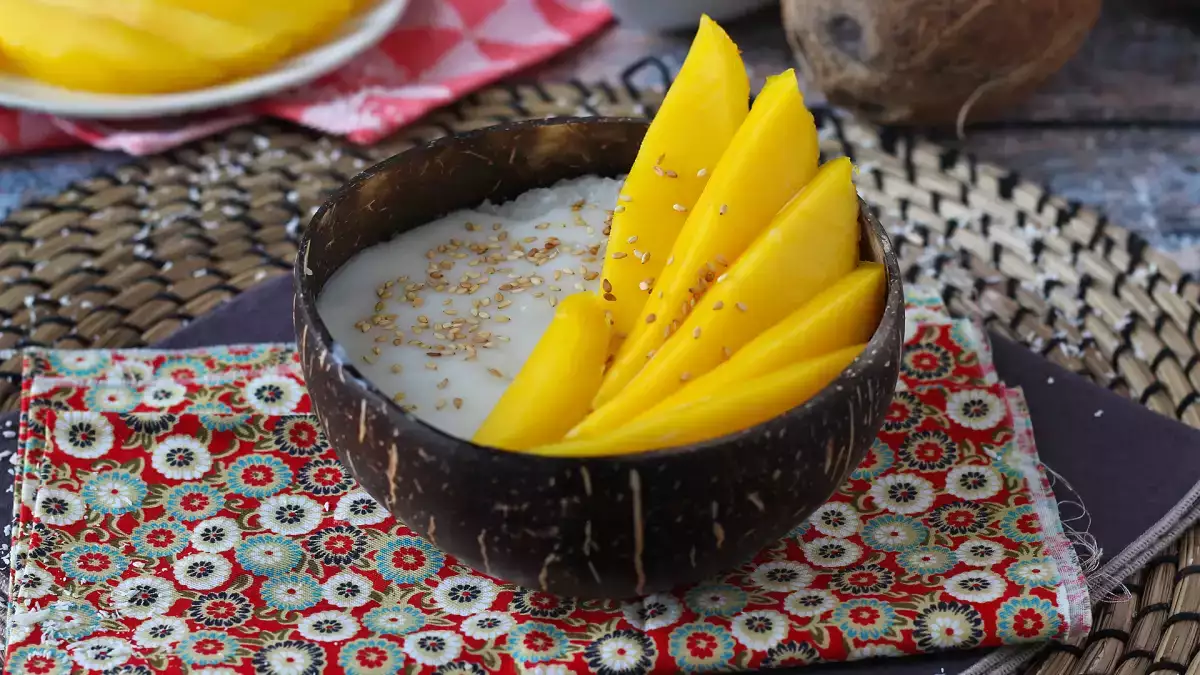
Trader Joe’s turns Thai mango sticky rice into a freezer-aisle moment
Trader Joe’s mango sticky rice has arrived at the ideal moment for a late-summer dessert story: it is tropical, quick to serve and rooted in one of Thailand’s most loved sweets. According to recent coverage, the product is sold at $4.69 for two servings, heats in about 50 seconds, and has already inspired fan reactions calling it an “11/10” dessert.
The official product description presents the dessert as two individual servings of ripe mango set over sweet, coconut-infused glutinous sticky rice, with separate packets of fried mung beans for sprinkling on top. Trader Joe’s also says it worked with a supplier in Thailand, which is an important detail because the dish belongs to Thai cuisine rather than to the American frozen-dessert category.
The buzz around the product fits a broader supermarket trend: shoppers are increasingly curious about frozen Asian desserts that feel restaurant-inspired, travel-friendly and easy to prepare at home. But convenience should not erase origin. The freezer tray may be new; the dessert tradition is not.
The official product description presents the dessert as two individual servings of ripe mango set over sweet, coconut-infused glutinous sticky rice, with separate packets of fried mung beans for sprinkling on top. Trader Joe’s also says it worked with a supplier in Thailand, which is an important detail because the dish belongs to Thai cuisine rather than to the American frozen-dessert category.
The buzz around the product fits a broader supermarket trend: shoppers are increasingly curious about frozen Asian desserts that feel restaurant-inspired, travel-friendly and easy to prepare at home. But convenience should not erase origin. The freezer tray may be new; the dessert tradition is not.
What makes mango sticky rice so memorable?
A proper mango sticky rice recipe is built on contrast. The rice is chewy and warm, the coconut cream is rich and lightly salty, the mango is cool and fragrant, and the topping adds crunch. When those elements are balanced, the dessert feels both comforting and fresh.
The rice is not ordinary long-grain rice. It is glutinous rice, often called sticky rice, which has a naturally cohesive texture when steamed. It is soaked or rinsed, cooked until tender, then mixed with sweetened coconut milk while still warm. That resting step matters because the rice absorbs the coconut mixture and becomes glossy rather than wet.
The mango should be ripe, soft and aromatic. The coconut sauce should be sweet, but not flat; a little salt is essential because it sharpens the coconut and keeps the dessert from tasting heavy. The final sprinkle of fried mung beans, toasted sesame or coconut gives the spoonful a small but important crackle.
The rice is not ordinary long-grain rice. It is glutinous rice, often called sticky rice, which has a naturally cohesive texture when steamed. It is soaked or rinsed, cooked until tender, then mixed with sweetened coconut milk while still warm. That resting step matters because the rice absorbs the coconut mixture and becomes glossy rather than wet.
The mango should be ripe, soft and aromatic. The coconut sauce should be sweet, but not flat; a little salt is essential because it sharpens the coconut and keeps the dessert from tasting heavy. The final sprinkle of fried mung beans, toasted sesame or coconut gives the spoonful a small but important crackle.
Mango sticky rice, the super comforting thai dessert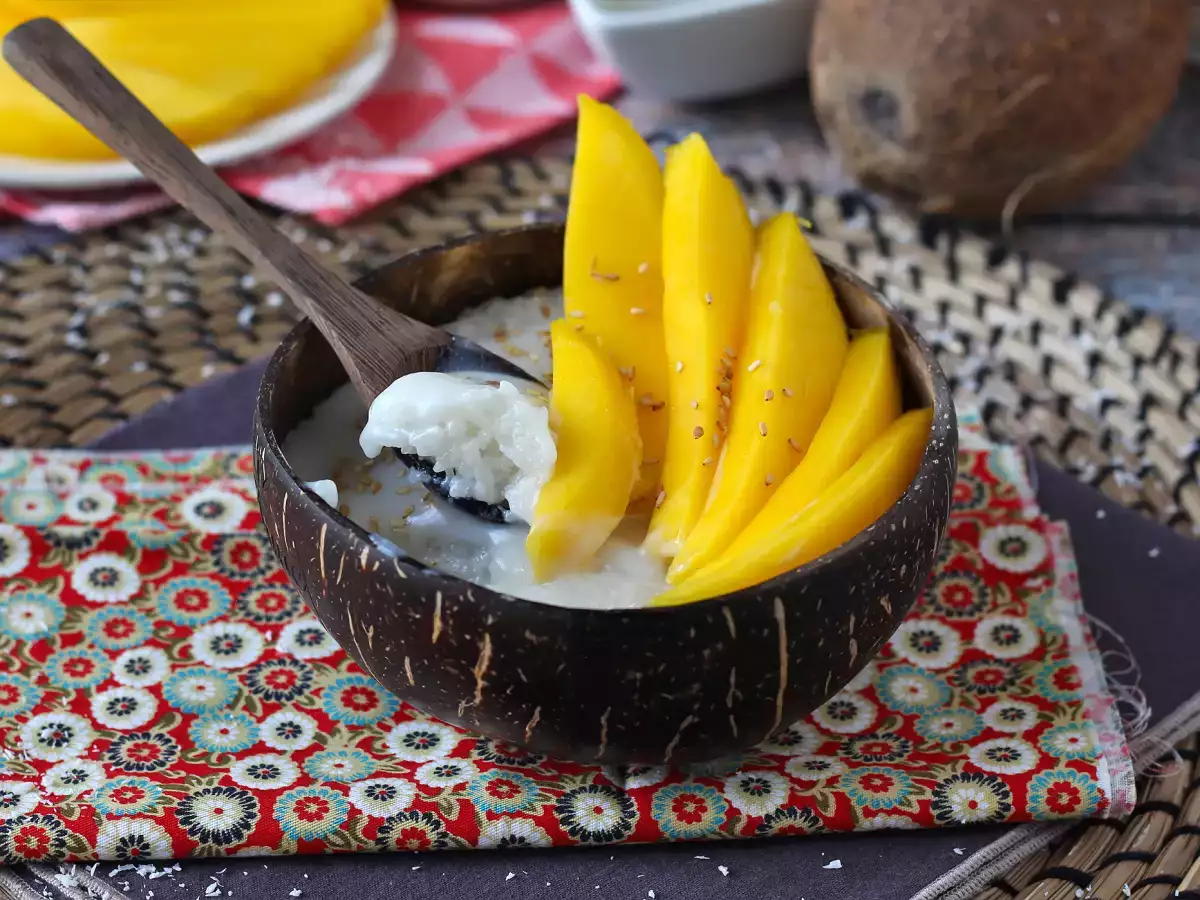
Head to Thailand for an explosion of sweetness and exotic flavors! Treat yourself to the famous mango sticky rice . For a feast of colors, let yourself be seduced by the creamy sticky rice soaked in coconut cream, the bright yellow of the juicy...
How to recreate the Trader Joe’s version at home
To make a homemade version inspired by Trader Joe’s mango sticky rice, start with the four essential components: sticky rice, mango, coconut cream and crunchy mung beans. If you can find Thai glutinous rice, use it. Rinse it well and soak it if your packet recommends it, then steam or cook it gently until tender. While the rice is still hot, fold in warm coconut milk mixed with sugar and a pinch of salt.
For the sauce, simmer coconut cream with a little sugar and salt until smooth. Keep it pourable, not stiff. Slice ripe mango into cubes or long pieces. For the topping, use fried split mung beans if available; otherwise, toasted sesame seeds or toasted coconut can provide a similar crunchy finish.
To echo the frozen product, serve it in two neat portions: rice on the bottom, mango on top, coconut cream drizzled over, and the crunch added at the last second. The advantage of making it fresh is control. You can keep the mango cool, the rice warm and the topping crisp, instead of letting everything soften together after heating.
For the sauce, simmer coconut cream with a little sugar and salt until smooth. Keep it pourable, not stiff. Slice ripe mango into cubes or long pieces. For the topping, use fried split mung beans if available; otherwise, toasted sesame seeds or toasted coconut can provide a similar crunchy finish.
To echo the frozen product, serve it in two neat portions: rice on the bottom, mango on top, coconut cream drizzled over, and the crunch added at the last second. The advantage of making it fresh is control. You can keep the mango cool, the rice warm and the topping crisp, instead of letting everything soften together after heating.
Why the frozen version is clever, and where homemade still wins
The frozen format is clever because mango sticky rice has several barriers for casual home cooks. Sticky rice is less familiar than regular rice, mango quality can vary, and coconut sauce needs balance. A ready-to-heat tray removes those decisions. That makes the dessert accessible to shoppers who may have eaten it in a Thai restaurant but never tried to cook it.
However, homemade coconut sticky rice still has advantages. Fresh mango has a perfume and texture that frozen mango can struggle to keep after microwaving. Warm rice absorbs coconut milk beautifully when prepared just before serving. The topping stays crisp when it is sprinkled at the table. You can also adjust sweetness, salt and portion size.
The best way to think about the product is not “frozen versus authentic.” It is better to say: the Trader Joe’s version is a quick gateway, while homemade mango sticky rice is the deeper experience. Both can have a place, as long as the Thai origin of the dessert is clearly named.
However, homemade coconut sticky rice still has advantages. Fresh mango has a perfume and texture that frozen mango can struggle to keep after microwaving. Warm rice absorbs coconut milk beautifully when prepared just before serving. The topping stays crisp when it is sprinkled at the table. You can also adjust sweetness, salt and portion size.
The best way to think about the product is not “frozen versus authentic.” It is better to say: the Trader Joe’s version is a quick gateway, while homemade mango sticky rice is the deeper experience. Both can have a place, as long as the Thai origin of the dessert is clearly named.
A simple home method without specialist equipment
You do not need a restaurant kitchen to make this Thai mango dessert. You need a pan or steamer, a bowl, a spoon and a knife. If you have a bamboo steamer, use it; if not, follow the cooking instructions on your sticky rice packet and keep the heat gentle. The goal is tender, chewy rice, not dry grains and not porridge.
For two to four servings, cook sticky rice, then mix it with warm coconut milk, sugar and salt. Let it stand until the rice looks glossy. In a second small pan, warm coconut cream with another small pinch of salt to make the drizzle. Slice the mango just before serving. Add the topping only at the end.
The most common mistake is making the dessert too sweet. The mango already brings sugar, so the coconut sauce should be rich, aromatic and lightly salty. Another mistake is skipping the rest after adding coconut milk to the rice. That pause is what gives the dessert its signature soft, sticky texture.
For two to four servings, cook sticky rice, then mix it with warm coconut milk, sugar and salt. Let it stand until the rice looks glossy. In a second small pan, warm coconut cream with another small pinch of salt to make the drizzle. Slice the mango just before serving. Add the topping only at the end.
The most common mistake is making the dessert too sweet. The mango already brings sugar, so the coconut sauce should be rich, aromatic and lightly salty. Another mistake is skipping the rest after adding coconut milk to the rice. That pause is what gives the dessert its signature soft, sticky texture.
Video comparison idea: frozen, homemade and shortcut
For a short comparative video, place three bowls side by side. Bowl one is Trader Joe’s mango sticky rice, heated according to the pack instructions. Bowl two is a classic homemade version with freshly cooked sticky rice, fresh mango and coconut cream. Bowl three is a shortcut version using supermarket rice pudding warmed with coconut milk and topped with mango.
Film three close-up tests. First, show the rice texture: does it hold together, or does it turn mushy? Second, show the mango: is it juicy, fragrant and distinct from the rice? Third, add the crunchy mung beans or substitute topping and capture the sound and texture.
The conclusion can be simple: the frozen version wins on speed, the homemade version wins on freshness and texture, and the shortcut version wins when you want the flavour idea without sourcing sticky rice. The key line for the audience is this: the launch may be American, but mango sticky rice is Thai.
Film three close-up tests. First, show the rice texture: does it hold together, or does it turn mushy? Second, show the mango: is it juicy, fragrant and distinct from the rice? Third, add the crunchy mung beans or substitute topping and capture the sound and texture.
The conclusion can be simple: the frozen version wins on speed, the homemade version wins on freshness and texture, and the shortcut version wins when you want the flavour idea without sourcing sticky rice. The key line for the audience is this: the launch may be American, but mango sticky rice is Thai.
Why this launch has staying power beyond the trend
The current excitement is tied to a new supermarket launch, but the recipe itself is evergreen. Mango, coconut and sticky rice are a combination people return to every summer, and the dessert works for dinner parties, barbecue endings, warm evenings and make-ahead sweet bowls.
For publishers, the useful angle is not only “new at Trader Joe’s.” It is the bridge from a hot product to a practical kitchen question: how do you make mango sticky rice at home, and how do you respect the dessert’s Thai roots while adapting it for a modern home kitchen?
That balance is why this story has legs. The frozen dessert gives readers a reason to click now. The homemade method gives them a reason to save, cook and return later. If shoppers manage to find the freezer-aisle box, they can enjoy the convenience. If it sells out, they still have a clear path to making the dessert themselves.
For publishers, the useful angle is not only “new at Trader Joe’s.” It is the bridge from a hot product to a practical kitchen question: how do you make mango sticky rice at home, and how do you respect the dessert’s Thai roots while adapting it for a modern home kitchen?
That balance is why this story has legs. The frozen dessert gives readers a reason to click now. The homemade method gives them a reason to save, cook and return later. If shoppers manage to find the freezer-aisle box, they can enjoy the convenience. If it sells out, they still have a clear path to making the dessert themselves.
 Juliette Hess
I have been creating culinary content for Petitchef since 2017.
I love travelling and discovering new dishes, trying out new food trends and exploring new restaurants.
I’m a huge fan of pasta and noodles in all their forms ❤ from udon noodles to tagliatelle, I love cooking them and even making them from scratch!
I’m currently preparing, filming and photographing your next recipe, and I hope you’ll enjoy it!
I love travelling and discovering new dishes, trying out new food trends and exploring new restaurants.
I’m a huge fan of pasta and noodles in all their forms ❤ from udon noodles to tagliatelle, I love cooking them and even making them from scratch!
I’m currently preparing, filming and photographing your next recipe, and I hope you’ll enjoy it!
Comments