Germinating chia seeds: why, how and where to use them
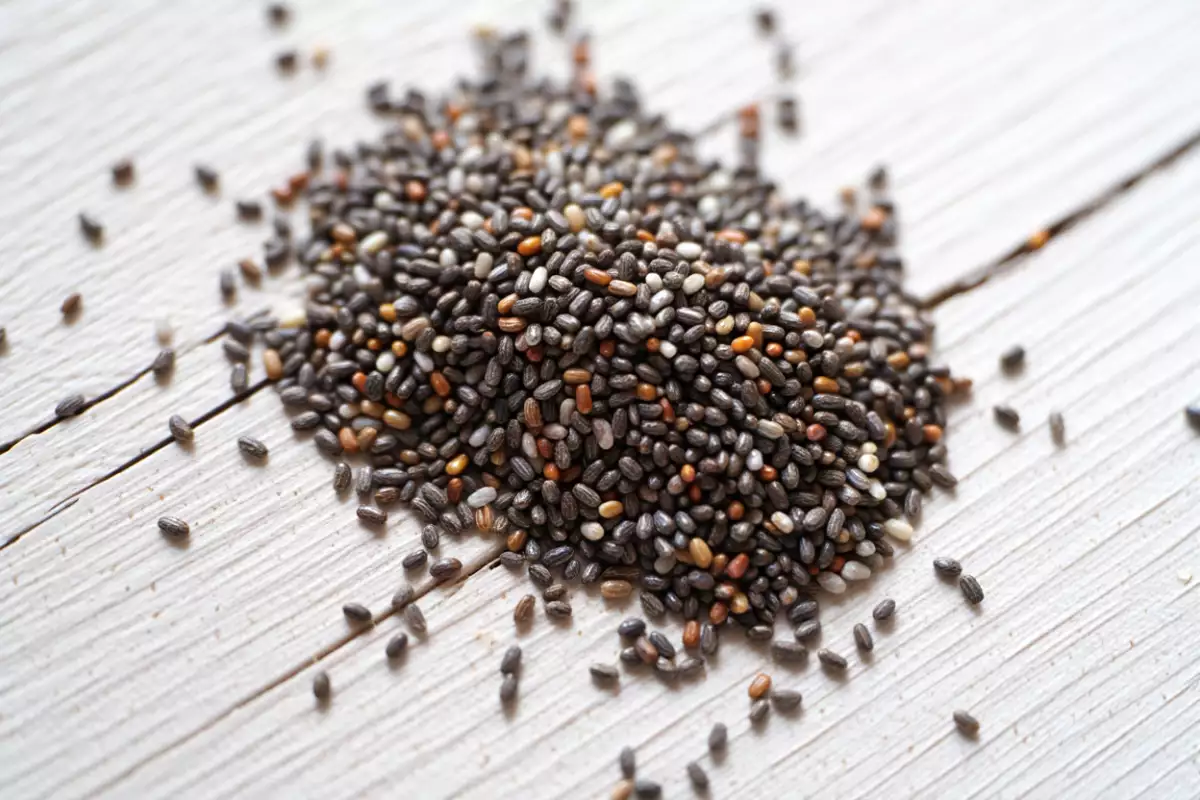
Small but mighty, chia seeds already have a reputation for being veritable nutrient concentrates. Rich in fiber, omega-3s, plant proteins and minerals, they are often eaten soaked, sprinkled or incorporated into recipes. But there's another, even more interesting way to eat them: sprouting.
Contrary to popular belief, chia germination doesn't work like that of lentils or chickpeas. And with good reason: these seeds have their own special characteristics.
Why chia seeds are not germinated like other seeds
Chia seeds belong to the mucilaginous plant family, like flax, watercress, mustard and psyllium. When they come into contact with water, they release mucilage, a kind of natural gel.
It's this same gel that gives the famous "chia pudding" its distinctive texture... but which poses a problem for germination. Soaking the seeds in water coats them in this mucilage, preventing oxygen from circulating and simply blocking the germination process.
Conclusion: never soak chia seeds to germinate them.
How to germinate chia seeds correctly
To get around this natural phenomenon, you need to adopt a suitable method. Good news: it's quick and easy.
The most effective method: the special mucilaginous seed dish
There are dishes specially designed for mucilaginous seeds. These are small ceramic plates fitted with a very fine stainless steel sieve.
How to proceed :
- Pour water into the dish, just up to the bottom of the sieve.
- Place the chia seeds directly on the sieve, without crowding them.
- The seeds absorb moisture by capillary action, without bathing in water.
This is the most reliable and cleanest way to obtain beautiful germination.
The simple alternative: cotton or gauze
If you don't have a special dish, don't panic.
- Place a bed of cotton or gauze on a plate.
- Scatter a few chia seeds on top.
- Moisten lightly with a spray bottle, 1 or 2 times a day, without soaking.
➡️En 2 to 3 days, small shoots will appear.
➡️ In about a week, the seeds are fully germinated, with pretty green shoots 2 to 3 cm long.
Harvesting and storage: timing is everything
Once the seeds have sprouted:
- Cut them flush with the support (sieve or cotton).
- Rinse quickly with clean water.
- Eat them as soon as possible, ideally just after harvesting.
Sprouted chia seeds are fragile: after 3 days, even in the refrigerator, it's best not to eat them.
Why it's good to eat sprouted chia
Germination has a very positive effect on nutrition:
- it improves the bioavailability of nutrients,
- facilitates digestion,
- it increases the content of vitamins and active enzymes,
- it reduces certain anti-nutrients naturally present in seeds.
This is one of the most interesting ways to take full advantage of chia's benefits.
What to eat sprouted chia seeds with?
This is where chia sprouts really come in handy: they go everywhere.
You can add it :
- in salads and raw vegetables,
- on steamed or roasted vegetables,
- in rice, pasta or potatoes,
- as a topping on soup or velouté,
- in a sandwich or wrap,
- as an accompaniment to fish or meat,
- or simply sprinkled on a plate just before serving.
The taste is mild and slightly vegetal, and the texture adds a pleasant crunch.
Germinating chia seeds requires a little method, but it's well worth the effort.
In just a few days, without soaking and with controlled humidity, you'll obtain rich, easily digestible young shoots that are easy to incorporate into your daily routine.
A simple way to vary the pleasures... and get even more out of these already well-known little seeds.
 Adèle Peyches
Comments