Gochujang opened: how to store and measure out the chili paste
Tuesday 3 November 2026 10:00 - Christelle Gary
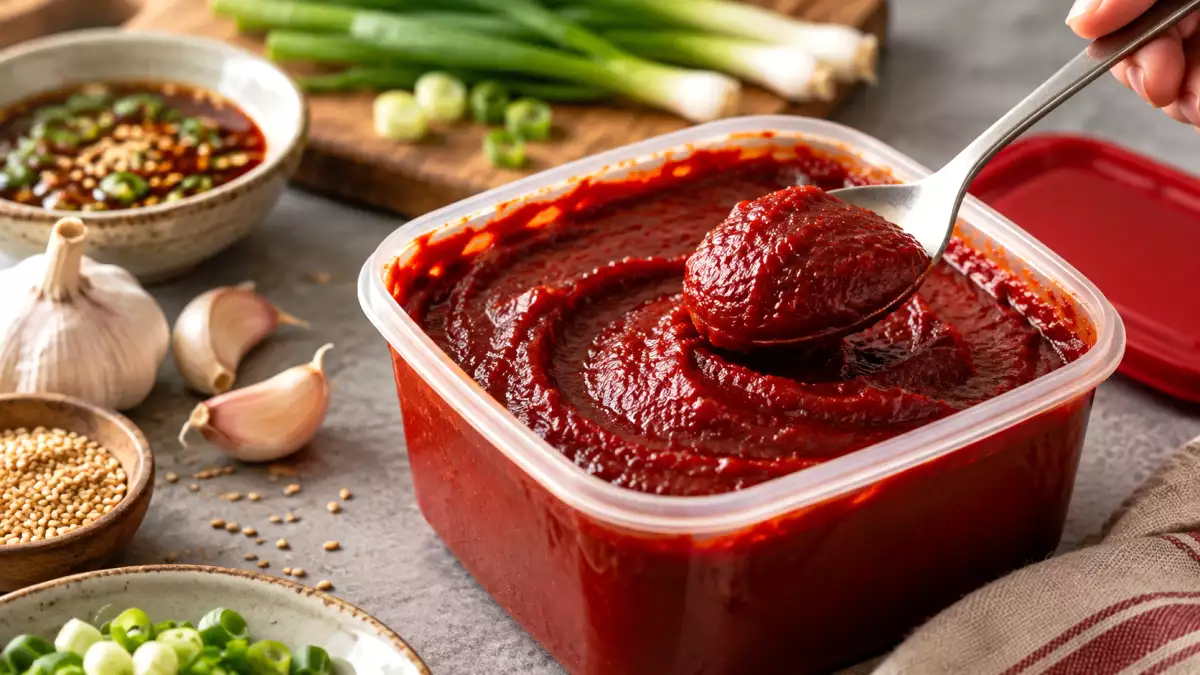
This guide focuses on the questions that arise after your first time cooking with it: how to scoop it out cleanly, proper storage, color, and using it sparingly. Three selected Ptitchef recipes then demonstrate specific uses without repeating yet another general collection of gochujang recipes.
Opening Gochujang: the three most important steps
1. Read the storage instructions: After opening, follow the specific packaging instructions. Many manufacturers recommend storing the fermented paste tightly sealed in the refrigerator.
2. Use a clean utensil: Use a dry, clean spoon. Do not let any crumbs, water, or raw marinade residue get into the storage container.
3. Close it immediately: Wipe the rim clean, seal the lid tightly, and return the package to its designated storage location. An open jar of gochujang does not belong on the dining table for hours on end.
Why fermented chili paste still needs to be stored properly
Fermented does not mean it has an indefinite shelf life. Gochujang gets its flavor from chili peppers and other ingredients such as rice, soybeans, and spices; the composition and processing methods vary by manufacturer.
Once opened, air and, if handled improperly, moisture or foreign bacteria—can come into contact with the product. That’s why the instructions on your package are more important than internet rules of thumb like “always lasts a year.”
Once opened, air and, if handled improperly, moisture or foreign bacteria—can come into contact with the product. That’s why the instructions on your package are more important than internet rules of thumb like “always lasts a year.”
How long does gochujang last after opening?
There is no reliable figure for all tubes and brands regarding this question. The usage period specified by the manufacturer and its storage conditions are the most important guidelines. If there is no clear indication, this does not mean that the toothpaste can be stored indefinitely.
If necessary, write the opening date on the lid. That way, you won’t have to rely on your memory months later. If you don’t know the product’s history or notice a significant change, you should stop using the toothpaste.
If necessary, write the opening date on the lid. That way, you won’t have to rely on your memory months later. If you don’t know the product’s history or notice a significant change, you should stop using the toothpaste.
Refrigerator instead of a countertop: how to keep the storage container clean
A clean, cool, and dark storage area helps prevent unwanted changes. The Korean manufacturer Sempio recommends storing opened seasoning pastes in a cool, well-sealed container and using clean, dry utensils.
It’s especially important not to dip the spoon you just used for a fish or chicken marinade back into the jar. Scoop out the amount you need separately beforehand.
If gochujang sticks to the rim, wipe it off with a clean paper towel and close the lid completely. Try not to leave any puddles of water in the container.
The paste is getting darker: Does that mean I have to throw it away?
As the red chili paste is exposed to air, light, and heat, its color may darken. According to the manufacturer, this does not necessarily mean the product has gone bad. However, the color alone is not a guarantee of safety.
Pay attention to the overall storage conditions and the condition of the product. If you see mold, notice obvious unusual changes, or have concerns about how it was stored, do not take a spoonful to taste it—if in doubt, discard it.
Pay attention to the overall storage conditions and the condition of the product. If you see mold, notice obvious unusual changes, or have concerns about how it was stored, do not take a spoonful to taste it—if in doubt, discard it.
The measurement mistake: don't confuse Gochujang with store-bought chili sauce
Gochujang is typically a concentrated seasoning paste, not a thin sauce like many bottled products. In addition to heat, it provides saltiness, sweetness, and fermented flavor.
To make a small batch of sauce for the first time, start with half a teaspoon of paste for one to two servings, stir in a little liquid, and taste it. Increase the amount in small increments as needed. This is a conservative starting point, not a fixed amount for every recipe.
If you’re sensitive to chili, use it very sparingly. Water dilutes a dish but doesn’t simply eliminate the capsaicin heat entirely.
Too thick for the pan? Stir the paste until smooth beforehand.
A generous portion of gochujang often spreads unevenly in a hot pan. First, mix the required amount with one or two teaspoons of water, broth, or an ingredient that complements the dish.
Only then should you add the mixture to mushrooms, vegetables, or meat. This helps prevent concentrated red spots from forming. If the sauce also contains sugar or honey, keep an eye on the heat: sweet glazes can brown quickly.
Do not use leftover marinade that has come into contact with raw meat or fish as a dip without cooking it first.
Sample recipe 1: a small portion of sauce instead of the paste on its own
A great way to use it for the first time is to make a well-balanced Korean sauce for a rice bowl. The Ptitchef recipe card shows the finished mixture with gochujang, which is easier to measure out than concentrated paste straight from the jar.
The point of this example is to demonstrate the correct dilution and flavor balance, not to provide a complete list of Korean dishes.
The point of this example is to demonstrate the correct dilution and flavor balance, not to provide a complete list of Korean dishes.
Spicy korean gochujang sauce for bibimbap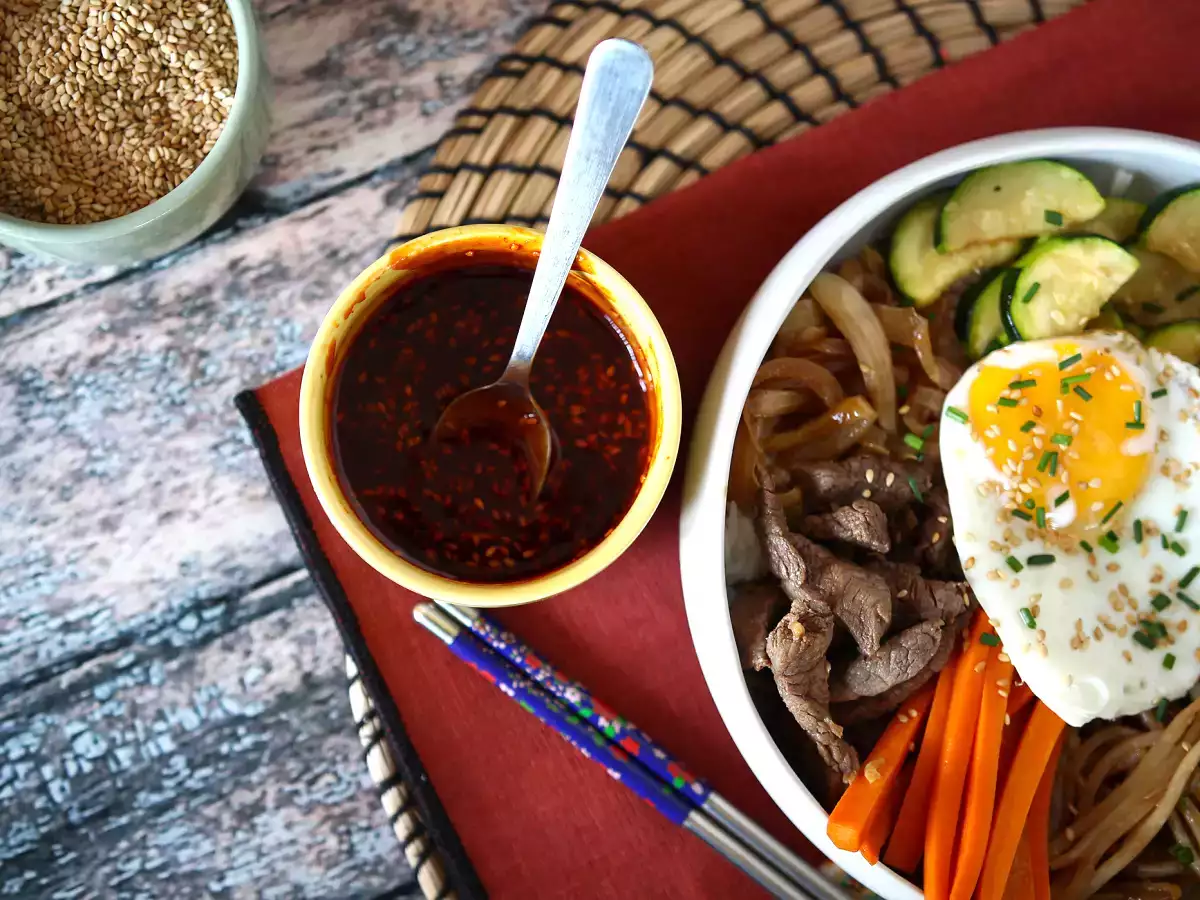
Discover this spicy Korean gochujang sauce for bibimbap, a real explosion of flavor that will take you on a journey to the heart of Korean cuisine ! This chili sauce is simply irresistible, rich and smooth, with a perfectly balanced blend of...
Sample recipe 2: a savory mushroom stir-fry, just a spoonful away
If the jar is already open, shiitake mushrooms in gochujang sauce make for a quick, warm meal. Ptitchef presents this combination of mushrooms and spicy sauce as a standalone recipe.
Stir the sauce until smooth, then add it to the mushrooms over low heat. This way, you can adjust the flavor gradually without wasting too much paste.
Stir the sauce until smooth, then add it to the mushrooms over low heat. This way, you can adjust the flavor gradually without wasting too much paste.
Korean-style mushrooms - shiitake mushrooms with gochujang sauce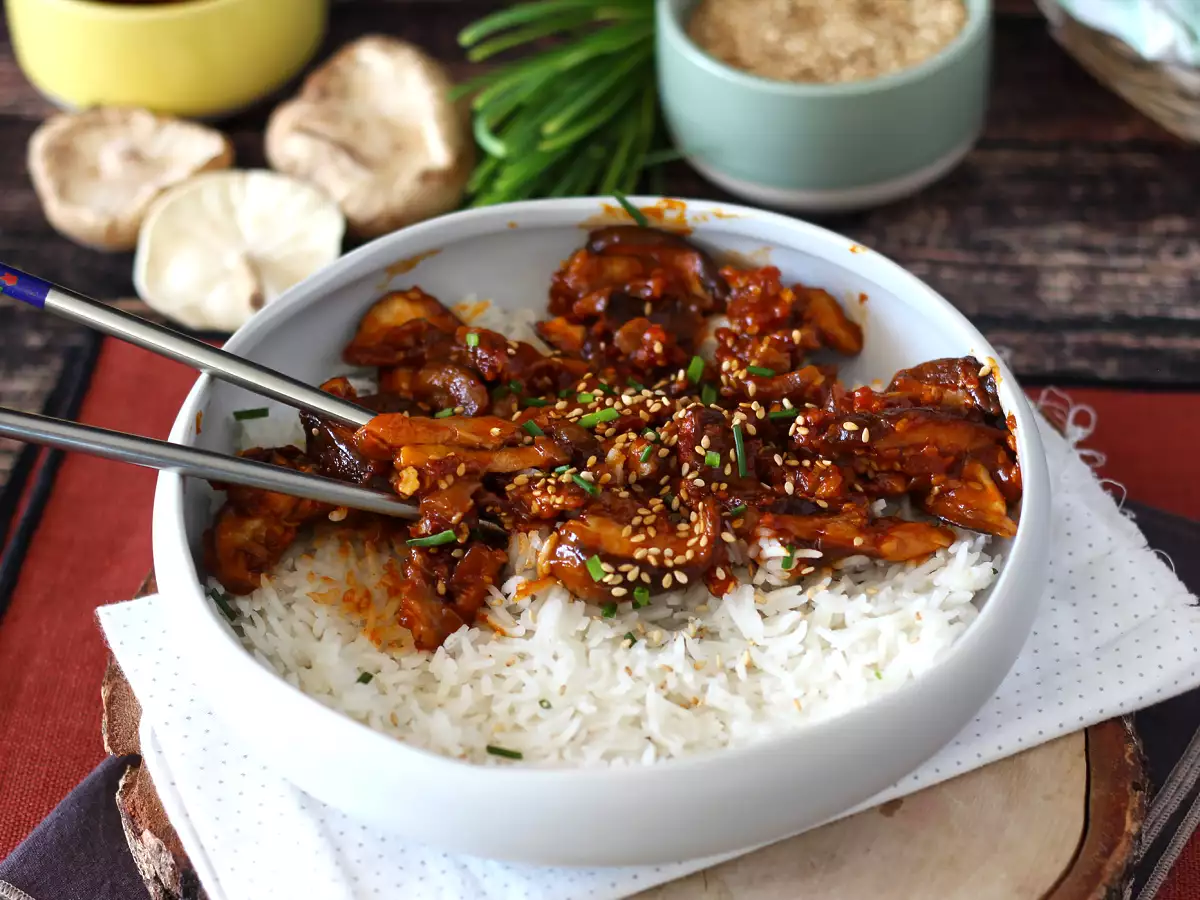
Looking for an alternative to traditional bibimbap , a classic Korean dish? Try our flavorful Korean-style mushrooms . Tender and juicy shiitake mushrooms pair perfectly with gochujang sauce , creating a perfect balance of sweetness and heat. This...
Can also be used for baking but only if you follow the recipe exactly
These sweet-and-spicy cookies demonstrate just how versatile gochujang is. Here, the paste is intentionally used to achieve a specific flavor balance; you can’t just add as much as you want.
Follow the Ptitchef instructions for these cookies. This example is meant to show that an opened jar can still be put to good use even after a hearty meal.
Follow the Ptitchef instructions for these cookies. This example is meant to show that an opened jar can still be put to good use even after a hearty meal.
Gochujang cookies: sweet, salty, and spicy!
If you love spicy AND sweet and salty flavors, you’ll definitely love these gochujang cookies ! This Korean chili paste is the star ingredient in many dishes and sauces , but today we’ve decided to use it in a sweet recipe with spicy cookies...
Is gochujang always gluten-free or vegetarian?
No, there’s no one-size-fits-all answer. Depending on the manufacturer, the product may contain soy, wheat, or other gluten-containing ingredients. If you have allergies or intolerances, you must check the ingredient and allergen list on the specific package.
Additional ingredients in a recipe can also alter the dish: fish sauce, meat broth, or a marinade containing animal products are not automatically vegetarian. Be sure to check not only the paste but all the ingredients.
Additional ingredients in a recipe can also alter the dish: fish sauce, meat broth, or a marinade containing animal products are not automatically vegetarian. Be sure to check not only the paste but all the ingredients.
The four most common mistakes after opening
1. Leaving the container next to the stove: Store the paste according to the label after opening .
2. Using a wet or dirty spoon: Use clean, dry utensils.
3. Relying solely on the red color: Check storage conditions and for any changes; color alone does not guarantee safety.
4. Stirring a large amount into the sauce without checking first: Start small and add gradually.
2. Using a wet or dirty spoon: Use clean, dry utensils.
3. Relying solely on the red color: Check storage conditions and for any changes; color alone does not guarantee safety.
4. Stirring a large amount into the sauce without checking first: Start small and add gradually.
Frequently Asked Questions about opened Gochujang paste
Does gochujang need to be refrigerated after opening?
Follow the label; manufacturers like Sempio recommend refrigerating opened seasoning pastes.
Can the paste be frozen?
Whether it’s suitable depends on the product. Above all, it should be stored correctly according to the manufacturer’s instructions. Portioning it out for storage only makes sense if the product was removed hygienically and is in perfect condition.
How can I be sure it’s still good?
It’s not possible to make a reliable assessment based solely on color or smell. If in doubt—especially after improper storage—do not use it.
Can I use gochujang like Sriracha?
Only to a limited extent: The paste is usually thicker and has a different flavor profile. Dilute it first and taste it.
Is the paste always equally spicy?
No. The spiciness and salt content depend on the manufacturer and the product.
Conclusion: proper withdrawal is more important than a new prescription
Once a jar of gochujang is opened, it’s not just the next recipe idea that matters; it’s, above all, how you handle the paste. Clean, dry spoons, a tight-fitting lid, and the storage instructions protect this pantry staple better than kitchen myths about its supposedly indefinite shelf life.
If you mix and measure out the paste in small amounts, you can use it to season a wide variety of dishes—without making every meal too spicy. This is a practical addition to the Ptitchef recipe guides we’ve already published.
If you mix and measure out the paste in small amounts, you can use it to season a wide variety of dishes—without making every meal too spicy. This is a practical addition to the Ptitchef recipe guides we’ve already published.
 Christelle Gary
As a fitness enthusiast and vegetarian, I love taking on a challenge: making plant-based meals that are packed with protein—without breaking the bank! My mission at Ptitchef? To prove that legumes can be delicious, creative, and truly irresistible. Chickpeas, lentils, and beans better watch out!
Comments