Golden outside, buttery inside: here’s how to finally cook scallops the way they deserve
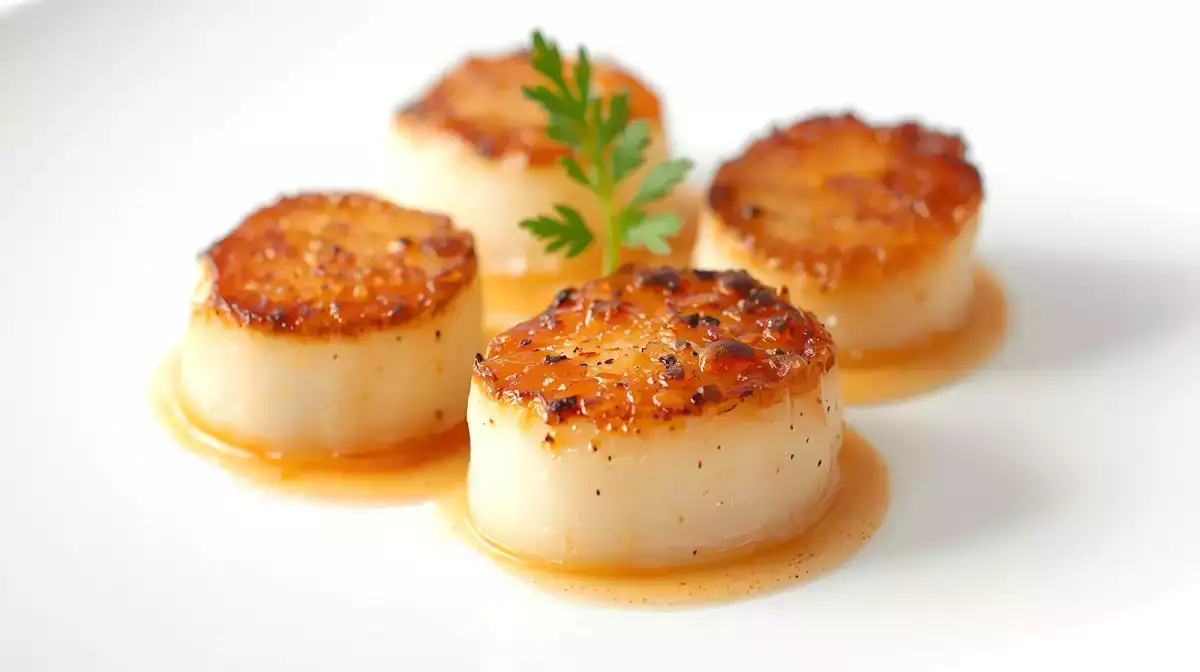
Delicate, buttery, elegant, scallops have that magical ability to turn any dinner into something sophisticated. But they also come with a reputation: they’re easy to mess up. Overcook them, and they turn dry and rubbery. Undercook them, and they lose their soft, silky texture. So how do you achieve that perfect sear (golden on the outside, pearly in the center) that makes food lovers weak in the knees?
Why are scallops so tricky to cook?
Scallops are made of extremely fine muscle fibers and contain very little collagen.
What this means:
- they cook extremely fast,
- they dry out the second they overcook,
- their texture depends 100% on precise cooking time.
A scallop can lose up to 25% of its moisture if left on the heat too long and that moisture loss is exactly what makes them turn rubbery.
To get them right, you must aim for a short, controlled, almost surgical cooking time.
Secret No. 1: always pat the scallops dry before cooking
This is the rule that changes everything. Why? Because a wet scallop won’t sear, it will steam. And without a good sear, you can forget that gorgeous golden crust.
How to do it:
- place scallops between two layers of paper towel,
- gently press to remove all moisture,
- season after cooking — salt draws out water.
A dry scallop = a beautifully browned scallop.
Secret n°2: very hot pan + the right fat
Scallops love intense heat.
The pan must be very hot
You should hear a sharp “pssshhh” the second a scallop hits the pan.
If not, the scallop will release water and turn gray instead of brown.
What fat should you use?
Chefs use a mix:
- neutral oil for high heat,
- butter for flavor.
Tip: heat the oil first, then add butter 30 seconds before you sear.
Secret n°3: never more than 1 minute 30 per side
This is the golden rule.
For a standard sea scallop (about 1–1.5 inches thick):
- 1 to 1½ minutes per side: tender, silky center
- 2 minutes max: firmer center
- More than that: rubbery disaster
What to look for:
- the bottom is golden brown,
- the center remains slightly translucent,
- the scallop “bounces” lightly when touched.
Secret n°4: never crowd the pan
Put too many scallops in a small pan and they will:
- cool the surface temperature,
- release water,
- steam instead of sear.
Result: no browning, only sadness.
Rule of thumb: 4 to 6 scallops per standard skillet.
If you have more, cook them in batches.
Secret n°5: always salt after cooking (lightly!)
Salt pulls out moisture. That’s why you always season scallops after they’re cooked and just before serving.
Use:
- flaky sea salt,
- smoked salt,
- or fleur de sel (the ultimate choice).
Secret n°6: deglaze the pan for a “one-minute sauce”
Once the scallops are cooked, never let the pan cool: that’s where all the flavor is hiding.
Deglaze with:
- a splash of lemon juice,
- white wine,
- seafood stock,
- heavy cream,
- or white balsamic vinegar.
Scrape up all the browned bits, add a small knob of butter, and you get:
→ a glossy, aromatic, restaurant-worthy sauce in 60 seconds.
Secret n°7: serve with light, delicate sides
Scallops are refined: they shine with elegant, subtle pairings.
Always a hit:
- parsnip purée
- mashed potatoes
- creamy risotto
- leek fondue
- glazed carrots
- celery root purée
- roasted vegetables
- pumpkin soup
Sweet pairings that work beautifully:
- caramelized apples
- citrus segments
- seared mango
- a touch of honey
So let’s recap!
Cooking scallops perfectly isn’t luck, it’s technique.
High heat, short cooking time, a properly dried surface, an uncrowded pan, and precise seasoning.
Master these simple gestures, and you’ll always get scallops that are golden on the outside, pearly on the inside, tender, and absolutely irresistible.
 Adèle Peyches
Comments