How long can barbecue leftovers safely sit on the table? Here's the simple rule you should follow
Friday 24 July 2026 17:00 - Adèle Peyches
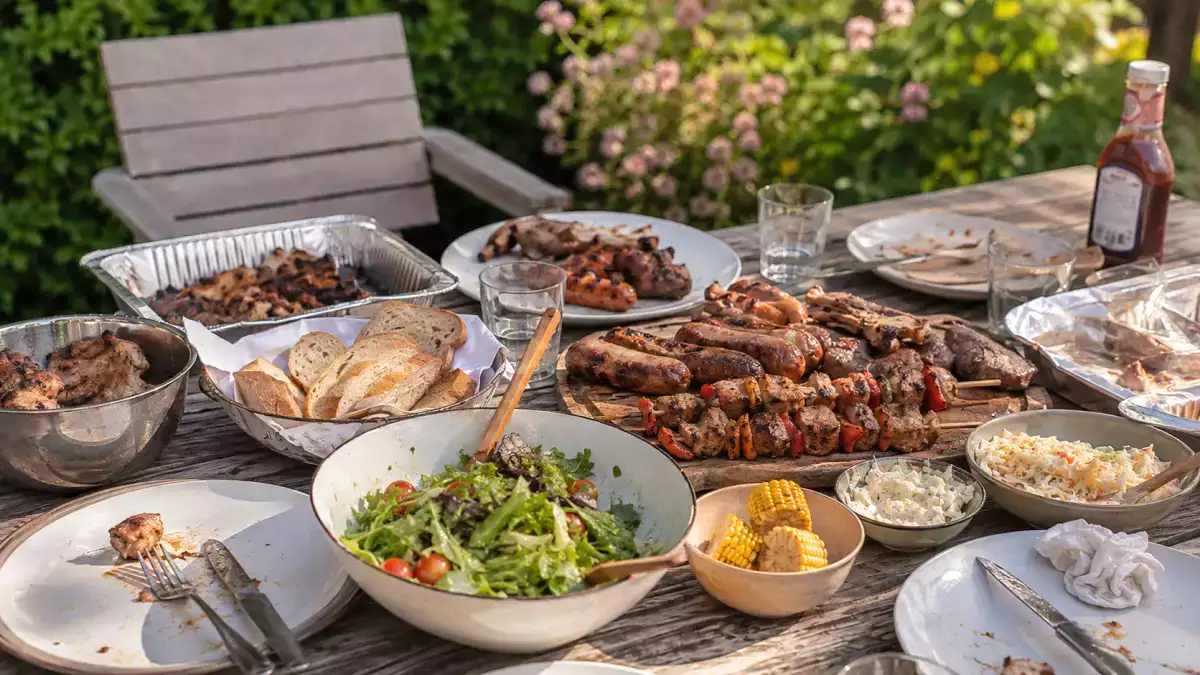
The problem is that in hot weather, “later” can sometimes be too late. Barbecue leftovers shouldn’t sit out at room temperature all afternoon… We’ll explain everything!
Why shouldn't barbecue leftovers be left lying around?
Once food is cooked, it sometimes seems less perishable. This is partly true, but it doesn’t mean it can be left out indefinitely. At room temperature, microorganisms can multiply more easily, especially when food is high in protein, moist, or has already been handled by several people.
The summer heat increases this risk. Whether on a patio table, under a parasol, or in an already warm kitchen, leftovers cool down and then remain in a lukewarm zone. This is precisely what we’re trying to avoid. The best practice, therefore, is to serve the food and then quickly refrigerate anything that won’t be eaten within two hours.
It’s not about panicking over every minute, but about not leaving dishes sitting out as if they were part of the decor. A plate of merguez sausage, a salad with mayonnaise, or leftover grilled chicken should be returned to the fridge fairly quickly.
The summer heat increases this risk. Whether on a patio table, under a parasol, or in an already warm kitchen, leftovers cool down and then remain in a lukewarm zone. This is precisely what we’re trying to avoid. The best practice, therefore, is to serve the food and then quickly refrigerate anything that won’t be eaten within two hours.
It’s not about panicking over every minute, but about not leaving dishes sitting out as if they were part of the decor. A plate of merguez sausage, a salad with mayonnaise, or leftover grilled chicken should be returned to the fridge fairly quickly.
An easy-to-remember rule: two hours at most
For summer meals, the simplest rule to remember is this: food should not be left at room temperature for more than 2 hours before being refrigerated. This applies to barbecue leftovers, as well as picnic dishes, mixed salads, cold cuts, and delicate desserts.
When it’s very hot, it’s best not to wait until the limit is reached. If the table is in the sun, if the dishes have already cooled down, if the meal is taking a long time, or if the food has been handled a lot, put it in the refrigerator sooner. In the summer, the refrigerator isn’t just convenient—it slows the growth of microorganisms and helps reduce the risk of foodborne illness.
A good rule of thumb: as soon as everyone has served themselves a first helping, set aside whatever won’t be eaten right away. You can always bring out a small portion later if needed, rather than leaving the entire dish out for hours.
When it’s very hot, it’s best not to wait until the limit is reached. If the table is in the sun, if the dishes have already cooled down, if the meal is taking a long time, or if the food has been handled a lot, put it in the refrigerator sooner. In the summer, the refrigerator isn’t just convenient—it slows the growth of microorganisms and helps reduce the risk of foodborne illness.
A good rule of thumb: as soon as everyone has served themselves a first helping, set aside whatever won’t be eaten right away. You can always bring out a small portion later if needed, rather than leaving the entire dish out for hours.
Which barbecue foods are the most delicate?
The most perishable foods are those containing meat, fish, eggs, dairy products, or delicate sauces. Sausages, skewers, merguez, chops, chicken wings, grilled fish, and leftover ground meat should be refrigerated promptly after the meal.
Side dishes also require attention. Potato salad, pasta salad, yogurt-based sauces, homemade mayonnaise, tzatziki, deviled eggs, or cream-based desserts should not be left out for long. Even grilled vegetables should be put away quickly, especially if they’ve been mixed with a sauce, cheese, or oil.
Minced meat and sausages are particularly important: they must be cooked thoroughly, then stored properly once served. Marinades that have come into contact with raw meat should also not be used as a sauce without being cooked first.
Side dishes also require attention. Potato salad, pasta salad, yogurt-based sauces, homemade mayonnaise, tzatziki, deviled eggs, or cream-based desserts should not be left out for long. Even grilled vegetables should be put away quickly, especially if they’ve been mixed with a sauce, cheese, or oil.
Minced meat and sausages are particularly important: they must be cooked thoroughly, then stored properly once served. Marinades that have come into contact with raw meat should also not be used as a sauce without being cooked first.
How can I store leftovers without making the refrigerator too warm?
We sometimes hear that you should never put a hot dish in the refrigerator. In practice, the main thing to avoid is placing a huge, piping-hot casserole in there, as it would raise the internal temperature. For barbecue leftovers, the best method is to divide the food into shallow containers so it cools faster, then place them in the refrigerator within two hours.
Avoid leaving a large, full dish in the middle of the table while waiting for it to cool completely. If the food is still warm, divide it into small portions. Close the containers, label them if necessary, and then store them in the refrigerator. The leftovers will be easier to use the next day, and they’ll cool more evenly.
Also, remember to separate the foods: meat on one side, salads on the other, and sauces in a separate container. This allows for better control over storage and prevents the entire meal from being ruined if one item has sat out too long.
Avoid leaving a large, full dish in the middle of the table while waiting for it to cool completely. If the food is still warm, divide it into small portions. Close the containers, label them if necessary, and then store them in the refrigerator. The leftovers will be easier to use the next day, and they’ll cool more evenly.
Also, remember to separate the foods: meat on one side, salads on the other, and sauces in a separate container. This allows for better control over storage and prevents the entire meal from being ruined if one item has sat out too long.
Common mistakes after a barbecue
The first mistake is leaving dishes out “in case someone wants seconds.” It’s better to keep a small serving plate on the table and put the rest in the fridge. The second mistake is putting food back in the fridge after it’s been out too long, thinking that the cold will fix the problem. The refrigerator slows the growth of microorganisms, but it doesn’t make at-risk food safe again.
Another common mistake: using the same dishes or tongs for raw and cooked meat. After cooking, food should be served with clean utensils. It’s a simple detail, but an important one for preventing cross-contamination.
Finally, don’t taste a questionable leftover “just to be sure.” If meat, a salad, or a sauce has been left out for several hours—especially in hot weather—it’s safer to throw it away. A normal smell or appearance isn’t always enough to guarantee that food is safe to eat.
Another common mistake: using the same dishes or tongs for raw and cooked meat. After cooking, food should be served with clean utensils. It’s a simple detail, but an important one for preventing cross-contamination.
Finally, don’t taste a questionable leftover “just to be sure.” If meat, a salad, or a sauce has been left out for several hours—especially in hot weather—it’s safer to throw it away. A normal smell or appearance isn’t always enough to guarantee that food is safe to eat.
What should you do if the meal takes a long time?
When a barbecue lasts for several hours, the easiest thing to do is to set the table differently. Bring out the food in small portions, keep the rest in the refrigerator or in a cooler with ice packs, and then replenish as needed. This method works very well for sauces, salads, desserts, and pre-cooked meats.
If you’re eating outdoors, place delicate dishes in the shade and don’t leave them near the grill, where the heat is even more intense. Sauces and salads can be kept in a cooler between servings. For leftover meat, wait until it’s no longer piping hot, place it in a clean container, and then put it in the fridge.
The bottom line is simple: serve smaller portions, but more often. You’ll reduce waste, keep your food fresh, and avoid having to throw away an entire dish just because it sat on the table all afternoon.
If you’re eating outdoors, place delicate dishes in the shade and don’t leave them near the grill, where the heat is even more intense. Sauces and salads can be kept in a cooler between servings. For leftover meat, wait until it’s no longer piping hot, place it in a clean container, and then put it in the fridge.
The bottom line is simple: serve smaller portions, but more often. You’ll reduce waste, keep your food fresh, and avoid having to throw away an entire dish just because it sat on the table all afternoon.
The rule to keep in mind before clearing the table
How long can you leave barbecue leftovers out?
No more than 2 hours at room temperature before refrigerating. In hot weather, it’s best to put them away even sooner.
Can you put a dish back in the fridge if it’s been left out all afternoon?
No, this is not recommended. If a perishable food has been left out well past the recommended time, it’s best not to keep it.
Which leftovers should you monitor most closely?
Meat, poultry, fish, sauces, mixed salads, dairy products, eggs, and cream-based desserts.
The right approach?
At the end of service, don’t let dishes sit out. Portion them out, cover them, refrigerate them, and keep only what will be eaten immediately on the table.
No more than 2 hours at room temperature before refrigerating. In hot weather, it’s best to put them away even sooner.
Can you put a dish back in the fridge if it’s been left out all afternoon?
No, this is not recommended. If a perishable food has been left out well past the recommended time, it’s best not to keep it.
Which leftovers should you monitor most closely?
Meat, poultry, fish, sauces, mixed salads, dairy products, eggs, and cream-based desserts.
The right approach?
At the end of service, don’t let dishes sit out. Portion them out, cover them, refrigerate them, and keep only what will be eaten immediately on the table.
 Adèle Peyches
Editorial manager who just can't wait for winter to enjoy fondue! Passionate about gastronomy and always on the lookout for new culinary gems, I first studied law before returning to my first love: the taste of good products and the joy of sharing around the table :)
Comments