How long can you store lemon water before it’s no longer good to drink and what changes occur?
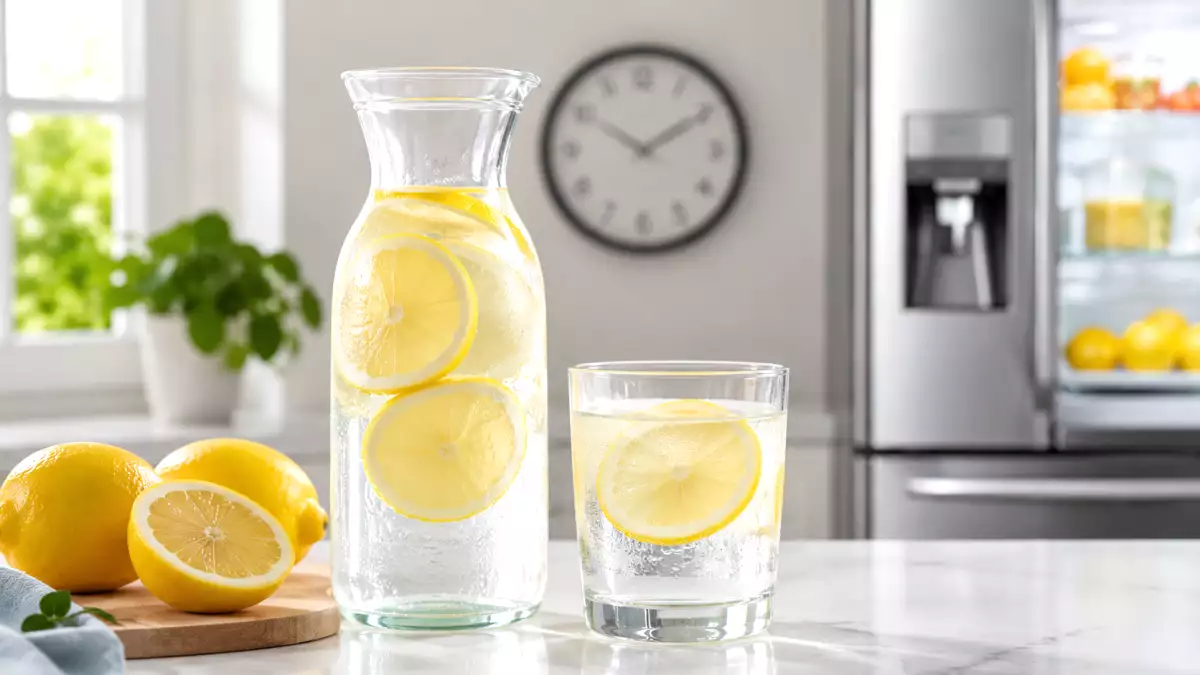
We often make lemon water because it tastes fresher and more pleasant than plain water and can help us drink more regularly throughout the day. Lemon also provides a small amount of vitamin C and makes the drink light and refreshing, especially in the morning, after exercise, or on hot days.
Some people make it as soon as they wake up, while others prefer to prepare it the night before so it’s ready in the fridge. The problem arises when the bottle isn’t consumed right away and sits there longer than expected.
- How long does lemon water last in the refrigerator?
- Can you still drink it the next day?
- What happens if it’s left on the table all morning?
There’s no universal expiration date printed on the pitcher, because how long it lasts depends on the temperature, how clean the container is, the amount of lemon, and whether there are slices with the peel still on. There is one safe rule, though: if stored properly in the refrigerator, it’s best to drink it within 24 hours.
You might also be interested in:
 Tired in the morning? Recharge your energy with this simple body-boosting drink that really works!
You’ve probably spotted those tiny yellow bottles at the supermarket, or seen them all over social media. Ginger shots have become the latest wellness obsession, embraced by athletes, health-conscious foodies, and anyone chasing a natural energy boost. But what makes this fiery little drink so popular? And more importantly, how can you make it part of your daily routine?
How long does lemon water last in the refrigerator?
Water with lemon prepared in advance should be poured into a clean bottle or pitcher, sealed, and immediately placed in the refrigerator. To maintain a fresh taste and minimize storage-related issues, it’s best to drink it within the next day and avoid refilling the same container over several days.
The authorities do not specify a specific expiration date for lemon water alone. However, the Food and Drug Administration, the U.S. government agency that oversees the safety of food, drugs, medical devices, and other products, recommends refrigerating fruits and vegetables after cutting them and storing them in covered containers. The refrigerator should be set to a temperature of about 39°F/4°C or lower.
Twenty-four hours is therefore a practical and prudent guideline, especially when slices or wedges are left in the bottle. After this time, the drink does not automatically become unsafe the moment the clock strikes the exact hour, but it may lose its freshness, absorb odors from the refrigerator, and develop a decidedly less pleasant taste.
Can you prepare lemon water the night before?
Yes, you can prepare lemon water the night before, as long as you put it in the refrigerator immediately. It’s important to use drinking water, a clean container, and a whole lemon with no mold or damaged parts.
Before cutting it, the lemon must be washed thoroughly under running water, even if you plan to use only the juice. Knives, cutting boards, and hands can transfer microorganisms from the peel to the flesh.
To prepare it correctly:
- Wash the lemon under running water;
- use a thoroughly clean bottle or pitcher;
- add the juice or a few thin slices;
- close the container;
- place it in the refrigerator immediately;
- Consume the drink preferably within 24 hours.
It’s best to avoid drinking directly from the bottle if you plan to store it: contact with your mouth can introduce bacteria and further shorten the shelf life.
How long can lemon water stay out of the fridge?
A pitcher of juice prepared for breakfast shouldn’t be left on the table all day, especially in the summer. As a general guideline, you can follow the rule used for cut fruit: no more than 2 hours at room temperature.
When the temperature exceeds 89°F/32°C for example, during a picnic, at the beach, or inside a hot car—the limit is reduced to about one hour.
Lemon juice makes the water acidic, but this does not mean the drink is sterile or that it can be left indefinitely at room temperature. If the bottle has been left out all night, it’s safer to throw it away and make a fresh one.
Why does water with lemon slices turn bitter?
The most noticeable problem after several hours is often the taste. As the slices steep, the water gradually extracts aromatic compounds from the peel and the white part of the lemon. It is precisely this white part (called the albedo) that can make the drink more bitter.
This is especially noticeable when:
- the slices are very thick;
- the lemon remains submerged for many hours;
- the peel is also crushed;
- the bottle is stored for several days;
- an excessive amount of lemon is used.
To prepare the water in advance, you can therefore squeeze the juice and remove the slices after a few hours. Alternatively, you can flavor the water just before serving, avoiding leaving the peel to steep overnight.
How can you tell if lemon water has gone bad?
Appearance and odor can indicate obvious spoilage, but they do not allow for the detection of all potentially harmful microorganisms. Time and temperature guidelines therefore remain more reliable than simply tasting the food.
Lemon water should not be consumed if it has:
- an unusual or fermented odor;
- a very cloudy appearance;
- bubbles not caused by carbonation;
- strands or abnormal residues;
- mold on the slices;
- a significantly altered taste;
- a dirty or open container.
If any of these signs are present, adding more lemon or fresh water will not solve the problem. Topping off the same bottle day after day is also a bad habit: the container should be emptied, washed, and refilled.
Freshly squeezed juice or slices: How does storage differ?
Water made with freshly squeezed juice alone tends to have a more consistent flavor than water containing whole slices. This is because the peel remains in contact with the water and can impart intense aromas, residues, and bitter notes.
When using lemons with the peel, thorough initial cleaning becomes even more important. It’s best to choose unblemished fruit and use the lemon quickly after cutting it, as also recommended by Utah State University Extension.
The rule that's easy to remember
Making lemon water ahead of time can be convenient, but it shouldn’t become a permanent fixture in the refrigerator. Preparing just enough for a single day helps preserve its flavor and freshness better.
The rule of thumb is simple: within 24 hours if kept in the refrigerator, within 2 hours if left at room temperature, and just one hour on very hot days. When you can’t remember how long ago it was made or how it was stored, making a fresh glass takes only a few minutes and avoids any unpleasant doubts.
 Leandra Masha
Comments