How to defrost turkey without rushing, without scares and with the flavor intact until the last slice
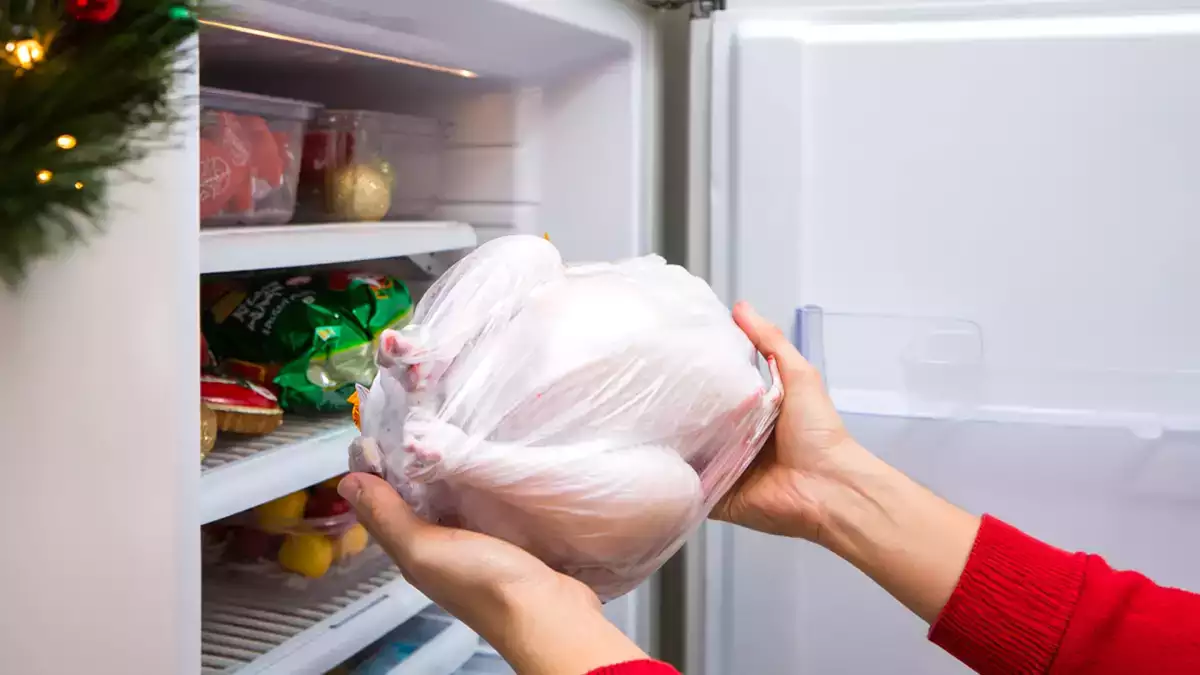
Few people realize it, but the success of a turkey begins long before it goes into the oven. Defrosting the wrong way can leave the meat dry, tasteless and even dangerous to eat.
When you get the thawing right, everything changes: the texture becomes tender, the flavor is preserved and the cooking is uniform. It's the first big step towards an unforgettable supper.
Why defrost slowly?
- Gradual defrosting prevents parts of the turkey from freezing while others start to heat up - which compromises even cooking.
- Doing it safely prevents the proliferation of bacteria - which multiply rapidly when parts of the bird reach temperatures between ≈ 39°F/4°C and 140°F/60°C.
- Proper defrosting maintains texture and moisture - essential for a juicy, not dry, turkey.
3 Reliable methods for defrosting your turkey
1. Refrigerator (safest and most recommended)
- Keep the turkey in its original packaging, set on a tray or rimmed baking sheet to catch any juices.
- Place it on the bottom shelf of the fridge so it can’t drip onto other foods.
- Plan on about 24 hours of thawing time for every 4–5 pounds of turkey.
- For example, a 16–18 lb turkey will need roughly 4–5 days in the fridge.
- Once it’s fully thawed, you can keep it in the refrigerator for another 1–2 days before cooking.
- Safest method from a food-safety standpoint
- Even, gentle thawing
- Almost no effort-perfect if you like to plan ahead
- You have to start several days before you want to roast it
2. Cold water bath (when you’re short on time)
- Keep the turkey in its original wrapping or place it in a leakproof plastic bag so water doesn’t get inside.
- Submerge it completely in cold tap water, making sure it stays fully covered.
- Change the water every 30 minutes to keep it cold and safe.
- Plan on about 30 minutes per pound of turkey.
- For example, a 10–12 lb turkey will take around 5–6 hours to thaw.
- Once it’s thawed using this method, cook it immediately.
- Much faster than the refrigerator—great for last-minute plans
- Requires attention and regular water changes
- The turkey needs to go straight into the oven once it’s thawed
3. Microwave (true emergency option)
- Only use this method for small turkeys or individual parts (like breasts or thighs).
- Check your microwave manual and follow the recommended defrost setting, time, and weight limits.
- Remove any metal clips or staples and place the turkey in a microwave-safe dish.
- Turn and rotate the turkey frequently so it thaws as evenly as possible.
- Because some areas may start cooking during defrost, you must cook the turkey immediately after microwaving.
- Very fast when you have no other option
- High risk of uneven thawing
- Some spots may be partially cooked while others are still icy
- Requires very close attention
Important food-safety reminder
Never thaw a turkey at room temperature (on the counter, in the garage, on the balcony, etc.).
Leaving a turkey out at room temperature puts it in the “danger zone” where bacteria can multiply quickly. It’s strongly discouraged from a food-safety standpoint, even if the center is still frozen.
Extra tricks to maintain flavor and texture
- After defrosting, consider making a marinade or using the "brining" technique (soaking the turkey in water + salt / spices) - this helps retain moisture and enhance the flavor.
- If you use the cold water method, make sure the water isn't lukewarm - constant cold water prevents bacterial growth.
- Parts such as legs and wings tend to defrost first - if they stick out, wrap with aluminum foil to prevent them from starting to "cook" before the rest.
Which method to choose for your Christmas dinner?
- You plan 4-5 days in advance: Refrigerator (safer, no effort)
- You're short of time - there are still hours or a day to go: Cold water (quick, but requires attention)
- You've run out of time and need to defrost something small: Microwave (as a last resort, use with caution)
Defrosting the turkey in advance and in the right way is the first step towards a memorable Christmas dinner. Proper defrosting prevents dry meat, raw parts or the risk of contamination, ensuring that the turkey is juicy, tasty and ready to receive your favorite spices or special marinade.
With the right techniques - fridge, cold water or, as a last resort, microwave - and a bit of organization, you can turn defrosting into a smooth ritual rather than a last-minute stress.
 Mirella Mendonça
Comments