How to make a quick and tasty gravy?
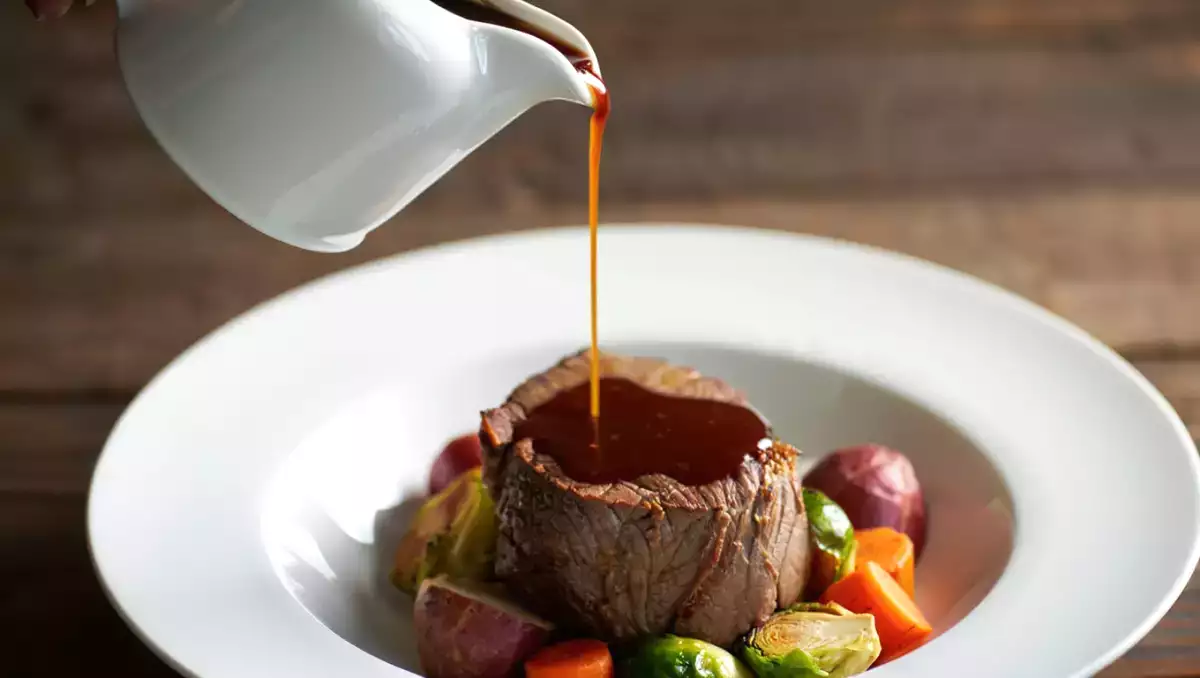
Meat jus is one of those little things that makes all the difference to a festive meal: just a few spoonfuls can transform roast poultry, roast veal or even filet mignon into a much more gourmet dish.
The problem is that it's often thought to take a long time to prepare, or to be the preserve of professionals. However, a good jus can be made in just a few minutes with almost nothing: the juices from cooking, a liquid to deglaze and a little patience. Here's how to get brown, bright and full-flavoured juice, even when you're in a hurry.
The secret begins in the frying pan
A successful jus depends first and foremost on how the meat is cooked. As soon as the meat browns, it leaves a thin, brownish layer on the bottom of the pan: these are the juices. This deposit, which sometimes looks like burnt spots, is in fact a concentrate of flavor. This is where it all comes together.
For the juices to form properly, the meat must be seared in a fairly hot pan, without excess liquid. If too much butter or oil is used, the juices lose their intensity. And if the meat is cooked on too low a heat, it gives off water and prevents coloring.
Once the meat is cooked or resting, simply keep this precious pan: it's the basis of the juice.
Deglazing: the magic step that liberates taste
To transform the juices into a sauce, a liquid is poured into the still-hot pan. This is called deglazing. The liquid will loosen all the particles stuck to the bottom, which will then mix to form a rich juice.
You can deglaze with several liquids, depending on what you have on hand:
- white wine for a tangy, festive juice,
- red wine for a rounder taste,
- poultry or vegetable stock for a very mild result,
- Even a simple glass of water works if the seasoning is right.
The idea is always the same: pour, scrape gently with a spatula, and leave to reduce.
Reduction: the stage that concentrates taste
Once the liquid has been added, leave to cook for a few minutes to thicken slightly. The aim is not to obtain a creamy sauce, but a glossy juice that coats the spoon lightly.
The more the juice reduces, the more powerful it becomes. Three to five minutes is usually enough. If you want something thicker, extend the cooking time a little or add a small piece of cold butter at the end: this adds shine and a rounder texture without weighing it down.
This is exactly what chefs do: a little butter, off the heat, to "lift" the juices. It's not compulsory, but the result is much better.
How to adjust the juice to give it more personality
A simple juice is already delicious, but you can easily personalize it without complicating the recipe.
A little chopped onion or shallot in the pan before deglazing adds a sweeter flavor. A hint of mustard adds pep. A sprig of thyme or a bay leaf adds a discreet but effective fragrance. A few drops of lemon balance out an overly rich juice.
The idea is not to turn the juice into a sauce, but to give it a little signature. At Christmas, a dash of port or a spoonful of onion confit may be enough to make it truly festive.
What if you don't have any cooking juices?
It happens, especially when you're cooking poultry in a bag, a pot roast or a ready-made dish. In this case, there's a simple solution.
Heat a small knob of butter in a frying pan, add a little shallot or onion, allow to brown, then deglaze as usual with stock or wine. It won't be exactly like a jus with cooking juices, but you'll get a very decent result in just a few minutes, tasty enough to accompany a meat dish.
When to serve the juice?
Always at the last moment. Juice prepared a little too early can thicken or congeal. But this is not a problem: simply reheat it gently over low heat, without boiling.
If you're cooking for lots of people, you can even double the quantities and keep the juice warm in a small container set in a pan of simmering water. This prevents it from reducing too much.
Why a "simple" juice makes all the difference
What makes gravy so precious is that it binds the whole meal together: the meat, the vegetables, the mashed potatoes... It's what gives the dish that festive, effortless feel. A sauce can be heavy or too rich. A jus, on the other hand, is light but very tasty.
And above all, it's a way of not losing anything: the juices from cooking are a richness that it would be a shame to leave at the bottom of the pan.
In the end, there's nothing complicated about making a good juice.
It's a question of heat, patience and a little care when deglazing. Pour, scrape, reduce, and the magic happens. In just a few minutes, you'll have a juice that's quick, tasty and perfectly suited to festive dishes. It's a simple technique, but it changes everything on the plate!
 Adèle Peyches
Comments
L N
Sounds pretty simple and delicious! Looking forward to trying this