Is cheese on fish pasta a culinary crime or an underrated delight? What cooks and food lovers say
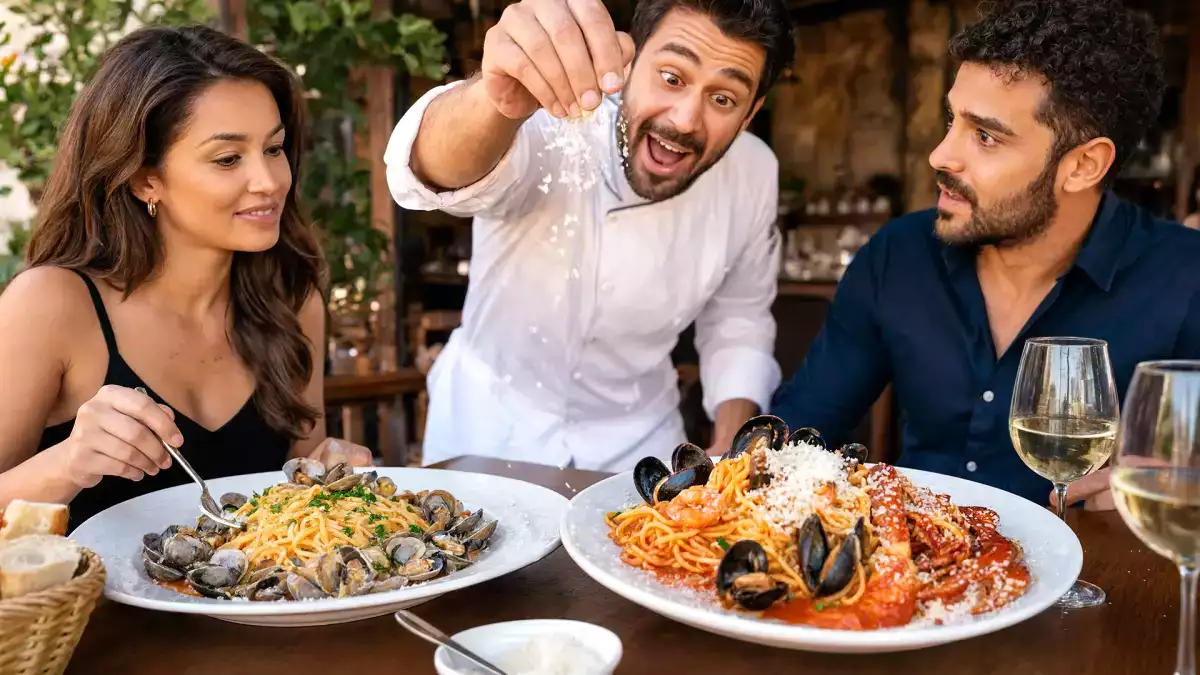
When it comes to seafood pasta dishes, one question continues to divide Italians: can you add cheese or not?
For many people, the answer is immediate and categorical. Never sprinkle Parmesan over spaghetti with clams, seafood linguine, or pasta with mussels. For others, cooking is all about experimentation, and there are no absolute bans.
So who is right? The truth is that behind this belief lies a story of tradition, taste, and habits that is worth exploring.
Why is cheese on seafood pasta often considered a mistake?
The rule comes from a very simple idea: fish and seafood often have delicate flavors that can easily be covered by stronger ingredients.
In great classics of Italian cooking, such as spaghetti with clams, pasta with mussels, or seafood risotto, the goal is to highlight the taste of the sea without changing it too much. Aged cheeses like Parmesan or Pecorino can take over and alter the balance of the dish.
That is why many traditional recipes do not include any cheese at all.
Seafood pasta dishes where cheese really works
And yet, Italian cooking itself proves that the “never cheese with fish” rule is not as absolute as many people think. There are several traditional and modern recipes where the meeting between seafood and dairy is not only accepted, but even essential.
One of the most famous examples is rice, potatoes, and mussels, a symbol of Apulian tradition. In this dish, mussels are cooked with potatoes, rice, and a generous sprinkling of Pecorino or Parmesan; ingredients that are essential for creating the characteristic balance of flavors that has made the recipe famous throughout Italy.
Sicily also offers successful combinations. Pasta with sardines is often finished with toasted breadcrumbs and, in some local versions, a light touch of grated cheese. In Sardinia, it is not unusual to find pasta dishes combining bottarga and Pecorino, two bold ingredients that surprisingly work well together.
Contemporary cooking has expanded these combinations even further. Think of pasta with salmon and ricotta, or shrimp risotto finished with burrata, a pairing that is very popular in Southern Italy. In these cases, cheese is not used to cover the flavor of the seafood, but to add creaminess and harmony, enhancing the ingredients without overpowering them.
Fresh and delicate cheeses such as robiola, stracciatella, and mascarpone are also used successfully today in many seafood recipes, proving that the real secret is not avoiding cheese at all costs, but choosing the right one and using it with balance.
Which cheeses can be used with fish?
One of the most common mistakes when talking about cheese and seafood is assuming that all cheeses have the same effect on a dish. In reality, the success of the pairing depends above all on the type of cheese you choose.
Aged, strongly flavored cheeses such as Parmesan, Grana Padano, or Pecorino tend to have intense aromas that can cover the more delicate notes of fish and seafood. Fresh, soft cheeses, on the other hand, often create a more harmonious balance.
Among the cheeses that work best with seafood pasta dishes, we find:
- fresh ricotta
- burrata
- stracciatella
- robiola
- mascarpone
- mild fresh spreadable cheeses
The general rule is simple: the more delicate the seafood, the lighter and less invasive the cheese should be. Choosing the right ingredient can make the difference between an unbalanced dish and a perfectly successful recipe.
Tradition and creativity can coexist
Italian cooking is made of rules, but also of constant evolution. Many dishes that we now consider untouchable were once innovations that sparked debate among cooks and food lovers.
The example of rice, potatoes, and mussels shows that pairing seafood with cheese is not a recent trend at all. On the contrary, it has been part of certain Italian regional traditions for centuries. At the same time, contemporary cooking continues to experiment successfully with combinations that once would have seemed unthinkable.
For this reason, cheese in seafood pasta dishes should not be seen as an absolute taboo. There are recipes where it is not suitable, and others where it helps create more creaminess, balance, and depth of flavor.
The real challenge is finding the right harmony between ingredients, respecting the character of the seafood without giving up creativity.
Cheese and seafood: can they be eaten together?
According to Italian etiquette and tradition, cheese should stay away from great seafood classics like spaghetti with clams, seafood linguine, and pasta with mussels. The risk, after all, is that it may cover the delicate flavor of the seafood and alter the balance of the dish.
But there are plenty of exceptions, especially in regional cooking. The famous rice, potatoes, and mussels is proof: when cheese is part of the recipe, it can help create flavor, creaminess, and character. The same goes for many more modern dishes with salmon, shrimp, or swordfish paired with fresh, delicate cheeses.
So rather than asking whether cheese with fish is forbidden, the real question should be: does the pairing feel balanced?
When flavors and textures work together, even this combination can surprise you. And you, which side are you on: cheese with seafood, yes or no?
 Daniele Mainieri
Comments
giordano_s2015
Clear and to the point but not very original. Exceptions exist to practically all rules!