Is your couscous too dry or too sticky? The right method takes just 5 minutes
Tuesday 29 September 2026 10:00 - Adèle Peyches
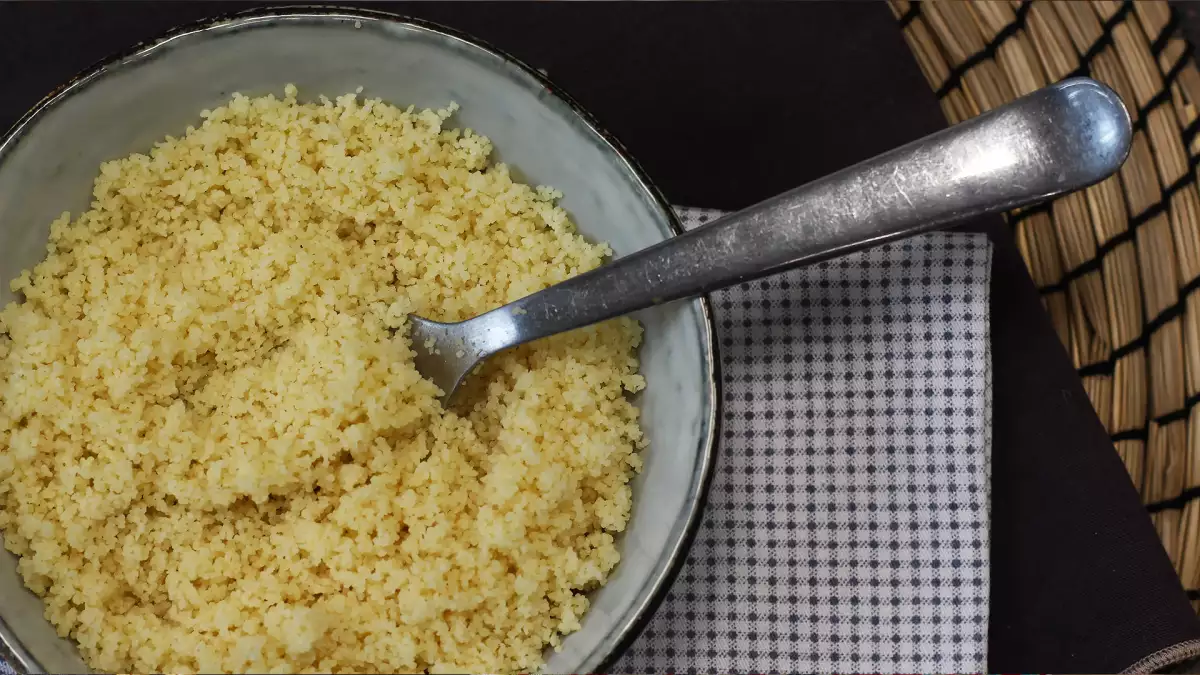
But for it to taste good, it shouldn’t end up as a compact lump. A successful couscous should be light, well-fluffed, and the grains should come apart easily.
The good news? It takes almost nothing: just the right amount of water, a short rest, and some gentle fluffing.
The right ratio of water to couscous
For classic couscous, the basic rule is simple: you need about the same volume of couscous as boiling water.
For example, for 1 glass of couscous, use about 1 glass of boiling water. For 2 glasses of couscous, use 2 glasses of water.
This guideline works very well with medium-grain couscous. If your couscous grains are very fine or larger, also check the package directions.
For example, for 1 glass of couscous, use about 1 glass of boiling water. For 2 glasses of couscous, use 2 glasses of water.
This guideline works very well with medium-grain couscous. If your couscous grains are very fine or larger, also check the package directions.
The simple method: 5 minutes of rest
Pour the couscous into a bowl. Add a pinch of salt and a drizzle of olive oil. Bring the water to a boil, then pour it over the couscous.
Stir quickly, cover with a plate or lid, then let it sit for about 5 minutes.
After this resting time, the grains will have absorbed the water. All that’s left to do is fluff them.
Stir quickly, cover with a plate or lid, then let it sit for about 5 minutes.
After this resting time, the grains will have absorbed the water. All that’s left to do is fluff them.
The step that changes everything: shelling
Once the couscous has puffed up, don't serve it as is. Take a fork and gently separate the grains.
Add a small pat of butter or a drizzle of olive oil, then fluff the couscous with a fork for a few moments.
This step ensures the couscous is well-separated, more pleasant to eat, and much less dense.
Add a small pat of butter or a drizzle of olive oil, then fluff the couscous with a fork for a few moments.
This step ensures the couscous is well-separated, more pleasant to eat, and much less dense.
How much couscous should I plan on per person?
As a side dish, allow about 60 to 80 g (2.1 to 2.8 oz) of uncooked couscous per person. This is enough to serve with vegetables, meat, fish, or a dish with sauce.
For a very hearty main course, you can increase the amount to around 100 g (3.5 oz) per person, especially if the couscous is the centerpiece of the meal.
A good tip: it’s better to make a little less and add vegetables or a sauce than to serve a large amount of dry couscous.
For a very hearty main course, you can increase the amount to around 100 g (3.5 oz) per person, especially if the couscous is the centerpiece of the meal.
A good tip: it’s better to make a little less and add vegetables or a sauce than to serve a large amount of dry couscous.
Why does couscous turn mushy?
Couscous often becomes mushy when there’s too much water, when it isn’t fluffed apart, or when it’s left covered for too long after it’s puffed up.
If you add way too much water, the grains will stick together. If you forget to fluff it, the couscous will form a clump.
To avoid this, use the correct proportions, let it rest for 5 minutes, and then fluff it immediately with a fork.
If you add way too much water, the grains will stick together. If you forget to fluff it, the couscous will form a clump.
To avoid this, use the correct proportions, let it rest for 5 minutes, and then fluff it immediately with a fork.
Can you cook it in broth?
Yes, and it’s actually a great idea if you want a more flavorful couscous. Replace the water with hot vegetable, chicken, or spiced broth.
Keep the same ratio: about the same volume of broth as couscous. Just be careful with the salt if the broth is already salty.
With cumin, paprika, turmeric, or a little ras el hanout, the couscous immediately takes on more character.
Keep the same ratio: about the same volume of broth as couscous. Just be careful with the salt if the broth is already salty.
With cumin, paprika, turmeric, or a little ras el hanout, the couscous immediately takes on more character.
The even creamier version
For a fluffier couscous, add a drizzle of olive oil before the water, then a small pat of butter after letting it rest.
You can also fluff it once, cover it for another 2 minutes, then fluff it again. This simple step gives it a softer texture.
The goal isn’t to make it greasy, but to give the grains a bit more softness.
You can also fluff it once, cover it for another 2 minutes, then fluff it again. This simple step gives it a softer texture.
The goal isn’t to make it greasy, but to give the grains a bit more softness.
And what about the couscous pot?
Cooking in a couscous pot is the more traditional method. The couscous is steamed over broth or a simmering dish.
This method takes longer and requires several rounds of steaming, but results in very light grains when done properly.
For quick weeknight meals, the bowl method remains the most convenient. For a real family-style couscous, the couscous pot is still the best choice.
This method takes longer and requires several rounds of steaming, but results in very light grains when done properly.
For quick weeknight meals, the bowl method remains the most convenient. For a real family-style couscous, the couscous pot is still the best choice.
What should you serve with whole-grain couscous?
Couscous goes very well with dishes served in sauce, roasted vegetables, chickpeas, chicken, meatballs, merguez sausages, fish, or a simple sauté of vegetables.
To keep the basic method handy, here’s an easy recipe.
It can also be used in a colorful couscous salad, perfect as a cold meal or side dish.
And for a more substantial meal, it pairs very well with chicken couscous.
To keep the basic method handy, here’s an easy recipe.
How to cook couscous? a super-easy cooking method!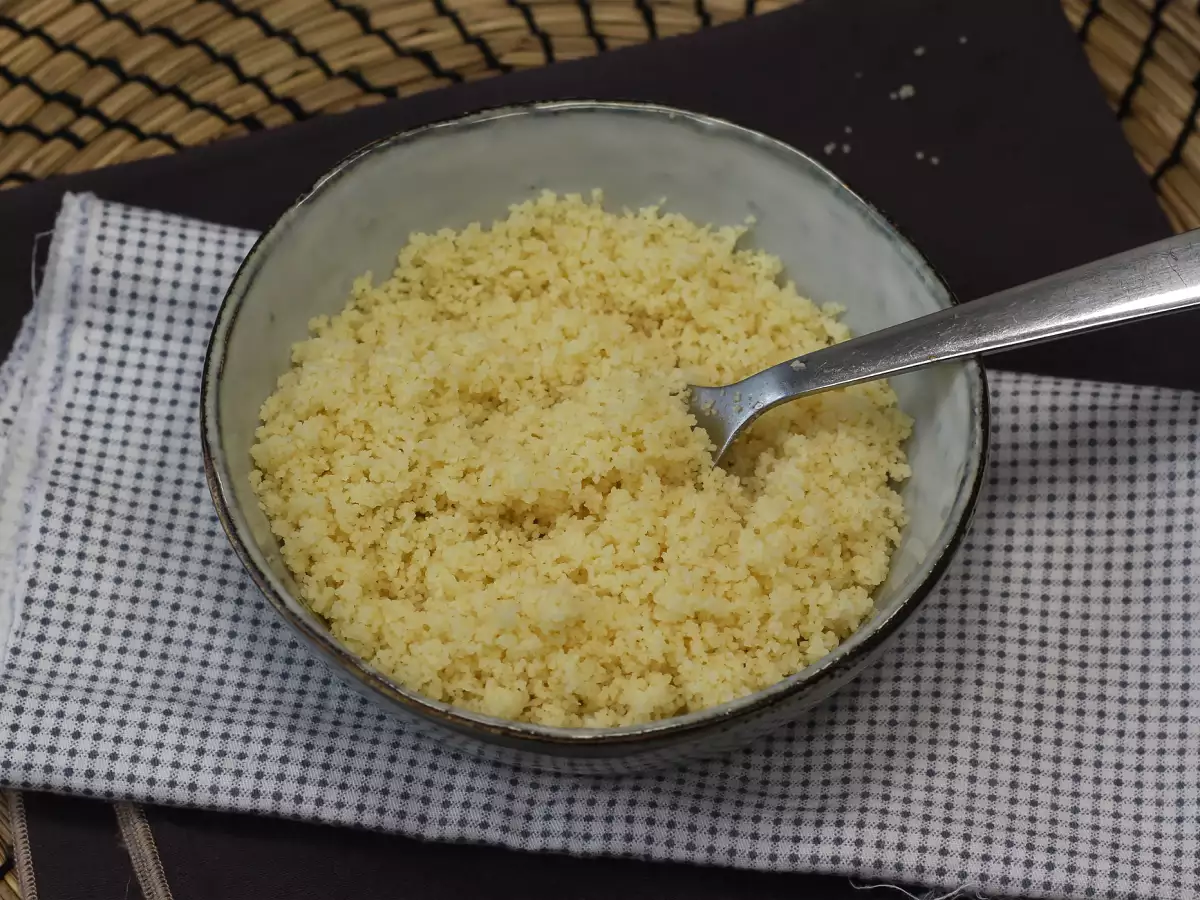
There are some basics you need to know, and cooking couscous is one of them! Whether you're making traditional couscous, tabbouleh, or serving it as a side dish, couscous is a kitchen staple! And you'll see that it's super easy to cook. Give it a try!
It can also be used in a colorful couscous salad, perfect as a cold meal or side dish.
Couscous salad for a simple, healthy and colorful starter!
You never have enough easy and healthy recipes in your cookbook, right? Especially when you’re looking to make something that will provide several meals . So we suggest using your couscous in a couscous salad recipe ! With seasonal vegetables and...
And for a more substantial meal, it pairs very well with chicken couscous.
A Good Summary of Times and Proportions
To easily cook whole-grain couscous, remember this: 1 part couscous to 1 part boiling water, a pinch of salt, a drizzle of olive oil, then let it rest, covered, for 5 minutes.
Next, fluff it with a fork, adding a little butter or oil. If needed, fluff it for a few more seconds to separate the grains thoroughly.
The secret to good couscous isn’t a long cooking time; it’s the right amount of water, a short resting period, and proper fluffing.
Next, fluff it with a fork, adding a little butter or oil. If needed, fluff it for a few more seconds to separate the grains thoroughly.
The secret to good couscous isn’t a long cooking time; it’s the right amount of water, a short resting period, and proper fluffing.
 Adèle Peyches
Editorial manager who just can't wait for winter to enjoy fondue! Passionate about gastronomy and always on the lookout for new culinary gems, I first studied law before returning to my first love: the taste of good products and the joy of sharing around the table :)
Comments