Managing blood sugar? Start with the whole plate, not carb fear
Wednesday 23 September 2026 10:00 - Juliette Hess
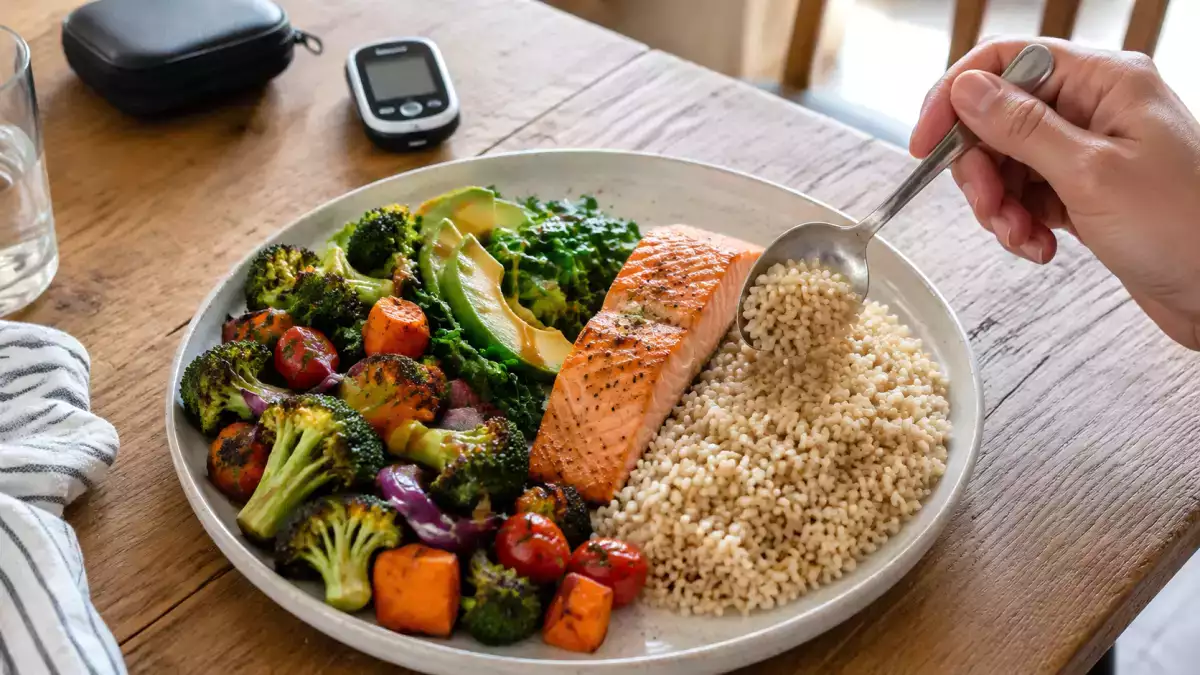
Carbohydrates affect blood glucose, but they are not all the same. Starch, fiber and sugar behave differently, and less processed, fiber-rich foods usually support a steadier meal than refined, low-fiber options.
A practical blood sugar-friendly plate focuses on carb quality, portion size and balance: choose more whole grains, beans, lentils, fruit and vegetables; keep portions intentional; and pair carbs with protein, healthy fats and vegetables so the meal is more satisfying and steadier.
Carbs are not all the same
Carbohydrates include starch, fiber and sugar. That is why judging a food only by whether it “has carbs” is too simple.
Complex, less processed carbohydrate foods tend to digest more slowly and often bring more fiber, vitamins and minerals. Refined or highly processed carbs can be easier to overeat and may create a faster blood sugar rise.
A better everyday choice is to move more often toward whole grains, beans, lentils, fruit, vegetables and intact plant foods.
Complex, less processed carbohydrate foods tend to digest more slowly and often bring more fiber, vitamins and minerals. Refined or highly processed carbs can be easier to overeat and may create a faster blood sugar rise.
A better everyday choice is to move more often toward whole grains, beans, lentils, fruit, vegetables and intact plant foods.
Portions still matter
Better-quality carbs still need portions that make sense for the meal. A nutritious food can still affect blood sugar if the serving is very large.
A simple guide is to leave space on the plate for protein, vegetables and healthy fats instead of letting starches take over the meal.
The goal is not tiny portions. It is intentional portions.
A simple guide is to leave space on the plate for protein, vegetables and healthy fats instead of letting starches take over the meal.
The goal is not tiny portions. It is intentional portions.
The whole meal changes the response
A carb eaten alone can affect the body differently from the same carb eaten with protein, fat and fiber. That is why a balanced plate matters.
Fruit with yogurt, pasta with vegetables and olive oil, or beans with greens can be more satisfying than a low-fiber carb eaten by itself.
Think of the plate as a team: carbs provide energy, fiber slows the pace, protein and fat add staying power, and vegetables add volume and nutrients.
Fruit with yogurt, pasta with vegetables and olive oil, or beans with greens can be more satisfying than a low-fiber carb eaten by itself.
Think of the plate as a team: carbs provide energy, fiber slows the pace, protein and fat add staying power, and vegetables add volume and nutrients.
Fiber is a useful clue
Fiber is one of the most helpful signs of a better carbohydrate choice. It is found in plant foods such as fruits, vegetables, beans, lentils, peas, nuts and whole grains.
Higher-fiber foods can support fullness and help make meals feel steadier. Good options include oats, brown rice, quinoa, barley, farro, beans, lentils and fruit with edible skin or seeds.
Increase fiber gradually and drink enough water to avoid digestive discomfort.
Higher-fiber foods can support fullness and help make meals feel steadier. Good options include oats, brown rice, quinoa, barley, farro, beans, lentils and fruit with edible skin or seeds.
Increase fiber gradually and drink enough water to avoid digestive discomfort.
Do not fear fruit or trust every label claim
Whole fruit does contain natural sugar, but it also brings water, fiber, vitamins, minerals and plant compounds. It is not the same as juice or highly processed sweets.
At the same time, labels such as “sugar-free,” “reduced sugar” or “no sugar added” do not automatically mean a food is carb-free or the best choice. Total carbohydrate, fiber, portion size and overall food quality still matter.
For a clearer approach, focus on the full nutrition picture rather than one front-of-package claim.
At the same time, labels such as “sugar-free,” “reduced sugar” or “no sugar added” do not automatically mean a food is carb-free or the best choice. Total carbohydrate, fiber, portion size and overall food quality still matter.
For a clearer approach, focus on the full nutrition picture rather than one front-of-package claim.
The takeaway
Managing blood sugar does not have to start with carb fear. A more useful approach is to focus on quality, portions and the whole meal.
Choose more fiber-rich, less processed carbohydrates. Keep portions intentional. Pair carbs with protein, healthy fats and vegetables. Pay attention to how meals make you feel and adjust the pattern to your needs.
The best plan is one that supports steadier blood sugar and still fits real life.
Choose more fiber-rich, less processed carbohydrates. Keep portions intentional. Pair carbs with protein, healthy fats and vegetables. Pay attention to how meals make you feel and adjust the pattern to your needs.
The best plan is one that supports steadier blood sugar and still fits real life.
 Juliette Hess
I have been creating culinary content for Petitchef since 2017.
I love travelling and discovering new dishes, trying out new food trends and exploring new restaurants.
I’m a huge fan of pasta and noodles in all their forms ❤ from udon noodles to tagliatelle, I love cooking them and even making them from scratch!
I’m currently preparing, filming and photographing your next recipe, and I hope you’ll enjoy it!
I love travelling and discovering new dishes, trying out new food trends and exploring new restaurants.
I’m a huge fan of pasta and noodles in all their forms ❤ from udon noodles to tagliatelle, I love cooking them and even making them from scratch!
I’m currently preparing, filming and photographing your next recipe, and I hope you’ll enjoy it!
Comments