Master Spanish ajoblanco at home: simple, practical tips to make a smoother, creamier, well-balanced bowl
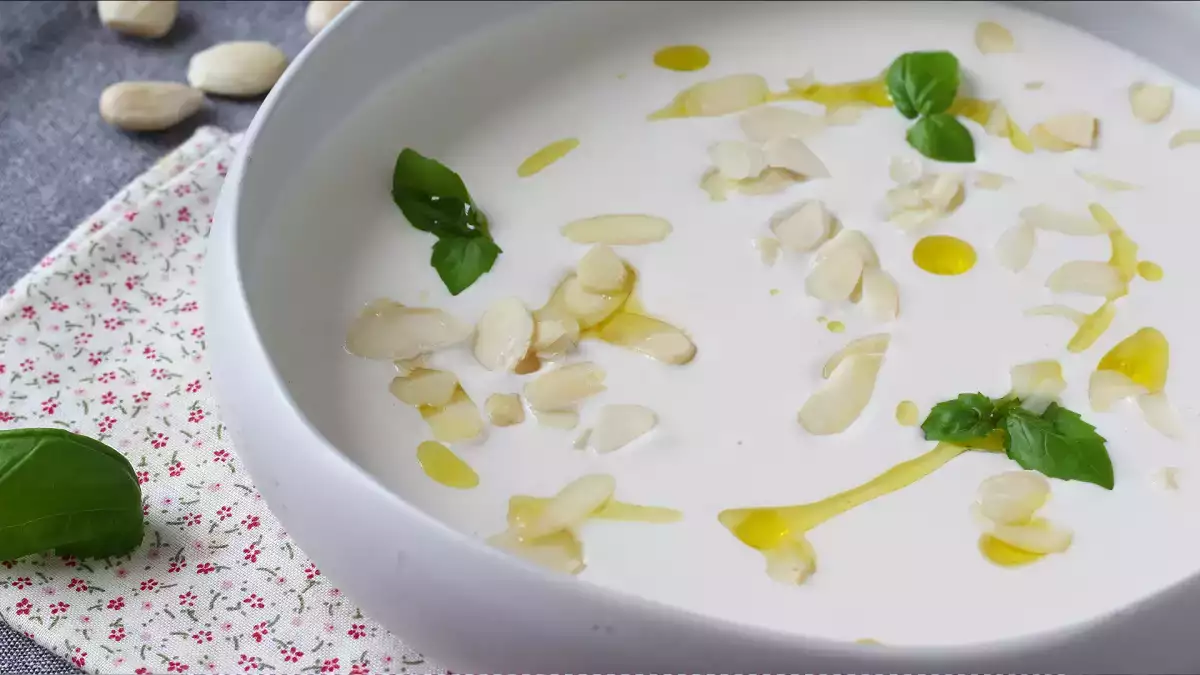
Ajoblanco originated in a humble pantry: day-old bread, almonds, garlic, olive oil, vinegar, and water. A simple recipe, rooted in making the most of what’s on hand and in traditional Andalusian cuisine, it’s now also being reinterpreted in Michelin-starred restaurants. Spanish chefs like Dani García, Pedro Sánchez, and Xanty Elías have shown that, with technique and sensitivity, this dish can make the leap from everyday meals to haute cuisine without losing its essence.
And perhaps that is precisely its charm: it seems easy, but it requires balance. The garlic shouldn’t overpower the dish, the vinegar should complement without dominating, and the texture should be smooth and silky.
These tips will help you avoid the most common mistakes and prepare restaurant-quality ajoblanco at home.
Choose a good almond
Almonds define both the flavor and texture of ajoblanco. It’s best to use them raw, blanched, and unsalted.
The Marcona variety is a great choice because it tends to be sweeter, more tender, and oilier than other almonds. That natural oil helps create a smoother cream. You don’t have to use them, but it’s best to choose good-quality almonds.
Before you start, taste one or two. If any taste rancid or very bitter, it’s best not to use that package. Just a few bad almonds can ruin the whole batch.
You also shouldn’t toast them. Toasting gives them a stronger flavor and takes the recipe away from the fresh, mild profile you’re looking for in a classic ajoblanco.
Don't go overboard with the garlic
One of the most common mistakes is adding too much garlic.
For 150 grams (about 5 oz) of almonds, one small clove is usually enough. If the garlic is large or has a particularly strong flavor, half a clove may be enough.
Removing the central germ helps mellow out some mature garlic cloves. You can also blanch it for a few seconds in boiling water. The heat reduces its intensity and makes it less pungent.
It’s safest to start with a small amount. After chopping and tasting, you can always add a little more. Once it’s mixed in, however, there’s no way to take it out.
First, blend with a little water
Don't add all the water at once.
Place the almonds, garlic, and just enough water to cover them in the blender. Blend for a few minutes until a paste forms that’s as smooth as possible.
This step helps the blades break down the almonds thoroughly. If the blender jar contains too much liquid, a home blender may leave small pieces, and the soup will be grainy.
Once the paste is smooth, gradually add the rest of the water. This will also allow you to better control the consistency.
If your blender isn’t very powerful, you can soak the almonds in the refrigerator for a few hours. They’ll be softer and will blend more easily.
Eat bread in moderation
Bread crumbs add body and help make the ajoblanco creamy, but they shouldn't mask the flavor of the almonds.
Use white bread (preferably from the day before) and avoid adding too much crust. Let it soak in the liquid for a few minutes before blending so it softens completely.
Using 20 grams (0.7 oz) of breadcrumbs for every 150 grams (5.3 oz) of almonds will result in a fairly light soup. Those who prefer a thicker texture can add a little more, but it’s best to do so at the end.
Ajoblanco thickens slightly as it sits in the refrigerator. For this reason, it’s best not to cover it too tightly right after blending.
Add the oil in a thin stream
Don't pour the oil all at once.
Add it gradually, with the blender running, so that it mixes well with the water, almonds, and bread. This will give you a more uniform and creamy texture.
Choose a well-balanced extra virgin olive oil. One that’s too bitter or spicy can overpower the mild flavor of the almonds.
There’s also no need to blend it for too long once it’s been added. Once it’s well incorporated, stop the blender. You can set aside a few drops to finish the dish just before serving.
Keep an eye on the vinegar
Vinegar adds a refreshing touch and keeps the soup from being too heavy, but it should be used sparingly.
Sherry vinegar has a strong aroma and is usually more intense than apple cider vinegar or white wine vinegar. Start with a small amount and adjust as needed.
Taste the ajoblanco once it’s cold. Temperature affects how we perceive salt and acidity, so a mixture that seems balanced when freshly made may taste bland after several hours in the fridge.
The right balance is when the vinegar enhances the flavor but doesn’t overpower it.
Strain the mixture to achieve a smoother texture
Straining the ajoblanco through a fine-mesh strainer isn't necessary, but it greatly improves the texture.
The strainer catches small bits of almond, garlic fibers, and pieces of bread that the blender hasn’t completely broken down.
Press down with a spatula or spoon to get the most out of the mixture. The result will be a smoother soup with a more pleasant mouthfeel.
If you prefer a slightly more rustic texture or have a very powerful food processor, you can skip this step.
Let it sit in the fridge
Ajoblanco needs time to cool and settle.
Store it in a covered container for at least two to four hours. You can also prepare it the day before.
Before serving, stir it and check the consistency. If it’s too thick, add a few tablespoons of very cold water and mix again.
Serve it cold, but not nearly frozen. A temperature that’s too low dulls the flavor of the almonds, oil, and vinegar.
What to put on top of it
Grapes are the most traditional accompaniment. Their sweetness and juiciness pair very well with the soup’s acidity.
You can also add melon, green apple, cucumber, or figs. For a crunchy contrast, use lightly toasted slivered almonds.
A few drops of olive oil and a few fresh herb leaves are all it takes to finish the dish. For a more original combination, some Michelin-starred chefs serve it with smoked sardines and figs, or with smoked salmon and ricotta.
There’s no need to overload it with ingredients. When ajoblanco is made well, it needs very little to be fresh, elegant, and appetizing.
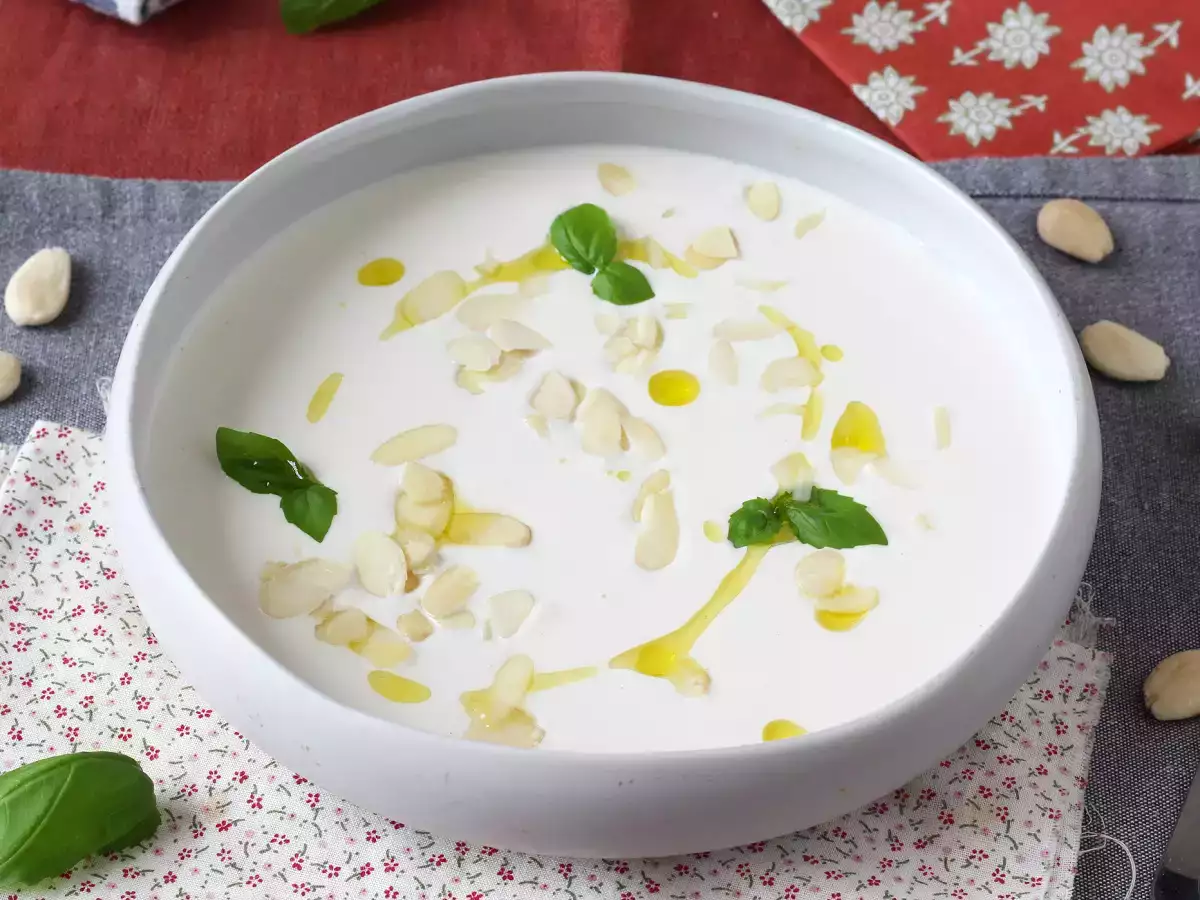
Don't let the name fool you: ajoblanco does not taste like garlic ("ajo" means "garlic" in Spanish). This cold soup from the south of Spain is made with raw almonds. Its delicate flavor and silky texture make it one of the most refreshing dishes of...
 Patricia González
Comments