Olive oil: these label details can change everything
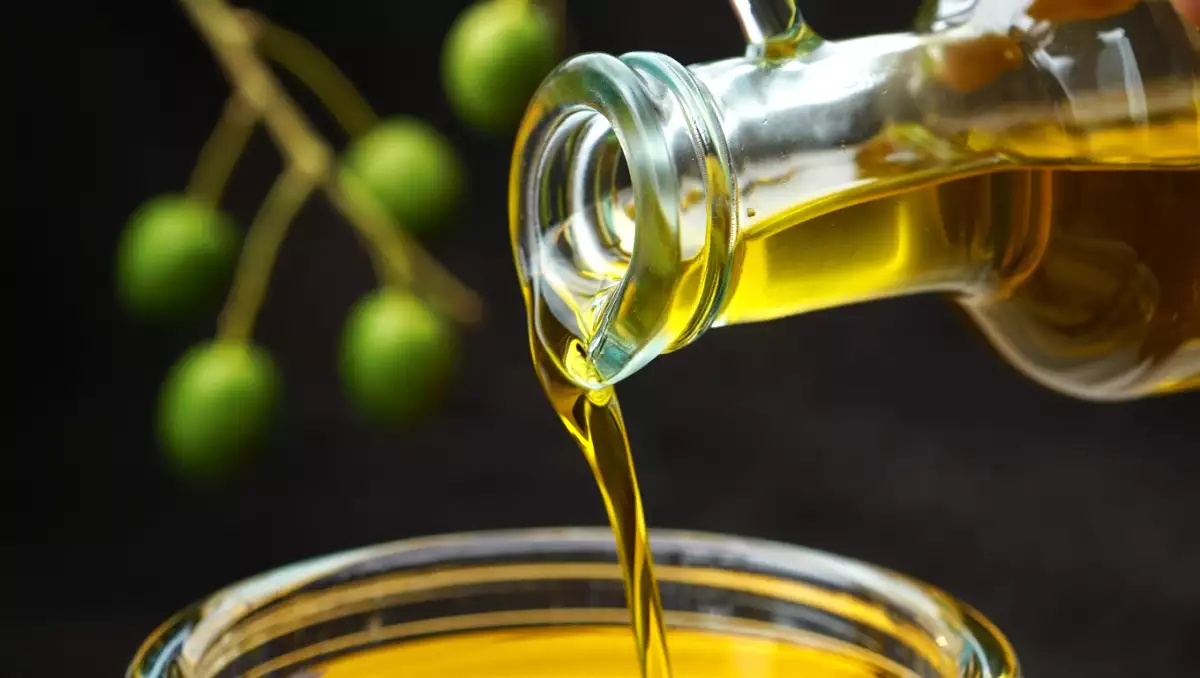
Olive oil is a kitchen essential. We use it to season salads, cook vegetables, baste fish or simply accompany a piece of bread. But faced with dozens of bottles lined up on the shelves, it's not always easy to find your way around...
Between "virgin", "extra virgin", origins and labels, many consumers end up choosing their olive oil somewhat at random. But there are a few simple criteria that can help you identify a quality oil.
Here are the essential points to know in order to choose the right olive oil and fully enjoy its aromas ;)
The "extra virgin" label: an essential criterion
This is probably the first thing to check on the label.
Extra-virgin olive oil is obtained by mechanical means only, i.e. by pressing or centrifuging the olives. No chemical treatment is used to extract it. It must also meet certain precise quality criteria.
For example, its acidity must be less than 0.8%, which guarantees a more stable and generally more aromatic oil. This mark is regulated by the European Union and is one of the main indicators of quality.
Conversely, a bottle simply labelled "olive oil" may be a blend of refined and virgin oils. These oils are often more neutral in taste and of less nutritional interest.
If you're looking for an oil that's rich in flavor and obtained in a more natural way, extra virgin olive oil remains the best choice.
The origin of olives: an interesting clue
The origin of the olives plays an important role in the quality and aroma of the oil.
Some bottles simply state "origine UE" or "mélange d'huiles d'olive de l'Union européenne". This means that the olives may come from several different countries.
Other oils indicate a more precise origin: Spain, Italy, Greece, Portugal or France, for example. These indications often give a better idea of the product.
Some oils also have labels such as AOP (Appellation d'Origine Protégée) or AOC (Appellation d'Origine Contrôlée). These labels guarantee that the olives have been grown and processed in a specific geographical area, according to local know-how.
This doesn't mean that an oil without a label is necessarily bad, but a clearly indicated origin is often a good sign of transparency.
Harvest date: a very useful detail
Contrary to popular belief, olive oil is not a product that improves with age. On the contrary, it's best when relatively fresh.
Some bottles indicate the date on which the olives were harvested. This information is very interesting, as it shows when the olives were pressed.
Oil consumed within a few months of harvest generally has more intense and complex aromas.
Generally speaking, olive oil can be kept for between 18 and 24 months, but its taste qualities gradually diminish over time.
Color doesn't tell the whole story
Many people think that a very green olive oil is necessarily of better quality. In reality, the color depends mainly on the variety of olives and the time of harvest.
An oil can be golden yellow, pale green or intense green and still be excellent. This is why professional olive oil tastings are conducted in opaque glasses. This allows you to concentrate solely on the aromas and sensations in the mouth, without being influenced by color.
So it's better to rely on smell and taste rather than appearance.
Taste: fruity, sometimes bitter or spicy
A good olive oil generally has a fruity taste, sometimes with a slight bitterness or spiciness on the finish.
These sensations are linked to the presence of polyphenols, natural compounds with antioxidant properties. The higher an oil's polyphenol content, the more bitter or spicy it may be.
These aromas may be surprising at first, but they are often considered a sign of quality.
Conversely, a totally neutral oil may be a sign of a refined or older oil.
The container: a detail that counts
Olive oil is sensitive to light, air and heat. These elements can alter its aromas and accelerate oxidation.
For this reason, the best oils are generally sold in :
- dark glass bottles
- metal cans
These containers better protect the oil from light.
Transparent bottles are less ideal, as they allow light to pass through, which can more rapidly deteriorate the quality of the product.
How to store olive oil properly
Once the bottle has been opened, there are a few simple steps you can take to preserve its aromas.
It is best to store olive oil :
- away from light
- in a cool place
- tightly closed after each use
The ideal temperature is generally between 59°F/15°C and 64°F/18°C. It is best to avoid leaving it in the immediate vicinity of the stove or oven, where heat can alter its qualities.
Choosing the right olive oil isn't so complicated after all
By taking the time to look at a few details on the label - the extra virgin label, the origin of the olives, the date of harvest or the type of bottle - you can already spot a better quality oil.
Olive oil is richly aromatic. Depending on the variety of olives, the climate or the production method, its flavours can vary enormously.
Testing different oils is an excellent way of discovering these nuances... and finding the one that goes best with your everyday dishes!
 Adèle Peyches
Comments