Power outage checklist: what to keep or toss from your fridge during thunderstorms and blackouts
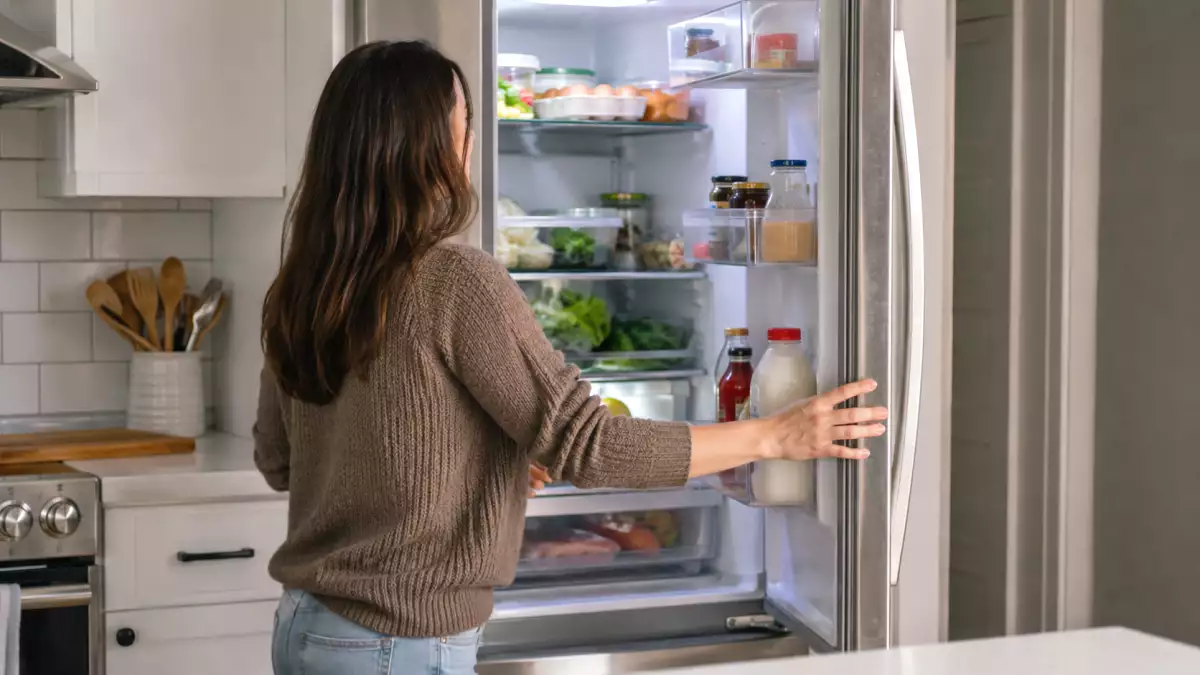
A violent thunderstorm, the power goes out, and then that question pops into your head right away: What do we do about the fridge?
When the outage lasts just a few minutes, there’s usually no need for a major sort-through. But when it drags on (especially in the middle of summer) the most perishable foods can go bad. And in that case, just sniffing or taking a small bite isn’t enough to decide.
The right thing to do is simpler: keep the doors closed, wait for the power to come back on, check the temperature if possible, and then sort the food by category. Here’s a checklist to help you figure out what to keep, what to cook right away, and what to throw out without hesitation after a power outage.
The first thing to do: don't open the fridge every five minutes
During a power outage, the refrigerator becomes like a closed cooler. The more you open the door, the more warm air comes in, and the faster the temperature rises.
So the first step is simple: don’t open the refrigerator unless you need to check on or retrieve something essential. The same goes for the freezer: with the door closed, it keeps the cold better.
Once the power comes back on, avoid opening the door wide right away to inspect everything. Let the appliance cool down first, then sort through the contents calmly. If you have a refrigerator thermometer, now is the time to use it. ANSES reminds us that cold temperatures serve to slow the growth of microorganisms and limit foodborne illnesses. In short: when the temperature is no longer low enough, certain foods become riskier, even if they don’t smell bad.
The rule to remember: don't taste it just to see if it's still good
It’s tempting: to open a yogurt, smell some meat, or taste a spoonful of a prepared dish. But that’s not a good way to go about it.
Food can look normal and still pose a risk. Bacteria or toxins aren’t always visible, don’t necessarily change the smell, and don’t always taste off. After a long power outage, the right question isn’t, “Does it smell good?” but rather: How long was the food left without sufficient refrigeration? And what temperature does the appliance read?
If you have no idea how long the power outage lasted, if the fridge felt warm to the touch, if perishable foods are lukewarm, or if you have any doubts about meat, fish, leftovers, or a homemade dish, the safest course of action is often to throw it away. It’s never pleasant, but food poisoning is even less so.
Meat, fish, seafood: the foods to watch out for most
These are the first foods to check. Raw meat, poultry, fish, seafood, sausage meat, carpaccio, tartare, and marinated skewers: all of these items are highly sensitive to breaks in the cold chain.
If the power outage was brief, the door remained closed, and the fridge is still very cold, these items can sometimes be saved. But if the outage lasted a long time, the temperature has clearly risen, or the packaging feels warm, don’t take any chances.
For products that are still cold but delicate, one option is to cook them immediately and consume them quickly. However, this does not apply to products that have been exposed to high temperatures for too long. And above all: do not put meat or fish that has thawed during the power outage back in the freezer.
Dairy products, fresh cheeses, dairy desserts: Be careful with open items
Opened dairy products, opened dessert creams, fresh cheeses, faisselles, ricotta, mascarpone, opened liquid creams, and milk-based preparations should be handled with care.
Unopened yogurt that has been kept very cold poses less of a problem than an already opened container, a homemade cream sauce, or a dairy dessert left on the top shelf of the fridge. The health safety guide on precautions during a power outage distinguishes between particularly delicate foods, such as fresh cheeses and soft cheeses and products that hold up better.
In practice: anything that is open, perishable, or very moist should be checked first. Items that are still sealed, well-chilled, and stored in a refrigerator that has remained closed can be preserved more easily—but only if the temperature has returned to the proper level.
Ready-made meals, leftovers, and homemade dishes: don't keep them "just in case"
Leftovers like pasta, cooked rice, gratins, quiches, homemade sauces, dishes stored in airtight containers, mixed salads with mayonnaise, peeled hard-boiled eggs, and meat or fish dishes are convenient… but delicate.
After a power outage, these are often the items that raise the most questions. Why? Because they’ve already been cooked, handled, cooled, and sometimes opened multiple times. If the refrigerator temperature has risen, these foods can become unsafe more quickly than an unopened packaged product.
Ptitchef’s rule of thumb: if the dish has stayed very cold, isn’t too old, and you can eat it very quickly, you can keep it but with caution. If the dish is lukewarm, if it contains cream, fish, meat, eggs, or a homemade sauce, or if you don’t know how long the power outage lasted, it’s best not to save it for the next day.
Condiments, jams, store-bought sauces: not everything has to be thrown away
Good news: not everything in the fridge is necessarily ruined.
Highly sweet, salty, acidic, or processed foods often hold up better during a power outage. Think of jams, pickles, mustards, certain ketchups, unopened or less perishable store-bought sauces, jarred olives, capers, chutneys, beverages, and unopened fruit in syrup.
Be careful, however, with opened sauces made with eggs, cream, or fresh ingredients. An unopened or properly stored store-bought mayonnaise is not the same as homemade mayonnaise or a fresh sauce prepared the day before.
The right approach: check the type of product, whether it’s open or unopened, and where it’s stored in the fridge. A tightly sealed jar at the back of a consistently cold fridge shouldn’t be treated the same as an open fresh sauce sitting in the door.
Fruits and vegetables: they last longer, but not all in the same way
Whole fruits and vegetables are generally less perishable than meat or an opened container of yogurt. Zucchini, carrots, apples, tomatoes, whole melons, bell peppers, or eggplants can often be saved if cutting them did not cause excessive heat to build up in the refrigerator.
On the other hand, cut fruit, washed and chopped raw vegetables, opened bagged salads, mixed salads, or cooked vegetables are more perishable. A whole watermelon doesn’t pose the same problem as a bowl of pre-cut watermelon. A whole carrot does not behave the same way as a seasoned salad of grated carrots.
If the cut fruits or vegetables have remained cold, eat them quickly. If they are lukewarm, soft, slimy, or swimming in juice after a long power outage, it’s best to throw them away.
Freezer: Be sure to check whether any food has thawed
A freezer retains cold better than a refrigerator, especially if it is full and the door has remained closed. The health information sheet states that a full freezer can stay cold for about 48 hours. However, this figure depends on the appliance, how full it is, the room temperature, and the number of times the door is opened.
After the power outage, check the condition of the food. If it’s still rock-hard or has ice crystals, that’s a good sign. If it has thawed, the situation is different.
In practice: Thawed food should not be refrozen as is. If it has remained cold enough, it can sometimes be cooked quickly and then eaten right away. But be especially careful with meat, poultry, fish, seafood, and prepared meals. If the food is lukewarm, if juices have leaked out, or if you have any doubts, throw it away.
A Quick Checklist After a Power Outage
1. During a power outage: Keep the refrigerator and freezer closed.
2. When power is restored: let the appliance return to its normal temperature before leaving the door open for an extended period.
3. Check: the refrigerator’s temperature, the condition of the food, packaging, opened products, and any food that has warmed up.
4. Discard the following first: meat, fish, seafood, prepared meals, homemade sauces, opened dairy products, and egg-based dishes if the power outage was prolonged or if the food is no longer cold.
5. It’s safer to keep: whole fruits and vegetables, condiments, jams, hard cheeses, unopened products, and items that have remained cold.
6. Never taste the food: this is not a safety test.
7. When in doubt: it’s better to throw away perishable food than to take a risk.
 Adèle Peyches
Comments