Red koji: the vivid fermented ingredient to know after miso, and why cooks are talking about it
Saturday 22 August 2026 12:00 - Juliette Hess
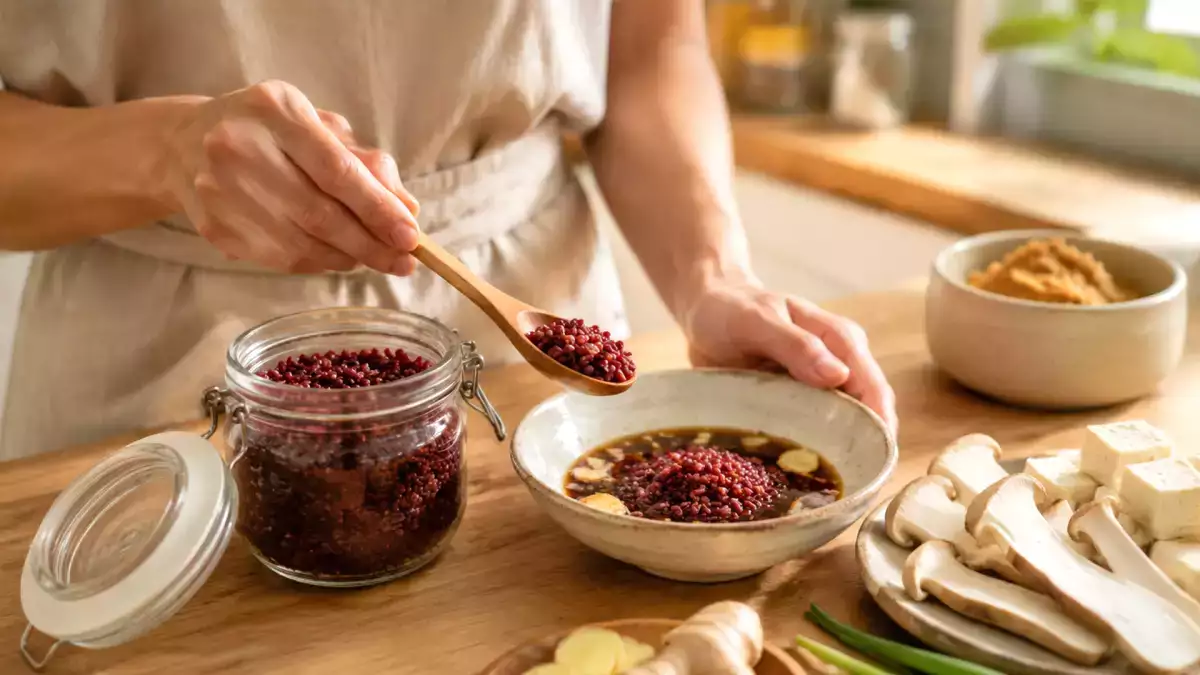
Red koji is not exactly the same as the pale koji used for miso, sake and soy sauce. Traditional Japanese koji is usually associated with Aspergillus oryzae, while red koji is linked to Monascus species, commonly Monascus purpureus. That difference matters because red koji has its own culinary history, flavour profile, pigments and safety considerations. It can be used for colour, marinades, fermented sauces, rice wines, tofu preparations and pantry experiments — but it should be bought from reliable food sources and not confused with cholesterol-lowering supplements.
So after miso, why pay attention to red koji? Because it is beautiful, deeply savoury, versatile and still underused in many Western kitchens. It can tint food naturally, add fermented complexity and open the door to East Asian pantry traditions that go far beyond a spoonful of miso soup.
What is red koji?
Red koji is rice that has been fermented with molds from the Monascus family. As the mold grows, it produces natural pigments that turn the grains a vivid red, red-purple or brick colour. This is why red koji has long been valued not only for flavour, but also for its ability to colour foods naturally.
It is often called red yeast rice, though the name can be confusing because the organism is a mold rather than ordinary baker’s yeast. In different food traditions, you may see it labelled as beni koji, hong qu, red mold rice or angkak.
In the kitchen, think of it as a fermented rice ingredient with colour, aroma and umami potential. It is not a direct replacement for miso, but it belongs in the same curious pantry universe: foods transformed by controlled fermentation into something deeper, stranger and more flavourful.
It is often called red yeast rice, though the name can be confusing because the organism is a mold rather than ordinary baker’s yeast. In different food traditions, you may see it labelled as beni koji, hong qu, red mold rice or angkak.
In the kitchen, think of it as a fermented rice ingredient with colour, aroma and umami potential. It is not a direct replacement for miso, but it belongs in the same curious pantry universe: foods transformed by controlled fermentation into something deeper, stranger and more flavourful.
How is it different from the koji used for miso?
The word koji can make things confusing because it is used broadly. The koji behind miso, soy sauce, sake and many Japanese ferments is usually associated with Aspergillus oryzae, a pale mold grown on rice, barley or soybeans. Red koji, by contrast, is associated with Monascus molds grown on rice.
That means red koji is not simply “miso koji, but red.” It has different pigments, different fermentation behaviour and different culinary uses. Miso koji is especially famous for enzymes that break down starches and proteins, helping create sweetness and umami. Red koji is prized for colour, savoury depth and fermented complexity in its own right.
A helpful comparison: miso is the familiar, salty, paste-like umami anchor. Red koji is the dramatic red cousin that brings colour, fermentation character and a different kind of pantry curiosity.
That means red koji is not simply “miso koji, but red.” It has different pigments, different fermentation behaviour and different culinary uses. Miso koji is especially famous for enzymes that break down starches and proteins, helping create sweetness and umami. Red koji is prized for colour, savoury depth and fermented complexity in its own right.
A helpful comparison: miso is the familiar, salty, paste-like umami anchor. Red koji is the dramatic red cousin that brings colour, fermentation character and a different kind of pantry curiosity.
What does red koji taste like?
Red koji’s flavour depends on the product and how it is used. On its own, it can be earthy, nutty, slightly sweet, tangy or gently funky. It may not taste as immediately salty and bold as miso because it is not necessarily a finished seasoning paste. It is often an ingredient used to build flavour through soaking, blending, fermenting, marinating or cooking.
Its best quality is not always loudness. Red koji can add background savouriness, a subtle fermented note and a gorgeous colour that makes food look deeper and more deliberate. In marinades and sauces, it can help create a reddish hue and a layered taste that feels more complex than plain seasoning.
Use it with ingredients that enjoy umami: pork, chicken, tofu, mushrooms, rice, noodles, beans, roasted vegetables, broths and fermented sauces.
Its best quality is not always loudness. Red koji can add background savouriness, a subtle fermented note and a gorgeous colour that makes food look deeper and more deliberate. In marinades and sauces, it can help create a reddish hue and a layered taste that feels more complex than plain seasoning.
Use it with ingredients that enjoy umami: pork, chicken, tofu, mushrooms, rice, noodles, beans, roasted vegetables, broths and fermented sauces.
Why chefs and curious cooks are paying attention
Many cooks already understand the magic of miso: a spoonful can make soup, butter, caramel, marinades or dressings taste fuller. Red koji appeals to that same instinct, but with a different visual and flavour personality. It is fermentation plus colour — a rare combination for a pantry ingredient.
It also sits at the intersection of old food traditions and modern curiosity. Cooks who love fermentation are interested in how red koji can deepen sauces, tint rice, season proteins and support new pantry projects. It is especially exciting because it feels familiar enough to explore, but unfamiliar enough to make cooking feel fresh again.
After miso, red koji offers the next question: what else can fermented rice do?
It also sits at the intersection of old food traditions and modern curiosity. Cooks who love fermentation are interested in how red koji can deepen sauces, tint rice, season proteins and support new pantry projects. It is especially exciting because it feels familiar enough to explore, but unfamiliar enough to make cooking feel fresh again.
After miso, red koji offers the next question: what else can fermented rice do?
Traditional culinary uses
Across East Asian food traditions, red koji and related red fermented rice products have been used for colouring, fermenting and flavouring. It appears in contexts such as red rice wine, fermented tofu preparations, coloured rice foods, sauces, meat marinades and other preserved or fermented products.
One of its most recognisable roles is as a natural red colouring agent. It can help give foods a reddish tone without relying only on spices or synthetic colour. That visual effect matters in dishes where colour signals celebration, richness or savoury depth.
For home cooks, the takeaway is simple: red koji is not just a novelty powder. It is part of a much older food language built around fermentation, colour and preservation.
One of its most recognisable roles is as a natural red colouring agent. It can help give foods a reddish tone without relying only on spices or synthetic colour. That visual effect matters in dishes where colour signals celebration, richness or savoury depth.
For home cooks, the takeaway is simple: red koji is not just a novelty powder. It is part of a much older food language built around fermentation, colour and preservation.
How to use it at home
If you are new to red koji, start gently. Buy a food-grade product from a reputable supplier, read the label and use a small amount first. Depending on the form, it may be sold as whole fermented grains, powder, paste, seasoning or as part of a prepared fermented ingredient.
Try it in marinades for pork, chicken, tofu or mushrooms. Blend a little into a sauce with soy sauce, garlic, ginger, rice vinegar and a touch of sweetness. Use it to tint rice, add depth to broths or experiment with fermented condiments if you already understand safe fermentation practices.
Red koji is strong visually, so add it gradually. It is easier to deepen colour and flavour than to rescue a dish that has become unexpectedly brick-red and mysterious.
Try it in marinades for pork, chicken, tofu or mushrooms. Blend a little into a sauce with soy sauce, garlic, ginger, rice vinegar and a touch of sweetness. Use it to tint rice, add depth to broths or experiment with fermented condiments if you already understand safe fermentation practices.
Red koji is strong visually, so add it gradually. It is easier to deepen colour and flavour than to rescue a dish that has become unexpectedly brick-red and mysterious.
Pair it with bold but balanced flavours
Red koji works well with ingredients that can hold their own. Try it with soy sauce, tamari, rice vinegar, ginger, garlic, sesame oil, chilli, honey, brown sugar, mushrooms, pork, tofu, aubergine, cabbage and spring onions.
Because it can bring earthiness and fermentation character, it benefits from balance. Sweetness rounds it out, acidity brightens it, salt makes it more savoury and fat carries the flavour. A red koji marinade with soy, ginger and a little honey can feel deep and glossy without becoming heavy.
Think of it the way you might think of miso: not as a flavour to dump in, but as a seasoning to build around.
Because it can bring earthiness and fermentation character, it benefits from balance. Sweetness rounds it out, acidity brightens it, salt makes it more savoury and fat carries the flavour. A red koji marinade with soy, ginger and a little honey can feel deep and glossy without becoming heavy.
Think of it the way you might think of miso: not as a flavour to dump in, but as a seasoning to build around.
Do not confuse culinary red koji with supplements
This point matters. Red koji or red yeast rice also appears in dietary supplements, especially products marketed for cholesterol management because some red yeast rice products can contain monacolin K, chemically identical to lovastatin. That is a very different context from using a small amount of food-grade red koji as a culinary ingredient.
Supplement use has specific health concerns and should not be treated like casual pantry experimentation. People taking cholesterol medication, liver-affecting medication, pregnant people, people with health conditions or anyone considering red yeast rice supplements should seek medical advice rather than self-prescribing fermented rice capsules.
In the kitchen, stay culinary. Buy food products for food use. Do not treat red koji as a wellness shortcut.
Supplement use has specific health concerns and should not be treated like casual pantry experimentation. People taking cholesterol medication, liver-affecting medication, pregnant people, people with health conditions or anyone considering red yeast rice supplements should seek medical advice rather than self-prescribing fermented rice capsules.
In the kitchen, stay culinary. Buy food products for food use. Do not treat red koji as a wellness shortcut.
The recent safety warning to know
Red koji gained wider attention after a major Japanese supplement recall in 2024 involving Kobayashi Pharmaceutical products containing beni koji. Japanese authorities reported kidney problems in people who consumed the supplements, and the company recalled affected products. Later reporting identified contamination concerns linked to specific supplement batches, not a general ban on all culinary red koji.
That distinction is important, but it should not be ignored. Fermentation depends on controlled conditions, correct strains and careful production. Some Monascus strains can also produce unwanted compounds, which is why reputable sourcing and food-safety controls matter.
The practical message for cooks is: be curious, but be choosy. Buy from trustworthy suppliers, use products as intended and avoid unknown powders, unlabeled imports or homemade fermentation experiments unless you truly know what you are doing.
That distinction is important, but it should not be ignored. Fermentation depends on controlled conditions, correct strains and careful production. Some Monascus strains can also produce unwanted compounds, which is why reputable sourcing and food-safety controls matter.
The practical message for cooks is: be curious, but be choosy. Buy from trustworthy suppliers, use products as intended and avoid unknown powders, unlabeled imports or homemade fermentation experiments unless you truly know what you are doing.
What to check before buying
Look for a clear label that identifies the product as food-grade and explains how it should be used. Check the ingredient list, storage instructions, country of origin and whether the product is whole grain, powder, paste or seasoning. If it is sold as a supplement, do not assume it belongs in your cooking.
Choose suppliers that specialise in Asian pantry ingredients, fermentation or restaurant-quality foods. Avoid products with vague claims, unclear dosage language or health promises. Culinary ingredients should help you cook; they should not read like a medicine cabinet with a marketing budget.
A good rule: if the label is confusing, choose another product.
Choose suppliers that specialise in Asian pantry ingredients, fermentation or restaurant-quality foods. Avoid products with vague claims, unclear dosage language or health promises. Culinary ingredients should help you cook; they should not read like a medicine cabinet with a marketing budget.
A good rule: if the label is confusing, choose another product.
Where red koji fits after miso
Miso is often the gateway ferment because it is easy to use: spoon into soup, whisk into dressing, melt into butter, stir into glaze. Red koji asks for a little more attention, but it rewards curiosity. It is less about instant salty impact and more about colour, depth and fermentation character.
Use miso when you want direct umami and salt. Explore red koji when you want a reddish hue, subtle fermented complexity or a new way to season marinades and sauces. They are not rivals. They are neighbours in the pantry.
Once you understand that, red koji becomes less intimidating. It is simply another fermented tool — vivid, old, useful and ready to make simple food feel more interesting.
Use miso when you want direct umami and salt. Explore red koji when you want a reddish hue, subtle fermented complexity or a new way to season marinades and sauces. They are not rivals. They are neighbours in the pantry.
Once you understand that, red koji becomes less intimidating. It is simply another fermented tool — vivid, old, useful and ready to make simple food feel more interesting.
The takeaway
Red koji is a vivid fermented rice ingredient made with Monascus molds, known for its striking colour and savoury fermented potential. After miso, it is one of the most intriguing pantry ingredients to explore because it brings something different: red pigment, umami depth, earthy complexity and culinary history.
Use it thoughtfully in marinades, sauces, rice dishes, broths and fermented pantry projects. Pair it with salty, sweet, acidic and aromatic ingredients so its flavour feels balanced rather than blunt.
Most importantly, treat sourcing seriously. Choose food-grade red koji from reliable suppliers and do not confuse culinary use with red yeast rice supplements. With that care in place, red koji can become the next fermented ingredient that makes your pantry feel bigger, bolder and far more colourful.
Use it thoughtfully in marinades, sauces, rice dishes, broths and fermented pantry projects. Pair it with salty, sweet, acidic and aromatic ingredients so its flavour feels balanced rather than blunt.
Most importantly, treat sourcing seriously. Choose food-grade red koji from reliable suppliers and do not confuse culinary use with red yeast rice supplements. With that care in place, red koji can become the next fermented ingredient that makes your pantry feel bigger, bolder and far more colourful.
 Juliette Hess
I have been creating culinary content for Petitchef since 2017.
I love travelling and discovering new dishes, trying out new food trends and exploring new restaurants.
I’m a huge fan of pasta and noodles in all their forms ❤ from udon noodles to tagliatelle, I love cooking them and even making them from scratch!
I’m currently preparing, filming and photographing your next recipe, and I hope you’ll enjoy it!
I love travelling and discovering new dishes, trying out new food trends and exploring new restaurants.
I’m a huge fan of pasta and noodles in all their forms ❤ from udon noodles to tagliatelle, I love cooking them and even making them from scratch!
I’m currently preparing, filming and photographing your next recipe, and I hope you’ll enjoy it!
Comments