Reusing frying oil: smart saving or hidden danger? This trick changes everything
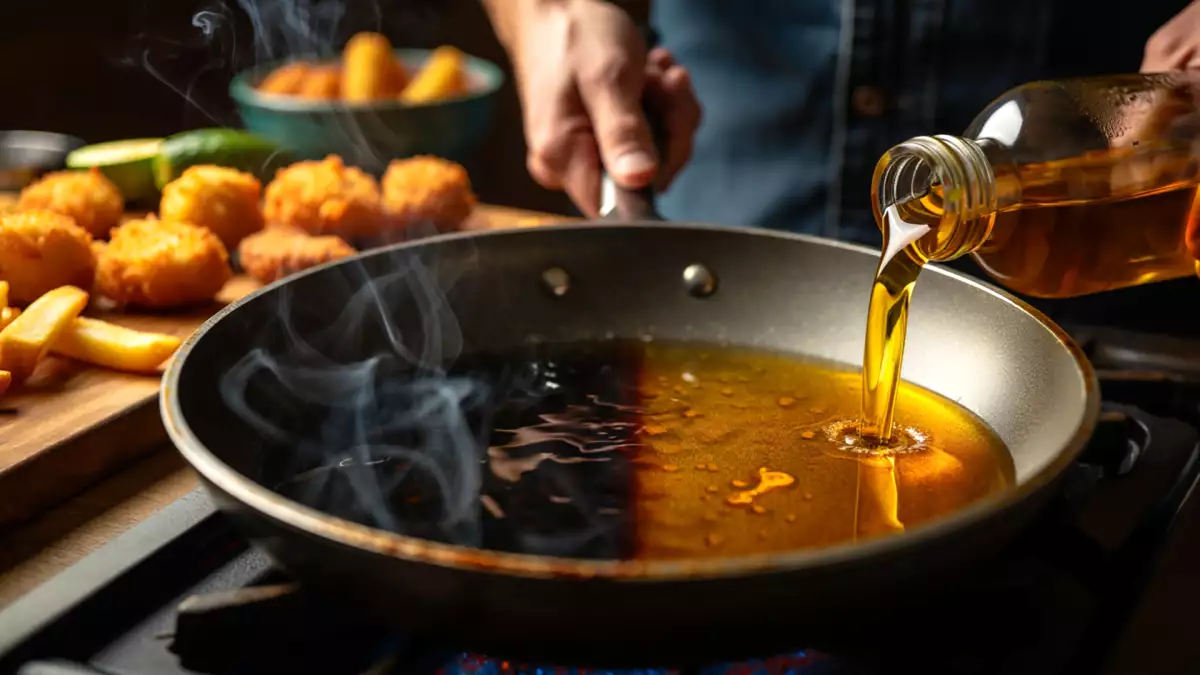
This happens a lot in the kitchen. We fry two fries, some zucchini, maybe some meatballs, and then there remains in the pan that oil that still looks "good." At this point the dilemma starts: throw it away or reuse it?
Over time I changed my mind several times, also because among grandmothers, friends and improvised chefs everyone says their own thing. Then I started to get seriously informed and discovered that the answer is not a simple yes or no. It depends on how you use it, what you fry, and how you store it.
Reusing frying oil: can it really be done?
The answer is yes, but critically. According to EFSA (European Food Safety Authority) and several studies published in journals such as Food Chemistry, oil can be reused, but only if it is not degraded.
The problem arises when the oil is heated too high or used several times without control. In these cases, oxidized compounds and potentially harmful substances are formed.
A little trick I always use: observe it. If it changes color, turns dark or has a pungent smell, there is no question, it should be discarded.
The most common mistakes everyone makes (and that ruin oil)
This is where everything really matters. Because it’s not so much about reusing oil, it’s about how you do it.
Here are the most common mistakes to avoid:
- frying at excessively high temperatures
- not filtering the oil after use
- mixing different types of oil
- using the same oil for very different foods, like fish and desserts
- storing it exposed to light or in open containers
According to nutritionist Giorgio Calabrese, one of the biggest mistakes is failing to filter the oil, since leftover food particles can speed up its deterioration.
How to reuse oil safely
If you really want to reuse it without risk, all it takes is a few precautions that make a huge difference.
- First of all, always strain it. I use a simple strainer with paper towels or gauze, nothing complicated.
- Then store it in a dark glass bottle, away from light and heat. This step seems trivial, but it is the one most often ignored.
- Finally, do not use it more than twice. It is a simple rule that avoids 90% of the problems.
Another important detail: choose the right oil. Olive oil, especially refined or extra virgin oil with a high smoke point, holds up better than others.
When NOT to reuse oil
There are cases when it is better not to even think about it.
Always avoid reusing it if:
- it has been smoking during frying
- it has a strong or rancid smell
- it has been used for fish and you want to cook something else
- it has foam or residue that is difficult to filter out
According to a study published in Journal of Food Science, degraded oil can develop harmful substances such as aldehydes, so it's best not to risk it.
The final trick that really changes everything
The difference is not in reusing the oil or not, but in treating it well.
I now follow a simple rule: I consider it an ingredient, not a waste. When you handle it this way, everything changes. Less waste, more flavor, and even a little extra satisfaction every time you cook.
And in the end, let's face it, in the kitchen the little tricks are the ones that really make a difference.
 Daniele Mainieri
Comments