Signs that help you recognize a fresh shrimp when you go to buy it
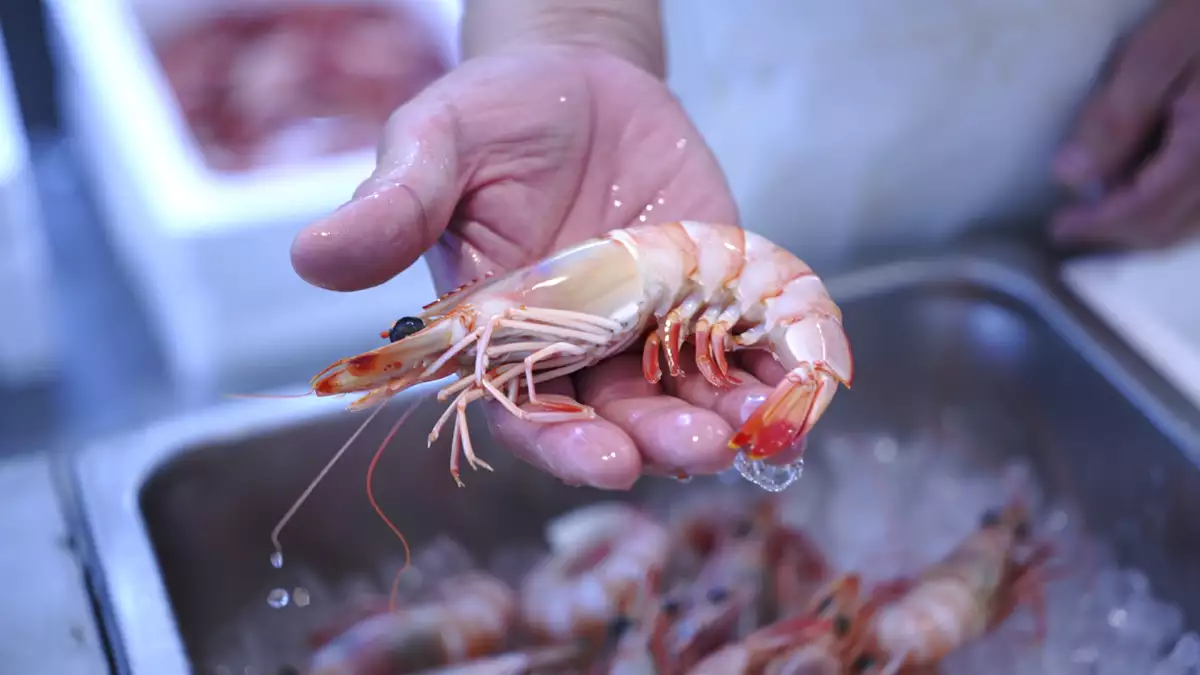
The shrimp is probably the crustacean most inscribed in the taste memory of Spaniards. It is the center of many celebrations, from Christmas to birthdays and family meals, and also the ingredient that arouses more doubts when one approaches the counter of the fishmonger. Choosing well is no small matter: freshness determines not only taste, but also texture, food safety and the final quality of the dish.
Today's market offers shrimp of all kinds: fresh from the day, fresh from the fish market but one or two days old, refrigerated, deep-frozen, frozen on board, cooked at source, defrosted... and each one requires a different reading. The question that matters is another: how to distinguish a really fresh shrimp from one that has already begun to lose its qualities?
The answer requires looking calmly and learning to read those small signs that the shrimp offers without hiding: details of smell, texture, color and firmness that, when known, allow us to distinguish with greater certainty a piece just arrived from the sea from one that has already begun to deteriorate.
1. The smell
Freshness is not disguised. A fresh shrimp smells of clean sea, slightly iodine, without aggressive notes. The smell should be faint, never penetrating.
When sweet, ammonia or "old seafood" aromas appear, decomposition has already begun. The strong odor is not a preliminary stage: it is a warning.
The deterioration of shellfish is rapid and, once it starts, there is not much margin to recover it. If the smell generates doubts, even if they are slight, the wisest thing to do is not to take it home. Smell is not usually deceiving in these cases.
2. The head
The head of the shrimp is the first point where the passage of time is detected.
- Color: should be kept uniform. Black or brown discoloration indicates oxidation.
- Union to the body: if the head separates easily or appears "loose", the shellfish has lost firmness.
- Internal appearance: when very fresh, the inside looks compact. If it appears excessively liquid or cloudy, degradation has begun.
It is also the most sensitive area of the shellfish, and that is why it usually gives away before any other area if the piece has begun to lose freshness.
3. The shell
The shell of a fresh shrimp is taut, shiny and translucent. The skin should be well adhered to the segments, without air pockets, wrinkles and stains.
If it appears dull, soft or has small watery areas, freshness is no longer optimal.
4. Touch
Touch provides information that sight does not always reveal. A fresh shrimp
- feels firm, but not hard;
- recovers its shape when lightly pressed;
- does not leave a slimy sensation.
Viscosity is a clear indication that the seafood has begun to degrade: when the surface becomes sticky or slippery, it is wise to discard the piece, because it has lost freshness and its deterioration is progressing rapidly.
5. Tail and legs
The legs should be whole, not broken or detached. The tail should be kept tightly closed and curved. A tail that opens or appears flaccid indicates loss of freshness.
Veteran fishmongers usually pay attention to these details before any other.
6. The color
Each species has its own, but it should never be turned off. Myths should be avoided here. Not all shrimp are pink; some are almost transparent; others are reddish or bluish.
The general criterion is simple: the color should be sharp and vivid, never grayish, dark or yellowish.
Small black spots may appear naturally, but if they advance rapidly or multiply, they indicate oxidation or poor preservation.
7. Conservation
Even an excellent shrimp can lose freshness in hours if not well preserved.
In fishmongers and supermarkets, it should be on clean ice, not in puddles, and at temperatures between 32°F/0ºC and 39°F/4ºC.
Seafood "refrigerated" off ice loses quality in minutes.
If the establishment does not meet these conditions, the shrimp (fresh or not) is already at a disadvantage.
8. And the thawed shrimp?
Thawed shrimp is not a problem if it is clearly indicated and if it comes from freezing on board. It is often safer than fake "fresh shrimp" that have been on the road for days.
To identify a thawed shrimp
- the flesh is usually less firm;
- the shell comes off more easily;
- the color may be duller;
- sometimes a slight watery film appears.
Fishmongers are obliged to label as "defrosted" any seafood that has been defrosted. If it is not announced, it is advisable to ask.
 Patricia González
Comments