Six little-known facts about figs that will change how you think about this everyday fruit
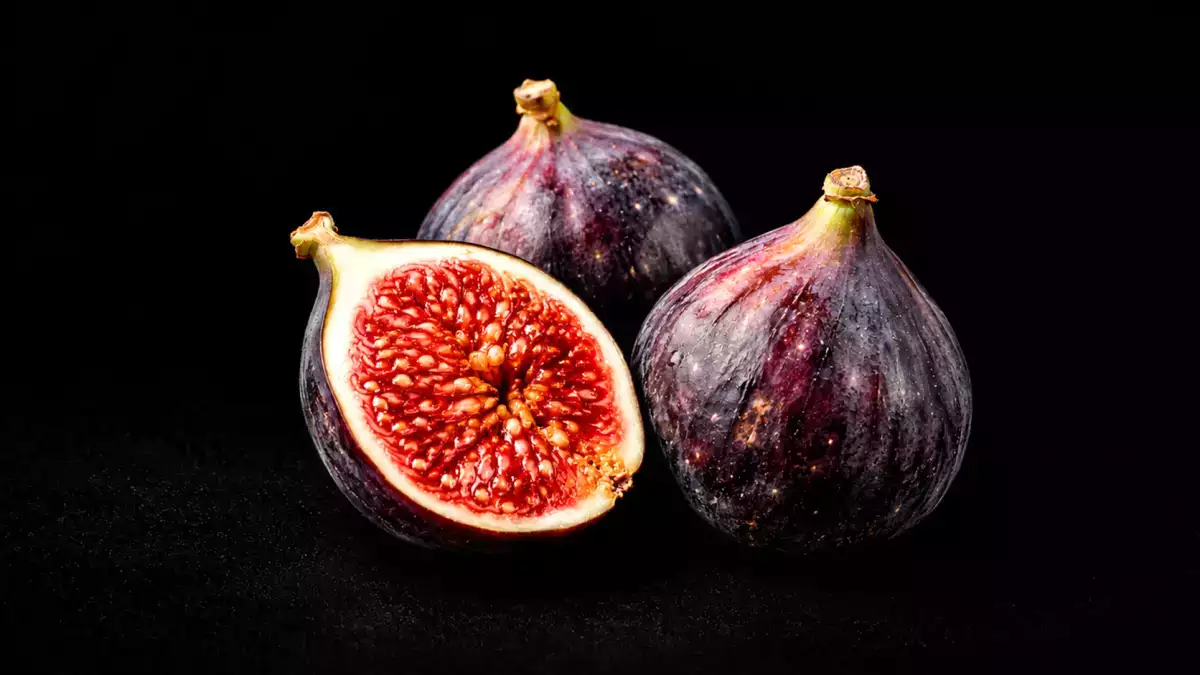
At first glance, a ripe fig seems like a fruit without many secrets: thin skin, sweet flesh, and hundreds of tiny crunchy seeds. But you only have to ask yourself what exactly we’re eating for things to get complicated.
The fig tree has been a companion to humans since the dawn of agriculture, and over that time, it has amassed an extraordinary collection of stories about botany, insects, athletes, and philosophers. Some are true. Others have been repeated so often that they’ve come to seem true. These six stories help distinguish the true ones from the rest.
1. What's inside a fig isn't just seeds
The first surprise comes when you cut it open.
A fig isn’t a simple fruit like a peach or a cherry. In fact, if we had to explain it with an image, we could say it’s something like a small bouquet of flowers turned inward. What we call a fig is actually a syconium: a fleshy, hollow structure whose inner walls are covered with tiny flowers. That’s why we never see a fig tree covered in flowers like we do with other fruit trees: its flowers develop inside that fleshy structure we know as a fig.
Later, many of those small flowers give rise to tiny fruits called achenes, each containing a single seed. Many of those little seeds that crunch when you bite into a fig come precisely from this unique structure. So what appears to be a fruit full of seeds is, botanically speaking, quite a bit stranger than it seems.
2. Figs dating back more than 11,000 years have led researchers to rethink the origins of agriculture
More than 11,000 years ago, someone was already eating figs. And perhaps growing them as well. At the Neolithic site of Gilgal I, in the Jordan Valley, nine charred figs and hundreds of small fragments dating back between 11,400 and 11,200 years ago were discovered.
What caught the researchers’ attention was the type of fig. In 2006, researchers proposed that they came from parthenocarpic fig trees—that is, trees capable of producing fruit without pollination. If those fig trees did not produce viable seeds, those communities would have had to propagate them vegetatively, for example, through cuttings.
If this interpretation is correct, we would be looking at one of the earliest known domesticated plants, predating even the domestication of some of the region’s major cereals.
But we should not get too carried away here. Other researchers later pointed out that parthenocarpic fig trees may also exist in the wild and that finding these remains does not in itself prove that they were trees cultivated by humans. The discovery is extraordinary; calling it “humanity’s first crop” remains debatable.
3. The fig wasp exists, but do all figs have it?
One of the most surprising things about figs is that, in some varieties, a tiny wasp plays a role in their pollination. The female enters the fig through a tiny opening called the ostiolus and carries pollen from another fig tree to the inner flowers.
In these cases, the wasp that enters usually dies inside after fulfilling its role, and its remains can break down significantly as the fig ripens. That’s why you typically won’t find a recognizable wasp when you cut it open. And, most importantly, this doesn’t mean that every fig has had a wasp inside it.
Many of the common fig varieties we grow for food are parthenocarpic: they can develop the fig without the need for pollination and, therefore, without the involvement of any wasps.
4. A breva and a fig can grow on the same fig tree
Although in Spain we talk about brevas and figs as if they were different fruits, on some fig trees both come from the same tree and simply correspond to two different harvests.
So-called “biferous” fig trees can produce two harvests a year. The first develops from buds that formed the previous year and remained on the branches throughout the winter. In Spain, we call these first fruits “brevas.” The second crop appears later, on the new shoots of the same year: these are what we call “higos” here.
This phenomenon is not unique to Spain. Fig trees capable of producing two harvests are also grown in other countries, although the names vary by region: in English, the first harvest is known as the “breva crop”; in Italy, as “fioroni”; and in France, as “figues-fleurs.”
5. Long before energy bars, there were athletes who ate dried figs
The comparison is modern, but the history behind it is well-founded.
Ancient sources describe athletic diets that were very different from those of today. Diogenes Laertius mentions a diet based on dried figs, fresh cheese, and wheat, before meat became a more significant part of certain athletes’ diets. A historical review published in *The Journal of Nutrition* confirms this account.
This account allows us to conclude, at the very least, that dried figs were part of the dietary tradition of Greek athletes. It does not, however, mean that they were “the secret food of Olympic champions.”
6. The best figs are also among the hardest to transport
There’s one final characteristic of figs that you’ll notice right away when buying them fresh.
Figs intended to be eaten fresh should be harvested when they are nearly ripe. If they are picked too early, they won’t fully develop the flavor and texture of a fig that has ripened on the tree. The problem is that the riper they are, the softer, more delicate, and more perishable they become.
Therefore, when selecting them, look for figs that give slightly to the touch, but without any excessively soft or damaged areas or a fermented odor, and eat them soon after.
After more than 11,000 years of coexistence with us, this is perhaps the simplest paradox of the fig: we have learned to grow it, dry it, preserve it, and transport it from one end of the world to the other, yet it remains at its best when it has barely had time to leave the tree.
 Patricia González
Comments