Small crack in an egg: the one detail that changes everything: what to look for before you eat it
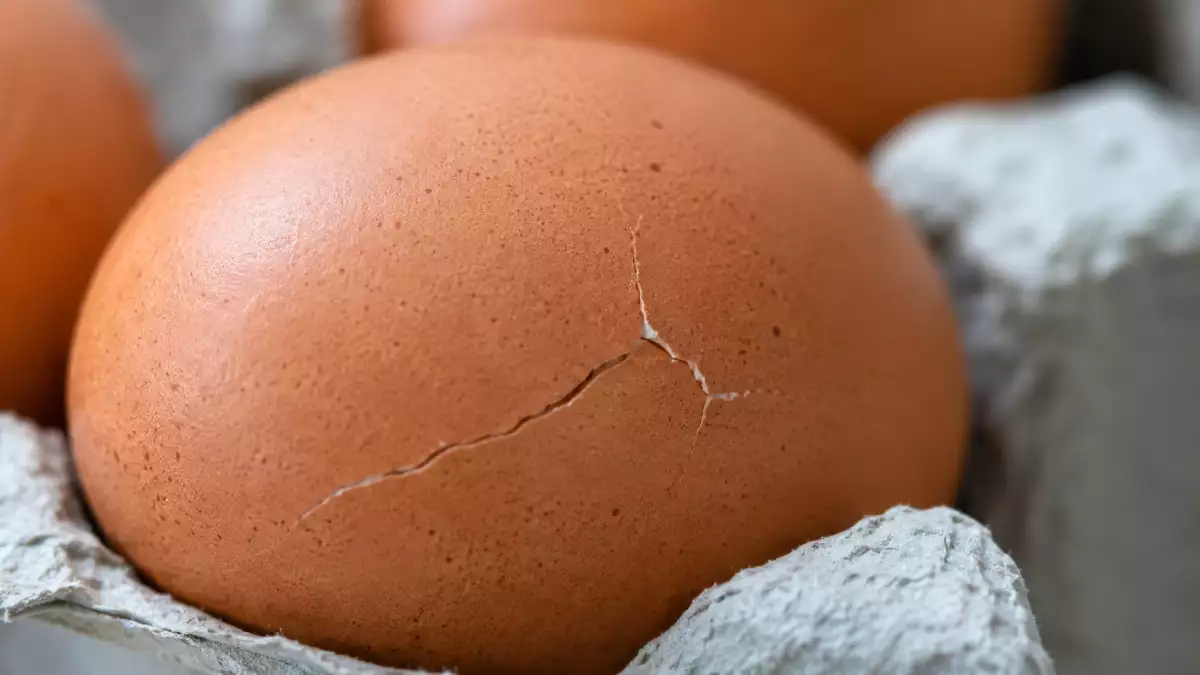
A small crack doesn't always mean the egg should be discarded, but there are situations in which the risk of contamination increases significantly.
At first glance, a small crack in the shell may seem harmless. But does eating this egg pose any health risks? The answer depends on when the crack appeared and how the egg was stored.
The eggshell acts as a natural barrier against bacteria and other microorganisms. When it breaks (even if it’s just a fine crack) this protection is compromised, increasing the likelihood of contamination.
Why can a small crack be a problem?
Although the shell appears solid, it is naturally porous. In addition, it has a protective layer called the cuticle, which prevents bacteria from entering.
When a crack appears, this barrier stops working properly, allowing microorganisms on the surface to come into contact with the inside of the egg.
Among them is Salmonella, a bacterium responsible for thousands of cases of food poisoning every year.
Should all cracked eggs be discarded?
Not always. The most important factor is when the crack appeared.
If the egg was already cracked in the package
- It’s safest not to eat it, especially if you can’t tell how long the crack has been there.
- During transport and storage, the crack can allow bacteria to enter.
What if the egg cracked at home?
If the crack occurred while you were handling it and the egg is still fresh, the risk is much lower.
In this case, it is recommended that you:
- break the egg immediately;
- place it in a clean container;
- keep it refrigerated;
- use it the same day;
- cook it thoroughly.
Is it a good idea to eat a cracked raw egg?
No!! Dishes such as:
- homemade mayonnaise;
- mousse;
- tiramisu;
- soft-boiled egg yolks;
- undercooked eggs;
are not recommended if the egg has any cracks.
Heat is one of the most effective ways to eliminate any bacteria that may be present.
How can you tell if a cracked egg is still good?
Unfortunately, it is not possible to assess the situation based solely on the appearance of the crack.
Even a small, nearly invisible crack can allow contamination.
In addition, a contaminated egg may:
- have no strange odor;
- look completely normal;
- have its usual color and texture.
Therefore, relying solely on appearance is not enough.
Who should be more careful?
Some groups are more vulnerable to foodborne illnesses:
- young children;
- the elderly;
- pregnant women;
- people with weakened immune systems.
In these cases, it is best to avoid eating cracked eggs altogether.
How to Avoid Problems
A few simple precautions can make all the difference:
- choose packages with no broken eggs;
- handle them with care;
- keep them refrigerated;
- avoid washing them before storing;
- discard eggs with old cracks or of unknown origin.
After all, is it worth the risk?
In most cases, no.
If the crack was already there before the egg reached your kitchen, it’s best to throw it away.
However, if the crack occurs accidentally at home, the egg can be used immediately, as long as it is kept refrigerated and cooked thoroughly.
Since the cost of an egg is relatively low compared to the risk of food poisoning, the experts’ recommendation is simple: when in doubt, it’s best not to eat it.
Frequently Asked Questions
Can I cook an egg that was already cracked? If the crack appeared at home and the egg is cooked right away, yes. If it was already cracked in the package, it’s safest to throw it away.
Can a cracked egg cause salmonella? Yes. The crack makes it easier for bacteria to enter through the shell, increasing the risk of contamination.
Does the water test work for cracked eggs? No. The water test only helps estimate the freshness of the egg. It does not indicate whether there is bacterial contamination.
Can I freeze a cracked egg? If the crack occurred during handling and the egg is still fresh, it can be cracked open, placed in a suitable container, and frozen immediately. Never freeze the egg inside the cracked shell.
 Mirella Mendonça
Comments